
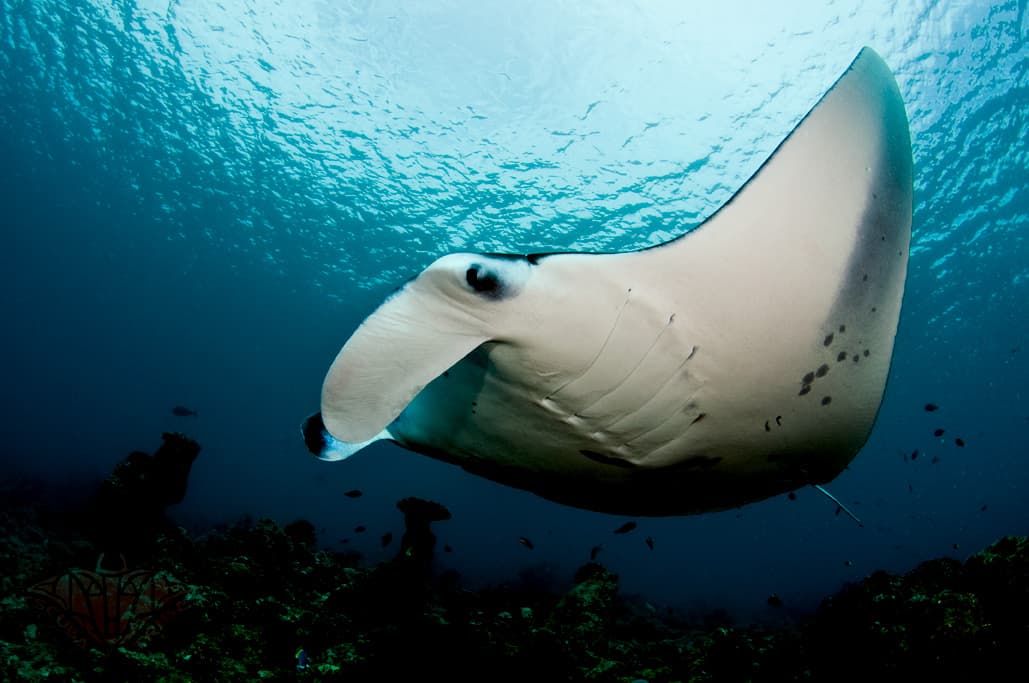
A reef manta ray's wingspan can reach up to four or five metres - wider than a family car is long. Despite this size, they feed only on some of the tiniest things in the ocean: plankton and tiny fish larvae. They swim with their wide mouths open, filtering enormous amounts of water through comb-like structures that trap their microscopic food.
Manta rays have the largest brain-to-body ratio of any fish in the sea, and they show behaviours that suggest they are among the more intelligent ocean animals. They sometimes visit 'cleaning stations' on coral reefs - places where small fish pick parasites off the ray's skin. A manta ray will hover perfectly still, tilted at an angle, while the cleaner fish do their work.
One of the most dramatic manta behaviours is breaching - leaping completely out of the water and somersaulting before crashing back with a spectacular splash. Scientists are still working out exactly why they do this, but it may be a form of communication or a way to remove parasites. Watching it happen is unforgettable.
Around Vanuatu, manta rays are sometimes seen near areas where ocean currents concentrate their plankton food. Local boat operators know the best spots to find them, and the experience of snorkelling alongside a manta - feeling the gentle pressure wave its wings create as it glides past - is described by many visitors as one of the greatest moments of their lives.