
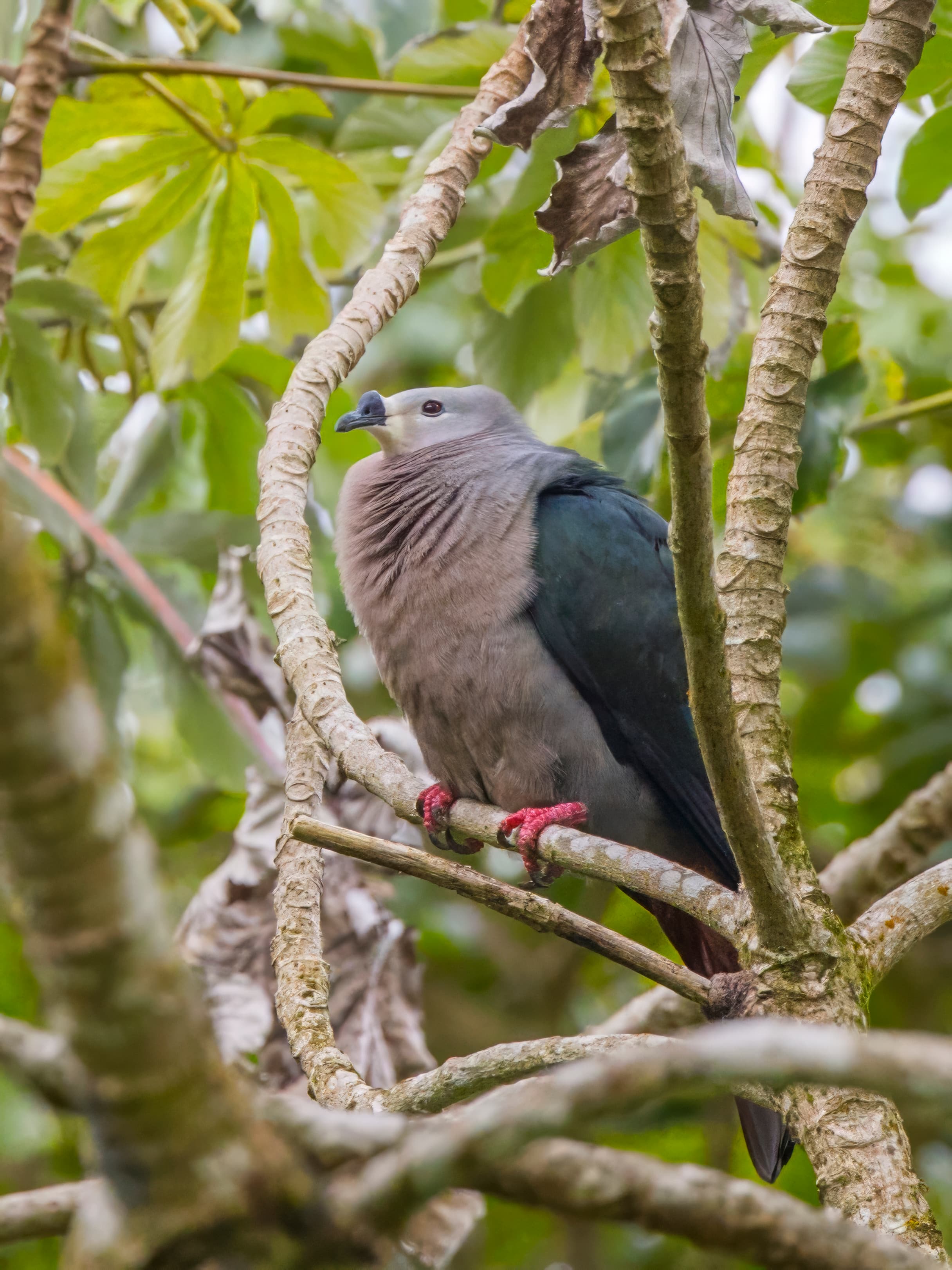
Pacific imperial pigeons are fruit eaters - they fly between trees seeking ripe figs, palm fruits and berries. Because they swallow fruit whole and then fly far away before the seeds pass through, they are excellent seed dispersers. A forest without these pigeons would slowly change, because many trees rely on birds to carry their seeds to new places.
The birds are larger than most pigeons - about the size of a small chicken. The males and females look similar: mostly white on the body with dark wings and a tail that fans out during display flights. Their call is a deep, rhythmic whooo-hooo that echoes through the forest and carries surprisingly far.
On different islands of Vanuatu, slightly different forms of the pigeon have developed over thousands of years of separation. Island life is a natural experiment in evolution - animals separated by sea begin to develop their own small differences over many generations. Scientists find this fascinating and use island species like this pigeon to study how new variations appear.
Local communities across Vanuatu have always known this bird well, and it appears in traditional stories and art. Seeing one land in the canopy above you and hearing its call boom through the trees is one of those simple, peaceful moments that visitors to the islands remember for years afterwards.