
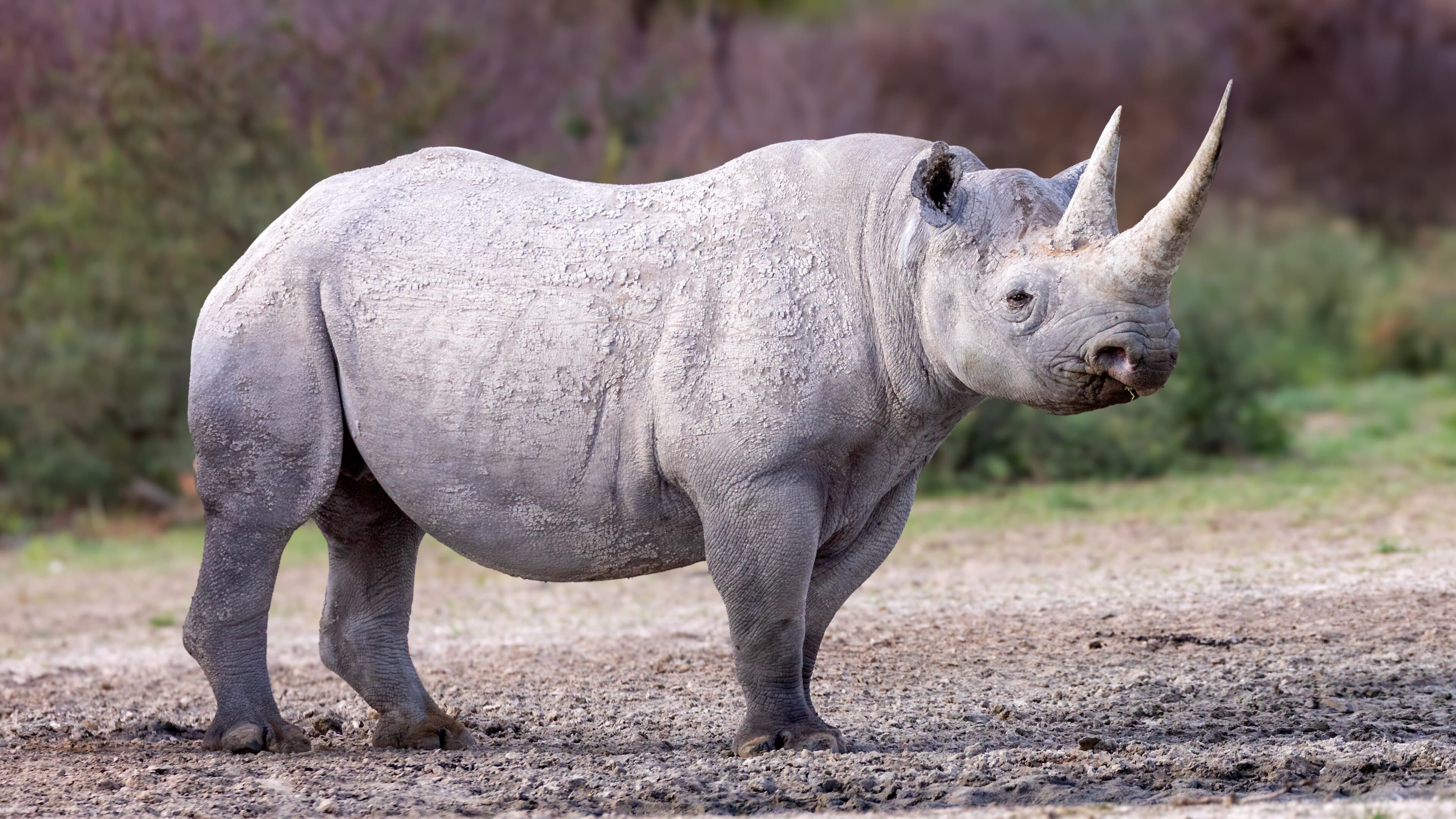
A black rhino weighs about as much as a small car - around 1,000 to 1,400 kilograms. Even though it is so heavy, it can run at 55 km/h for a short distance. That is faster than most racehorses. When a black rhino decides to charge, the ground actually shakes.
Black rhinos have very poor eyesight - they can barely tell a tree apart from a person if you stand still. But their sense of smell is amazing, and their ears twist independently like little radar dishes. They use smell and sound to know what is around them, not their eyes.
Black rhinos eat leaves, twigs and thorny bushes. (Their cousins the white rhinos eat grass.) A black rhino's lip is pointed and grippy, like a finger, so it can pick the exact leaves it wants from a thorny branch without getting pricked. They can eat plants that would tear a human's mouth.
Small birds called oxpeckers ride on rhinos' backs and eat the ticks and flies that bother them. The rhino gets cleaned; the bird gets a meal. It is one of the most famous examples in nature of two animals helping each other - scientists call it a 'partnership'. Local rangers in Zimbabwe sometimes know individual rhinos by name and protect them around the clock.