
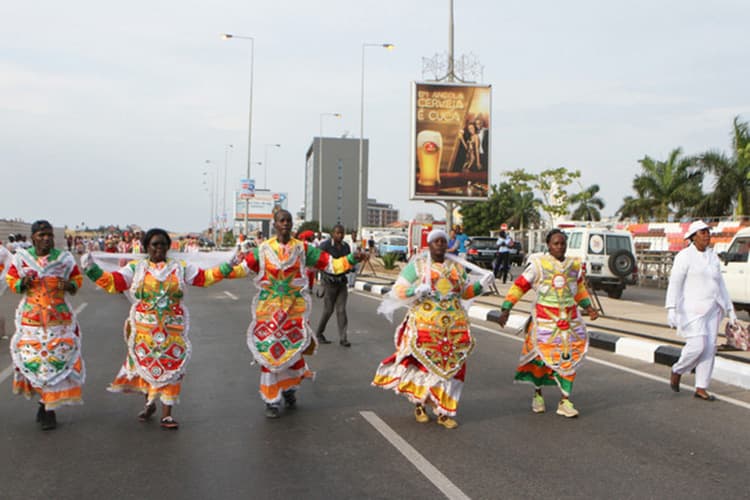
Carnival in Angola mixes African, Portuguese and Brazilian influences into something uniquely Angolan. Months before the event, neighbourhood groups called 'blocos' begin practising their dances and sewing their costumes. The competition between blocos is friendly but serious - each group wants to have the most spectacular display.
The carnival parade goes through the streets of Luanda with giant floats, drummers, dancers and enormous feathered headdresses in every colour imaginable. The crowds cheer, music blasts from speakers, and the atmosphere is one of pure joy. Even people who do not join the parade wear bright clothes and dance on the pavement.
Street food is everywhere during carnival - vendors sell grilled fish, skewers of meat, corn on the cob, and cold drinks. Carnival is a time when the whole city becomes one enormous outdoor party. Children are given special carnival clothes and stay up late watching the parade with their families.