
Classroom lesson ยท Wildlife ยท ๐Ÿ‡ฆ๐Ÿ‡ด Angola

Leatherback Turtle

The world's largest turtle nests on Angola's beaches

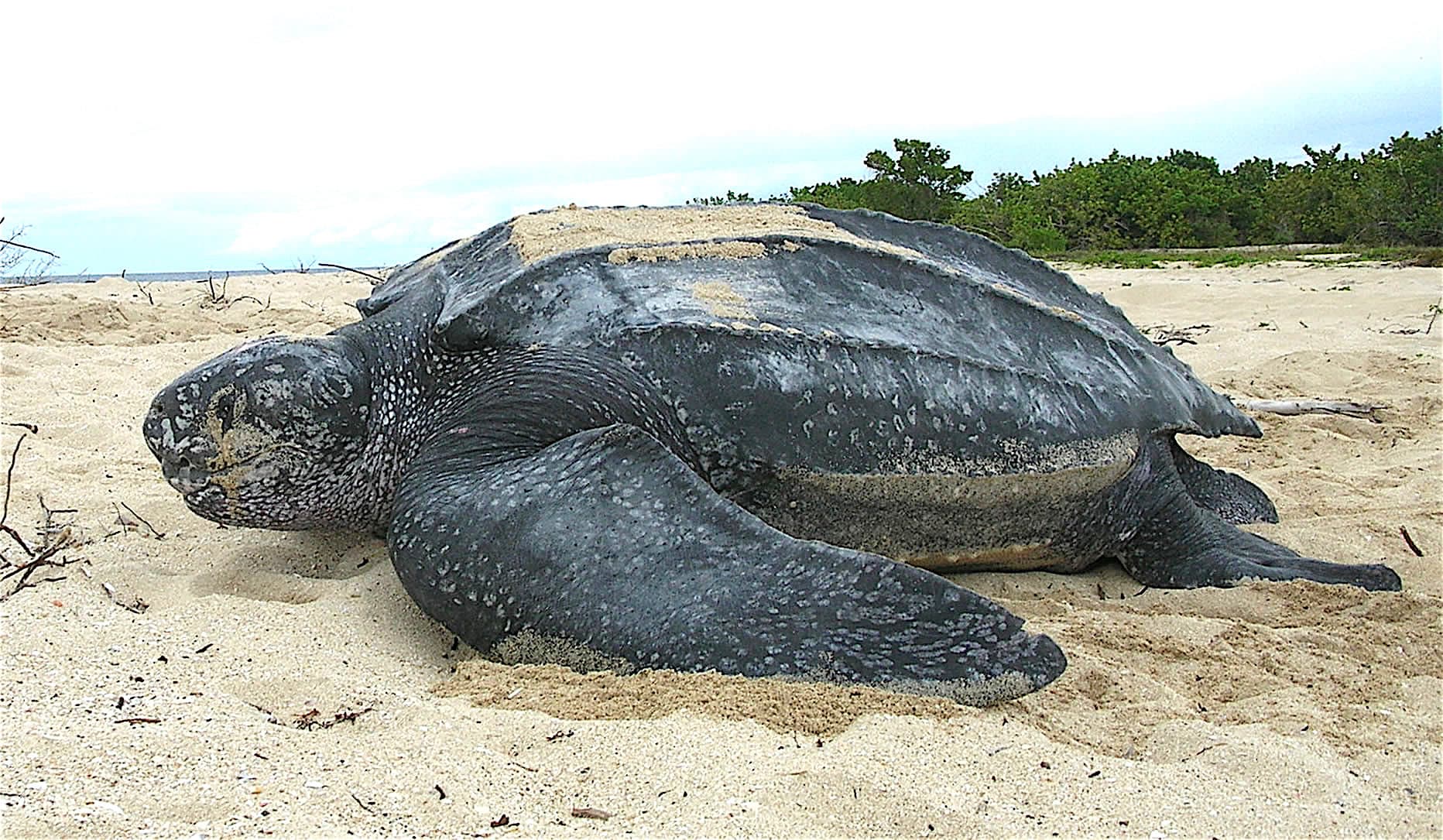
Large leatherback turtle on a sandy beach at night with the ocean behind

Photo ยท Wikimedia Commons

What is it?

The leatherback turtle is the largest turtle in the world, and it comes to Angola's beaches to lay its eggs. Unlike other turtles, it does not have a hard shell โ€” instead it has a leathery, flexible back that can be up to two metres long. These incredible animals travel thousands of kilometres across the ocean to return to their nesting beaches.

Tell me more

A leatherback turtle can weigh up to 900 kilograms โ€” as much as a small car. They are built for open ocean swimming and can dive deeper than almost any other reptile, sometimes going 1,200 metres below the surface to catch jellyfish, which are their favourite food.

Female leatherbacks return to the same beach where they were born to lay their eggs. They come ashore at night, dig a deep hole in the sand with their flippers, lay around 80 eggs, cover them up and then return to the sea. About two months later, tiny hatchlings dig their way up through the sand and scramble toward the water.

Angola's long, undisturbed sandy beaches are important nesting grounds for leatherbacks. Watching a leatherback come ashore is described as one of the most magical experiences in nature. The turtles are slow and calm on the beach, focused entirely on the important task of laying their eggs safely.

In the classroom

Walk your class through this in 15 minutes.

Talk together

Discussion prompts

  1. 01How do you think a leatherback turtle finds its way back to the exact beach where it was born, even after years at sea?
  2. 02Why is it important that some beaches stay quiet and undisturbed?
  3. 03What could people do to help leatherback turtle hatchlings make it safely to the sea?
Try this

Classroom activity

Map the leatherback turtle's journey. Draw a world map and mark Angola on it. Then draw a dotted line showing how a leatherback might travel from Angola across the Atlantic to find jellyfish, and back again. Add arrows, the turtle's nesting season, and three facts along the route.