
Classroom lesson ยท Food ยท ๐Ÿ‡ฆ๐Ÿ‡ด Angola

Muamba de Galinha

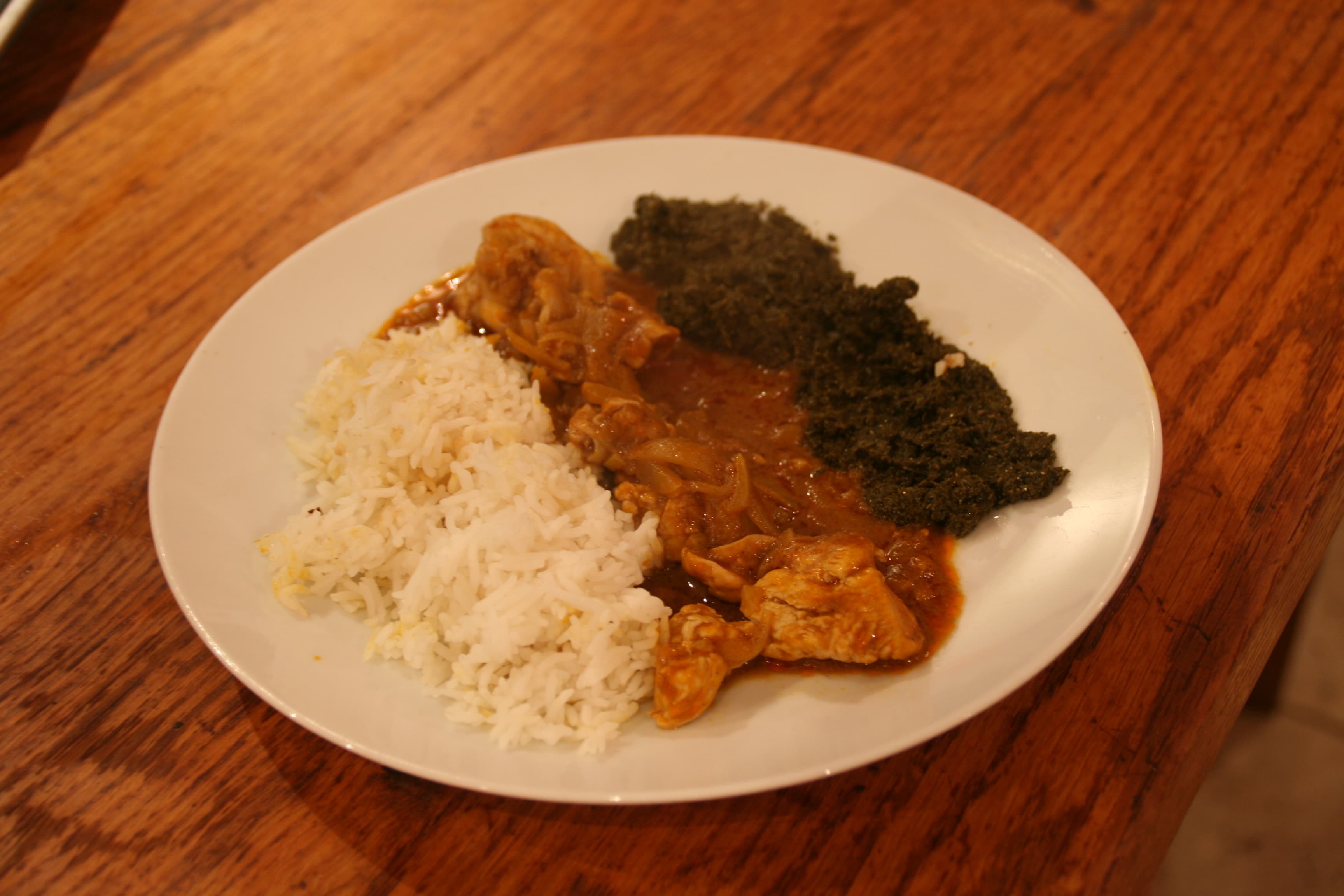
Angola's national dish โ€” rich chicken stew cooked in palm-nut oil

Photo ยท Wikimedia Commons

What is it?

Muamba de galinha is one of Angola's most famous dishes โ€” a golden, richly flavoured chicken stew made with palm-nut oil, garlic, okra, and chilli. The palm-nut oil gives it a deep orange colour and a nutty flavour that is quite unlike any other cooking oil. It is often considered Angola's national dish.

Tell me more

Palm-nut oil comes from the fruit of the oil palm tree, which grows across tropical West and Central Africa. The oil is a deep, almost brick-red colour when raw, giving muamba its distinctive golden hue. People have been cooking with palm oil in Angola for thousands of years.

To make muamba, pieces of chicken are marinated in garlic and chilli, then cooked slowly in palm-nut oil with okra (a green vegetable with a slightly sticky texture) and sometimes butternut squash. The result is a thick, aromatic stew that fills the kitchen with incredible smells.

Muamba de galinha is always served with funje or rice. The combination is a perfect balance โ€” the plain, soft funje soaks up the rich, deeply flavoured stew. At celebrations, weddings and family gatherings across Angola, muamba is the dish that brings everyone to the table.

In the classroom

Walk your class through this in 15 minutes.

Talk together

Discussion prompts

  1. 01Many dishes become 'national dishes' because they use local ingredients that grow well in that country. What ingredients from YOUR region or country might make a great national dish?
  2. 02Muamba uses palm oil, garlic, chilli and okra โ€” all ingredients grown in Angola. Why might it be good to cook with local ingredients?
  3. 03If you were invited to an Angolan family's celebration dinner, what questions would you want to ask about the food?
Try this

Classroom activity

Design an Angolan restaurant menu for a class feast. Include muamba de galinha as the main dish and funje as the side. Write a short, tempting description of each dish (like a real menu) and draw what the plate would look like.