
Classroom lesson ยท Wildlife ยท ๐Ÿ‡ฆ๐Ÿ‡ด Angola

Southern Right Whale

Enormous gentle whales that visit Angola's Atlantic coast

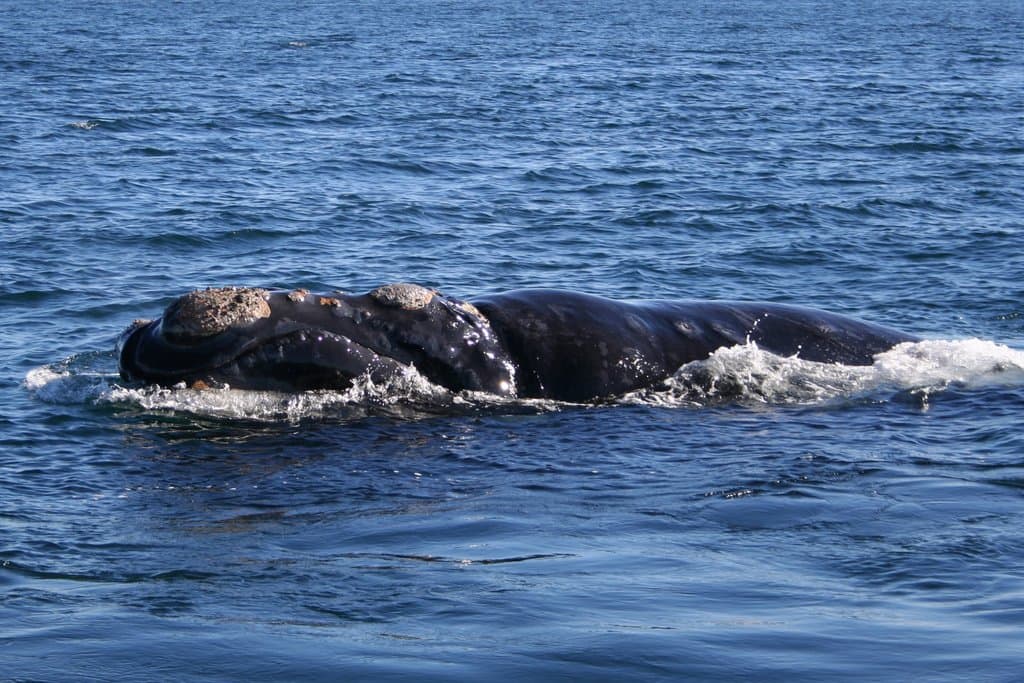
Southern right whale breaching in the Atlantic Ocean with a clear blue sky

Photo ยท Wikimedia Commons

What is it?

The southern right whale is one of the largest animals on Earth, and it visits the waters along Angola's coast. These enormous, slow-moving whales can grow up to 18 metres long โ€” about as long as three double-decker buses parked end to end. They are known for being curious and sometimes approaching boats very closely.

Tell me more

Southern right whales are dark grey or black, with patches of rough white skin called callosities on their heads. Each whale has a unique pattern of callosities, so scientists can identify individual whales just by looking at these markings โ€” a bit like a fingerprint.

These whales do not have teeth. Instead, they have long plates of a material called baleen hanging from their upper jaw, which works like a giant sieve. They swim with their mouths open through clouds of tiny shrimp-like creatures called krill, and the baleen catches the krill while the water flows out.

Right whales are famous for 'breaching' โ€” leaping part of their enormous body out of the water and crashing back down with a spectacular splash. Nobody is completely sure why they do this, but it might be to remove parasites from their skin, to communicate, or simply because it feels good. When you see an 18-metre whale leap into the air, it is truly unforgettable.

In the classroom

Walk your class through this in 15 minutes.

Talk together

Discussion prompts

  1. 01Southern right whales have individual markings like fingerprints. Why is it useful for scientists to be able to tell individual animals apart?
  2. 02Why do you think these huge animals leap out of the water? Can you think of three possible reasons?
  3. 03How is a baleen whale's way of eating similar to using a sieve in cooking?
Try this

Classroom activity

Design your own unique southern right whale by drawing the outline and creating your own pattern of callosities (white patches). Give your whale a name and an ID number, then write a scientific 'whale identification card' with three facts about this individual whale โ€” as if you are a real marine biologist.