
An ibex's hooves are specially designed for mountain life. Each hoof has a hard outer rim to grip rock edges and a soft, rubbery inner pad that moulds to uneven surfaces. This means an ibex can stand comfortably on a ledge just a few centimetres wide, hundreds of metres above a valley.
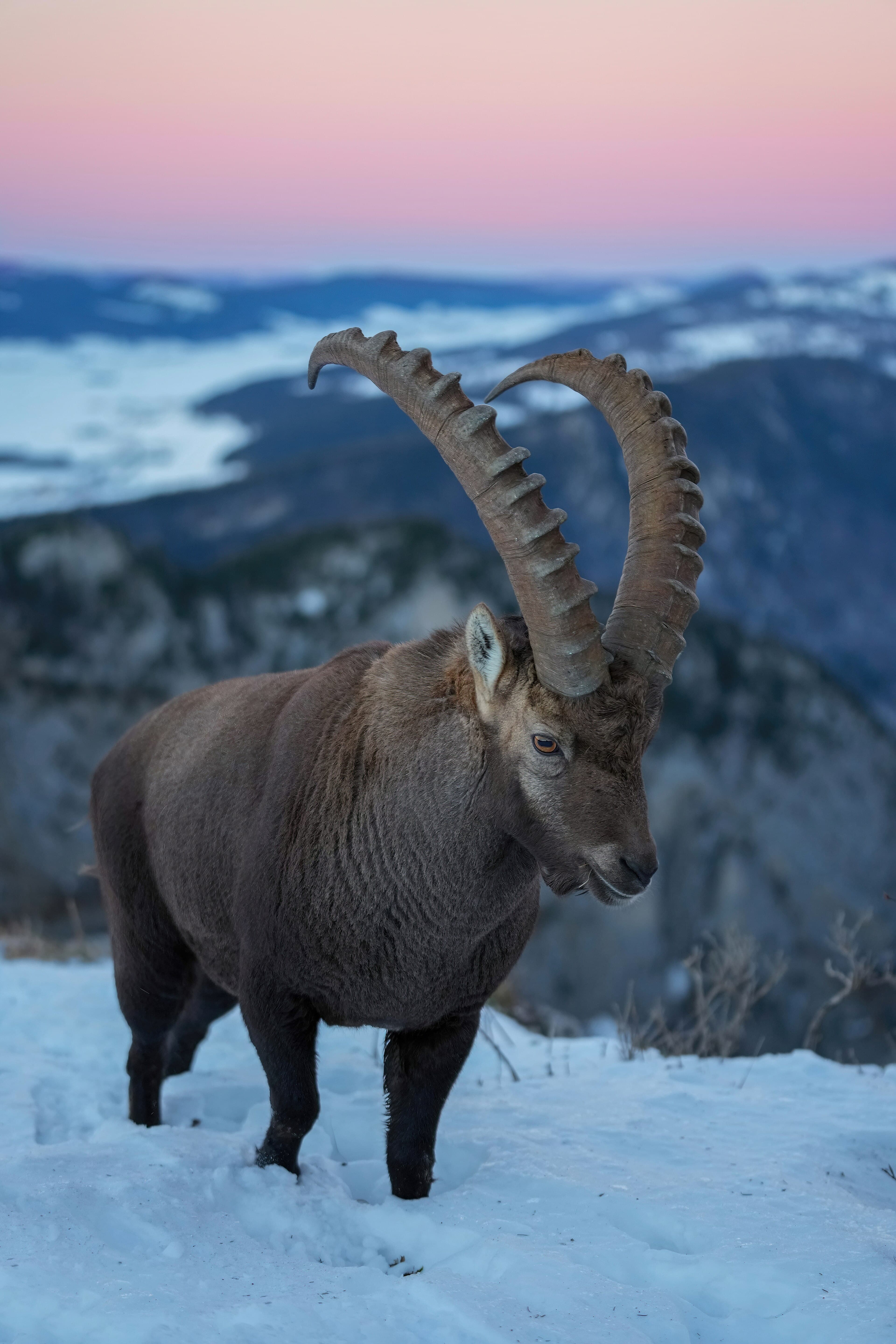
Male ibex grow long, dramatic horns that curve backwards over their bodies. The horns can reach one metre in length and have ridges on them - one ridge grows each year, so you can count them to tell how old the ibex is, like counting rings in a tree trunk. Females have much shorter, thinner horns.
Ibex were once extremely rare across the Alps because they were hunted heavily for centuries. Thanks to conservation programmes that began in the early 1900s, their numbers have recovered beautifully. Today there are around 50,000 alpine ibex living across the Alps - a real wildlife success story.
In summer, ibex graze on high mountain meadows, eating grasses, herbs and mosses. In winter they move to slightly lower, south-facing slopes where the sun melts the snow and exposes the plants beneath. They are very comfortable in cold weather - their fur has two layers, an outer layer that repels water and a thick inner layer for warmth.