
Classroom lesson · Wildlife · 🇦🇹 Austria

Alpine Marmot

A chunky, cheerful rodent that whistles like a tiny alarm system

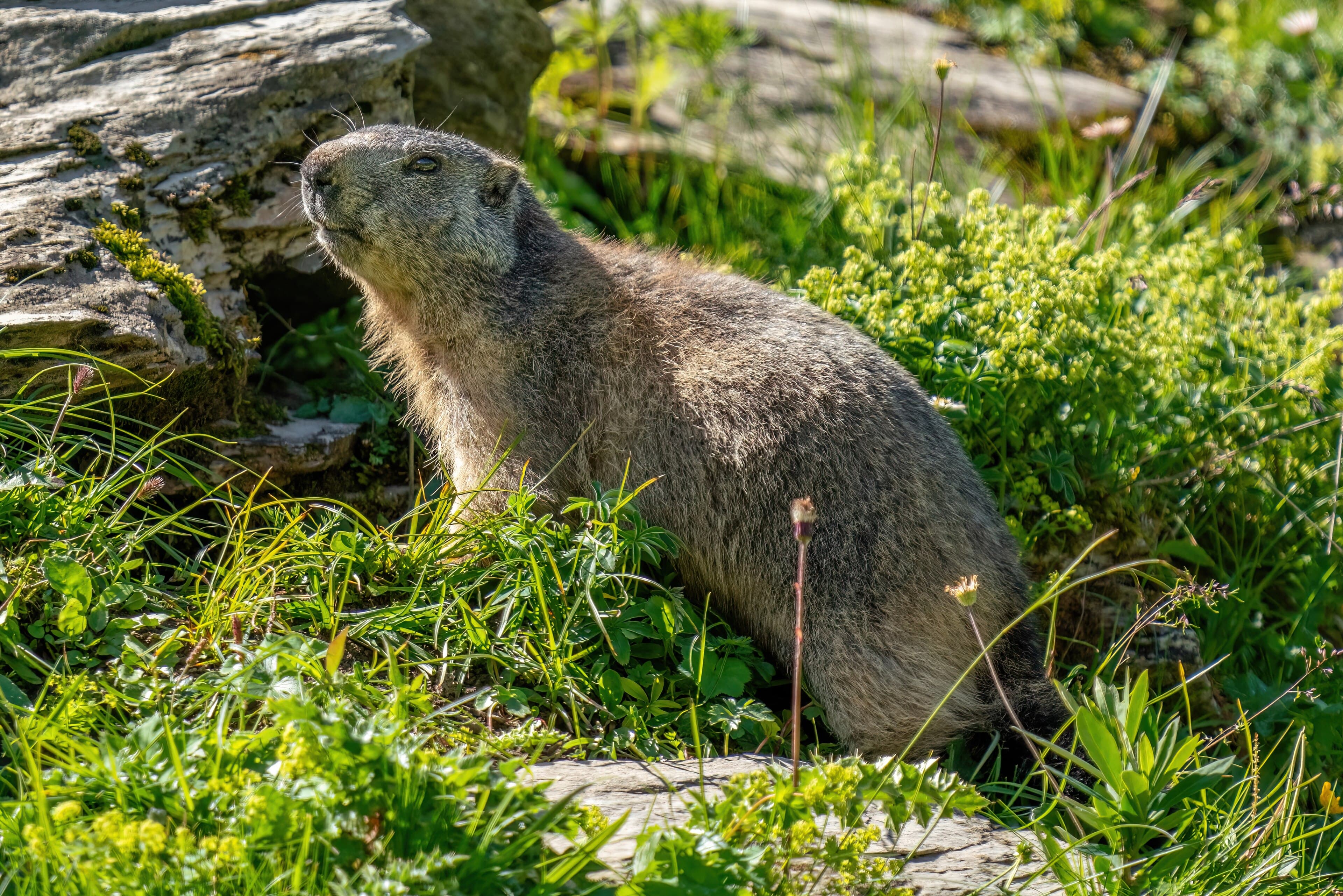
A plump alpine marmot sitting upright on a rocky slope with mountains behind

Photo · Wikimedia Commons

What is it?

The alpine marmot is a large, fluffy rodent that lives in the high mountain meadows of Austria. It looks like a very fat squirrel with short ears and a stubby tail. Marmots are famous for their loud, sharp whistle — when one marmot spots a predator, it lets out a piercing call that warns every marmot nearby to dive into its burrow.

Tell me more

Marmots live in burrow systems underground, which they dig with their powerful front teeth and claws. A marmot burrow can be enormous — sometimes three metres deep and over ten metres long, with separate chambers for sleeping, eating and raising young. The burrow is always warm inside, even when there is snow above.

Marmots are one of Europe's largest rodents — a fully grown one can weigh as much as a cat. In autumn they eat as much as possible to build up a thick layer of fat, then they sleep through the entire winter in their burrows. This deep winter sleep is called hibernation and can last up to six months.

During hibernation a marmot's heartbeat slows down dramatically — from around 120 beats per minute to just three or four. Its body temperature drops close to freezing. When spring arrives and the mountain meadows become green again, the whole marmot family wakes up and gets very busy very quickly.

Marmot families live together in groups, with one dominant pair in each group. They are very sociable and spend a lot of time playing, grooming each other and lazing in the sun on warm rocks. If you sit very quietly in an alpine meadow, you might see one pop up from its burrow and look around.

In the classroom

Walk your class through this in 15 minutes.

Talk together

Discussion prompts

  1. 01Marmots use whistles to communicate danger. How do humans warn each other about danger without using words?
  2. 02Marmots hibernate for six months. If you had to hibernate for half the year, what would you miss most? What would you be happy to skip?
  3. 03Marmots live in close family groups underground. How is that similar to or different from how your family lives?
Try this

Classroom activity

Draw a cross-section (a cut-through view) of a marmot burrow system underground. Show the entrance tunnel, the sleeping chamber, the main tunnel and at least two marmots — one sleeping for winter and one standing guard at the entrance. Label each part.