
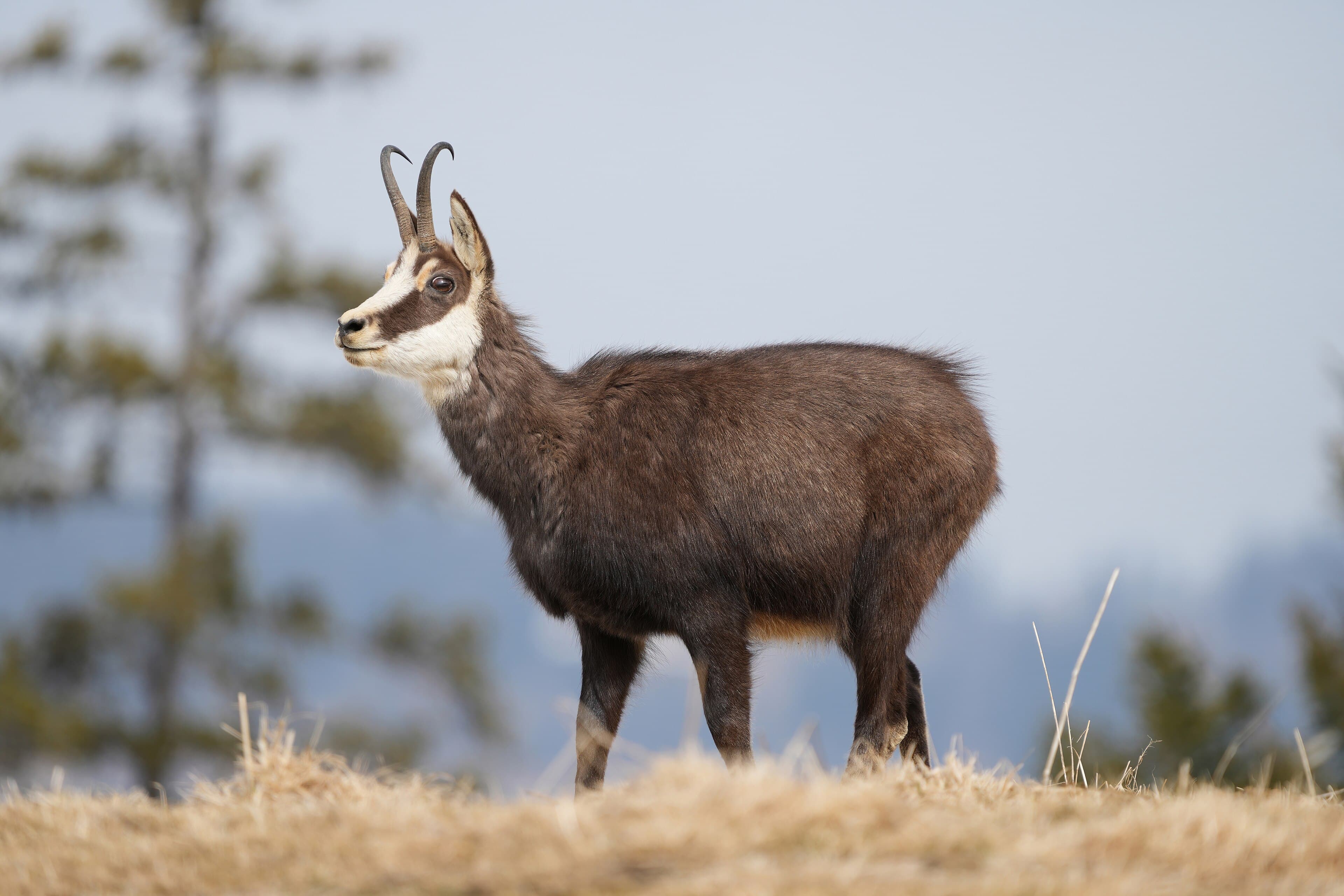
Like the ibex, the chamois has specially adapted hooves with a hard outer edge and soft inner pad for gripping rocks. But chamois tend to be smaller and faster than ibex, moving with a quick, flicking stride even on near-vertical cliff faces. They are sometimes described as the ballet dancers of the Alps.
Chamois live in groups called herds, usually led by a female called a doe. In summer the herds stay high in the alpine meadows, and in winter they move to lower woodland areas to shelter from the harshest storms. Young chamois, called kids, can follow their mother across difficult rocky terrain within just a few days of being born.
In Austria, a chamois tuft - a small bunch of hair from a chamois - is traditionally worn in a hatband on the traditional felt hats called Trachtenhüte. These decorative hats are part of Austrian folk costume (called Tracht) and are still worn at festivals and celebrations today.
Chamois have excellent hearing and smell as well as good eyesight, making them very hard to approach quietly. If one animal senses danger, it stamps its feet and makes a sharp hissing snort - and the whole herd disappears over the nearest ridge within seconds.