
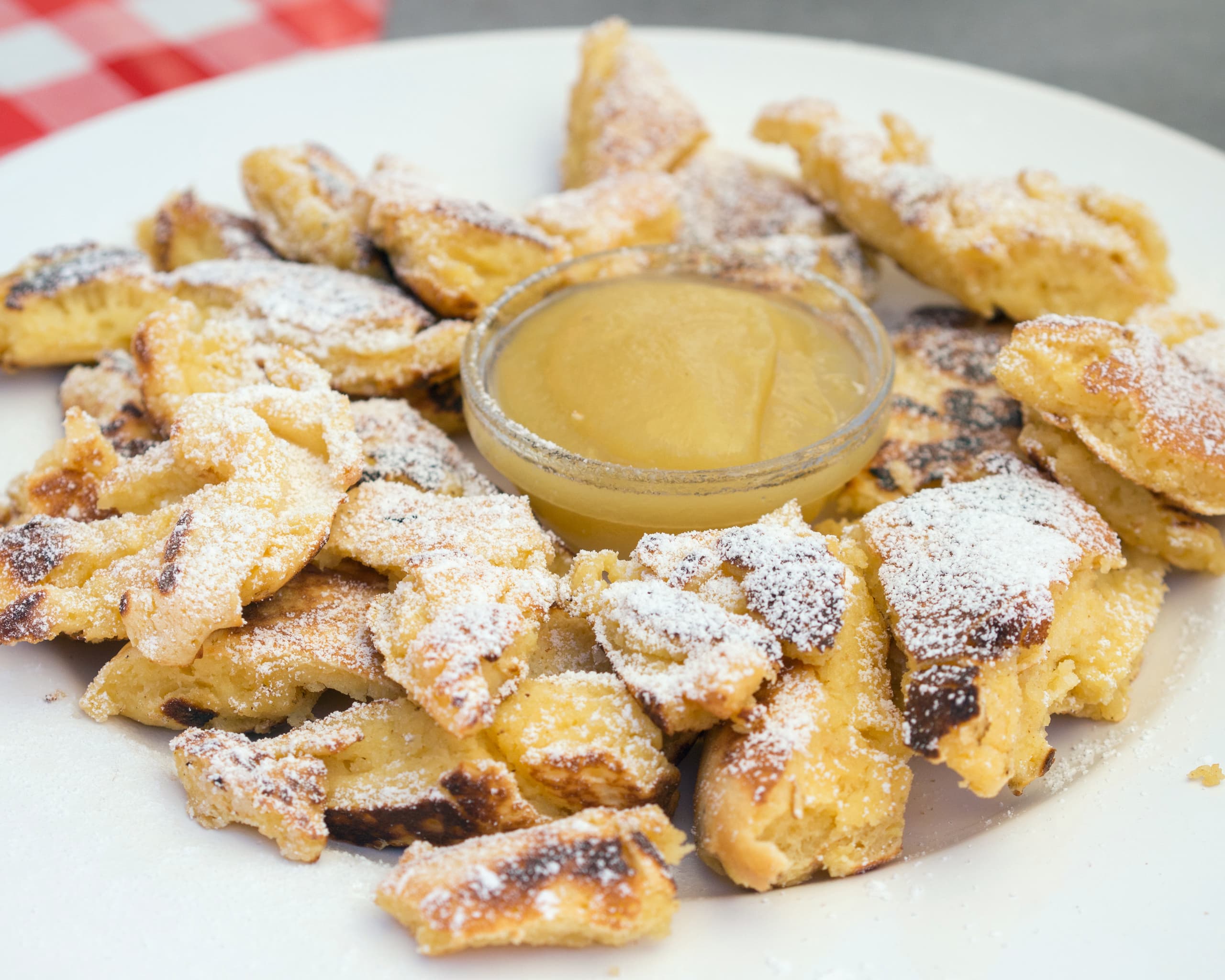
To make Kaiserschmarrn, a light egg batter is poured into a pan with butter and cooked until golden on the bottom. Then it is flipped and roughly torn into pieces with two forks while it finishes cooking. Raisins are often mixed in. The whole messy, golden pile is then dusted with a snow of icing sugar and served immediately while it is hot and fluffy.
The legend of its invention tells of a royal cook who accidentally ruined a pancake while preparing it for the emperor. Rather than throwing it away, the cook tore it up and presented it as if it were intentional. The emperor - who was known to have a big appetite - loved it and requested it again. Whether or not this story is true, the dish stuck.
Kaiserschmarrn is one of Austria's favourite comfort foods, eaten as a dessert or even as a main course in the Alps, where it is traditional after skiing. Mountain restaurants called 'Hütten' serve enormous portions. It is warming, filling and - despite looking chaotic - surprisingly elegant in taste.
Variations of Kaiserschmarrn exist across the region, with different countries having their own versions using local fruits or adding chocolate. The Austrian version remains the most celebrated. Like apfelstrudel and sachertorte, it is one of the dishes that defines Austrian dessert culture.