
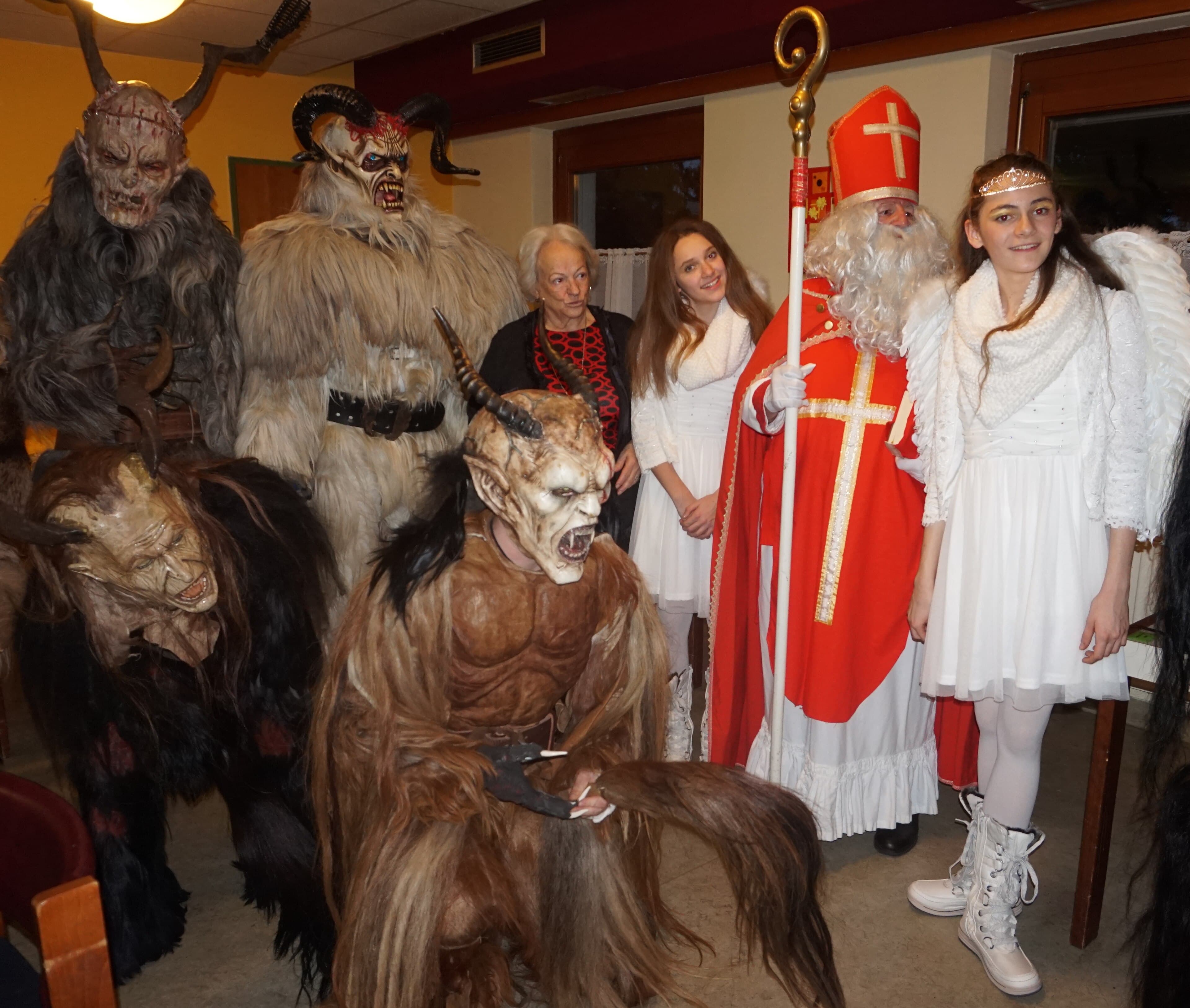
Krampus is a creature from old Alpine folklore - a shaggy, horned figure who traditionally accompanies Saint Nicholas on his December rounds. While Saint Nicholas rewards children who have been kind and helpful, Krampus - in the stories - playfully scolds the naughty ones with a bundle of birch twigs. In modern parades, Krampus is more theatrical performance than anything frightening.
The costumes are extraordinary pieces of craft. Each mask is hand-carved from wood by skilled craftspeople, often taking many weeks to complete. They are painted and decorated, with real animal horns attached and wild expressions carved into them. The fur suits are made from real sheepskin and are very heavy and very hot to wear. Each performer also wears a belt of large cowbells that clang loudly as they move.
The parades are enormous spectacles - a procession of clanging bells, flickering torches, swirling fur and theatrical posturing. Local communities take enormous pride in their Krampus groups, which are often made up of young adults who train and prepare their costumes months in advance. Some groups even have their own club colours and traditions passed down through families.
Krampuslauf parades are festive community events where families line the streets to watch. In recent years the tradition has become so popular that parades are now held in cities across Europe and even in some parts of North America and Australia. The creatures that once only lurked in Alpine folklore have become one of the most beloved winter spectacles.