
Classroom lesson · Wildlife · 🇦🇹 Austria

Lipizzaner Stallions

Austria's famous white horses that dance with perfect precision

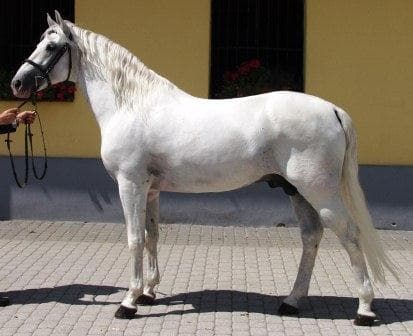
Photo · Wikimedia Commons

What is it?

Lipizzaner stallions are magnificent white horses that perform incredible leaps and movements in Vienna's Spanish Riding School. They are some of the most carefully trained horses in the world, and the school that trains them is over 450 years old. Watching a Lipizzaner perform is like watching a ballet — but with a horse.

Tell me more

Lipizzaner horses are not actually born white. Foals are born dark — usually black, bay or brown — and their coats gradually turn white as they grow up, usually by the age of seven. Only a very small number of Lipizzaners remain dark-coated for their whole lives, and these are considered especially lucky.

The Spanish Riding School in Vienna has been training Lipizzaner horses since 1572. The horses learn a series of very precise movements called 'airs above the ground', which include leaping into the air, kicking their back legs while hovering and balancing on their hind legs alone. These movements take years of patient training.

Both the horses and their riders train for years before performing together. A young horse starts its training at three or four years old and may not be ready to perform the most advanced movements for another eight to ten years. The partnership between horse and rider is built on trust, patience and kindness — never force.

The breed takes its name from the town of Lipizza (now in Slovenia), where the horses were first bred in the 1500s. Today the horses are bred at a famous stud farm in Austria called Piber, set in green rolling hills. Visitors can watch the foals playing in the fields.

In the classroom

Walk your class through this in 15 minutes.

Talk together

Discussion prompts

  1. 01The Lipizzaner's training relies on trust and patience, not force. Can you think of other activities where patience and kindness matter more than pushing hard?
  2. 02The horses are born dark and turn white. Can you think of other animals that change colour or appearance as they grow?
  3. 03If you could learn to ride any animal (real or imaginary) to perform in a show, which would you choose?
Try this

Classroom activity

Draw a Lipizzaner performing a 'levade' — the movement where the horse balances on its hind legs with its front legs tucked in. Then draw a second picture of the same horse as a dark foal. Label both pictures and write one sentence underneath each one.