
Classroom lesson · Wildlife · 🇧🇭 Bahrain

Arabian Oryx

An elegant desert antelope that was brought back from the brink

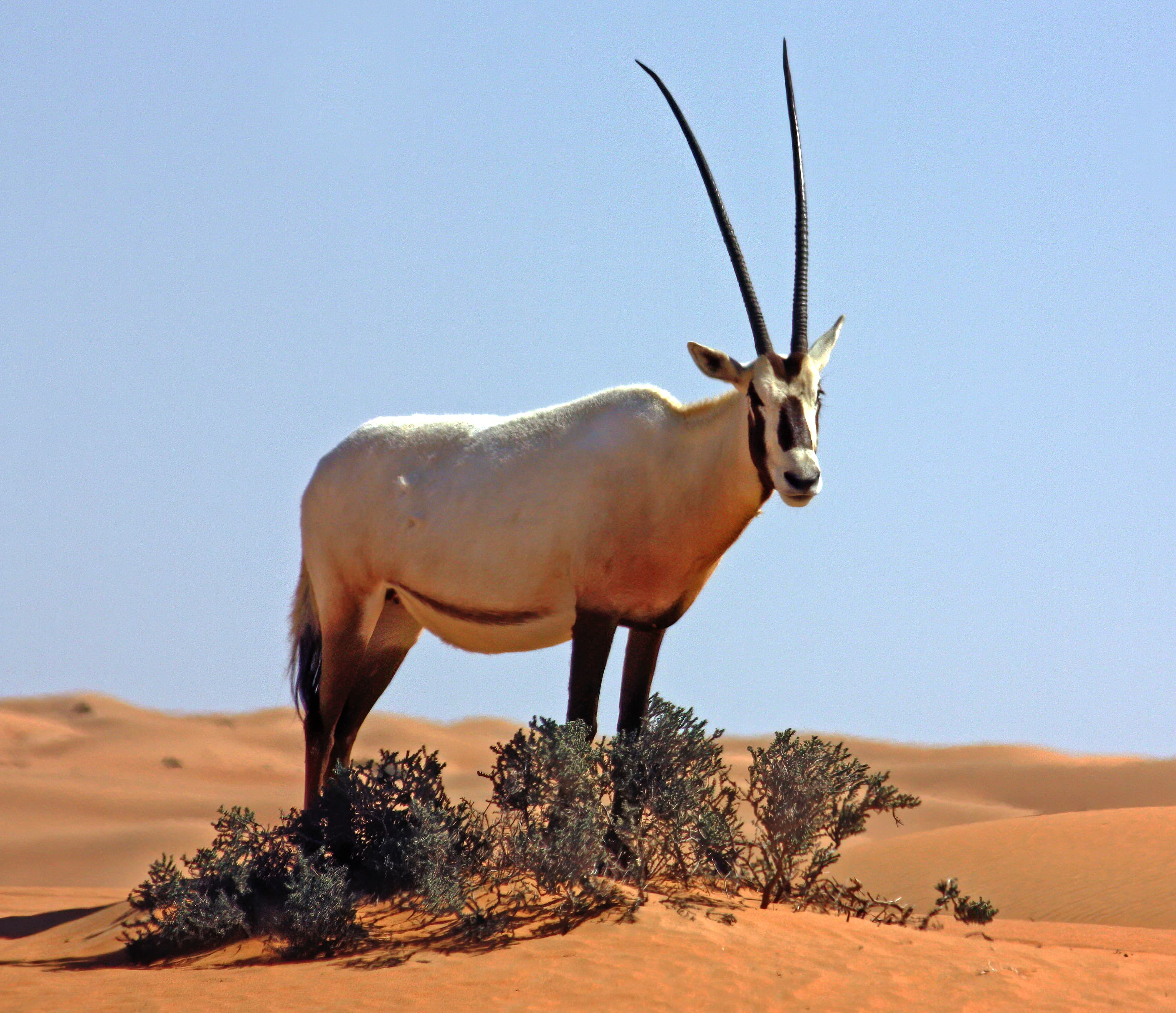
A white Arabian oryx with long straight horns standing in the desert

Photo · Wikimedia Commons

What is it?

The Arabian oryx is a beautiful white antelope with two long, straight horns that lives in the desert. It is the national animal of Bahrain and several other countries in the Arabian Peninsula. Oryx are brilliantly adapted to survive in hot, dry deserts where very few other large animals can live.

Tell me more

The oryx's white coat reflects the blazing desert sun, which helps keep its body temperature down. Its hooves are broad and shovel-shaped, perfect for walking on soft sand without sinking. It can go for long periods without drinking water by getting moisture from the plants it eats — such as grasses, bulbs and desert fruits.

Arabian oryx can sense rain and fresh grass from very far away, and they travel long distances across the desert to find it. They are not fast runners like cheetahs, but they are steady walkers who can cover huge areas of harsh desert landscape without tiring.

You can see Arabian oryx at the Al Areen Wildlife Park in Bahrain, where they roam in large open enclosures. The park is one of the places helping to protect these animals and ensure they continue to thrive. When an oryx is seen from the side, its two horns can look like one long horn — some historians think this may be where the legend of the unicorn came from!

The Arabian oryx is an inspiring conservation success story. By working together, people in the Gulf and around the world have helped bring these graceful animals back and given them safe places to live.

In the classroom

Walk your class through this in 15 minutes.

Talk together

Discussion prompts

  1. 01How has the Arabian oryx's body adapted perfectly to life in the desert? Can you list three ways?
  2. 02Why do you think the oryx became the national animal of so many countries in the Gulf?
  3. 03If you could design an animal perfectly suited to living in a hot desert, what features would it have?
  4. 04Why is it exciting when an endangered animal is successfully protected and brought back?
Try this

Classroom activity

Draw an Arabian oryx and label at least five body features that help it survive in the desert (white coat, broad hooves, long horns, etc.). Next to each label, write a sentence explaining why that feature is helpful. Compare your oryx with a partner's — did you label the same features?