
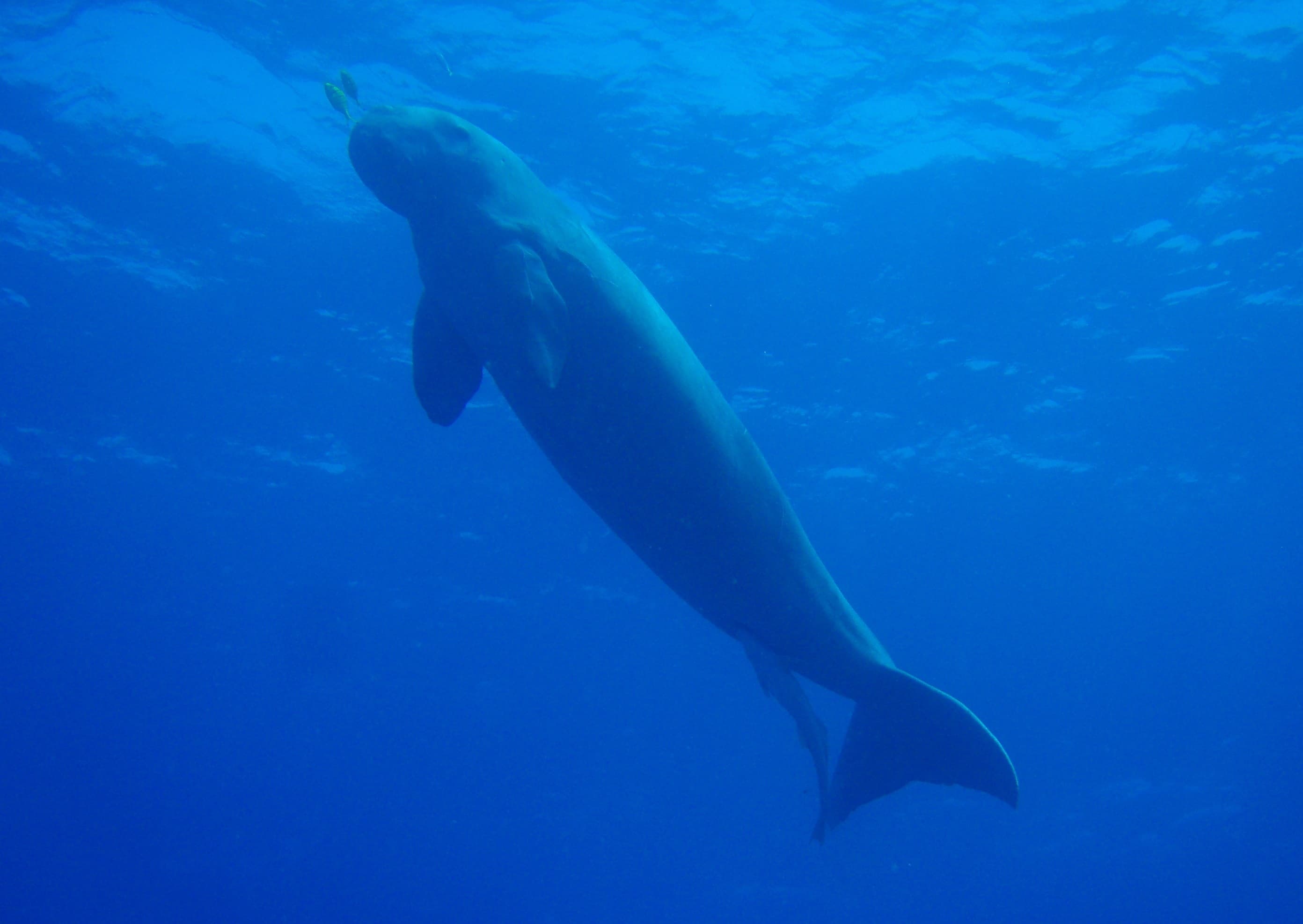
Dugongs are sometimes called 'sea cows' because they spend their days slowly grazing on underwater meadows of seagrass. They use their wide, bristly upper lips to uproot and munch the grass, leaving trails of bare sandy patches behind them. A dugong can eat about 40 kilograms of seagrass every day - that is a lot of salad!
Unlike fish, dugongs must breathe air. They come to the surface every few minutes to take a breath, then dive back down to continue grazing. They move slowly and peacefully through the shallow, warm waters, and are completely harmless. A fully grown dugong can weigh as much as 400 kilograms and live for 70 years.
Bahrain's shallow coastal waters contain large seagrass beds, which makes them excellent dugong habitat. The Gulf has one of the largest populations of dugongs in the world, and Bahrain's waters are an important part of that. Dugongs are sociable animals and sometimes gather in groups called herds.
Dugongs are classed as vulnerable, meaning their numbers need careful watching. Seagrass beds can be damaged by pollution or disturbance, so protecting the sea around Bahrain helps protect dugongs too. Some researchers believe ancient sailors who spotted dugongs surfacing may have started the mermaid legend.