
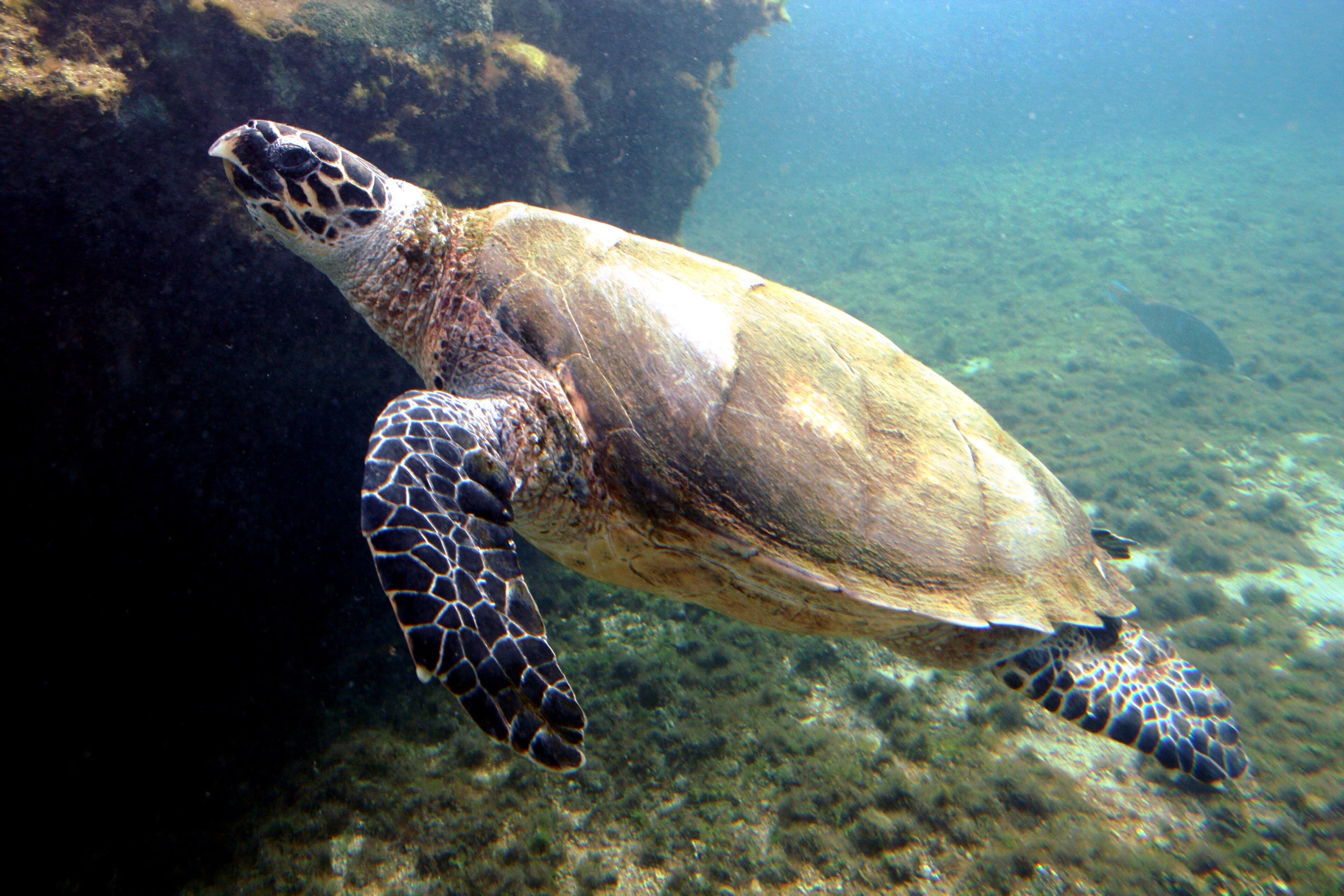
Hawksbill turtles are excellent swimmers and spend almost their entire lives in the ocean. Their front flippers work like wings, 'flying' through the water. They can dive to reach coral reefs, which are their favourite hunting ground. Their narrow beaks are perfect for reaching into cracks in coral to pull out sponges - their main food.
Female hawksbill turtles do something remarkable: they return to the same beach where they were born to lay their own eggs. They may travel thousands of kilometres across the ocean, but somehow they find their way back. Scientists think they use the Earth's magnetic field like a compass.
A female turtle comes ashore at night and digs a deep hole in the sand with her back flippers. She lays around 100 to 150 eggs, covers them with sand, and then heads back to the sea. About two months later, tiny hatchlings dig their way up through the sand and scuttle towards the water - usually under the cover of darkness.
Hawksbill turtles are classed as critically endangered, which means there are worryingly few of them left in the world. Bahrain, like many countries, works hard to protect nesting beaches and keep turtles safe. Researchers and volunteers monitor nests and make sure hatchlings have the best chance of reaching the sea.