
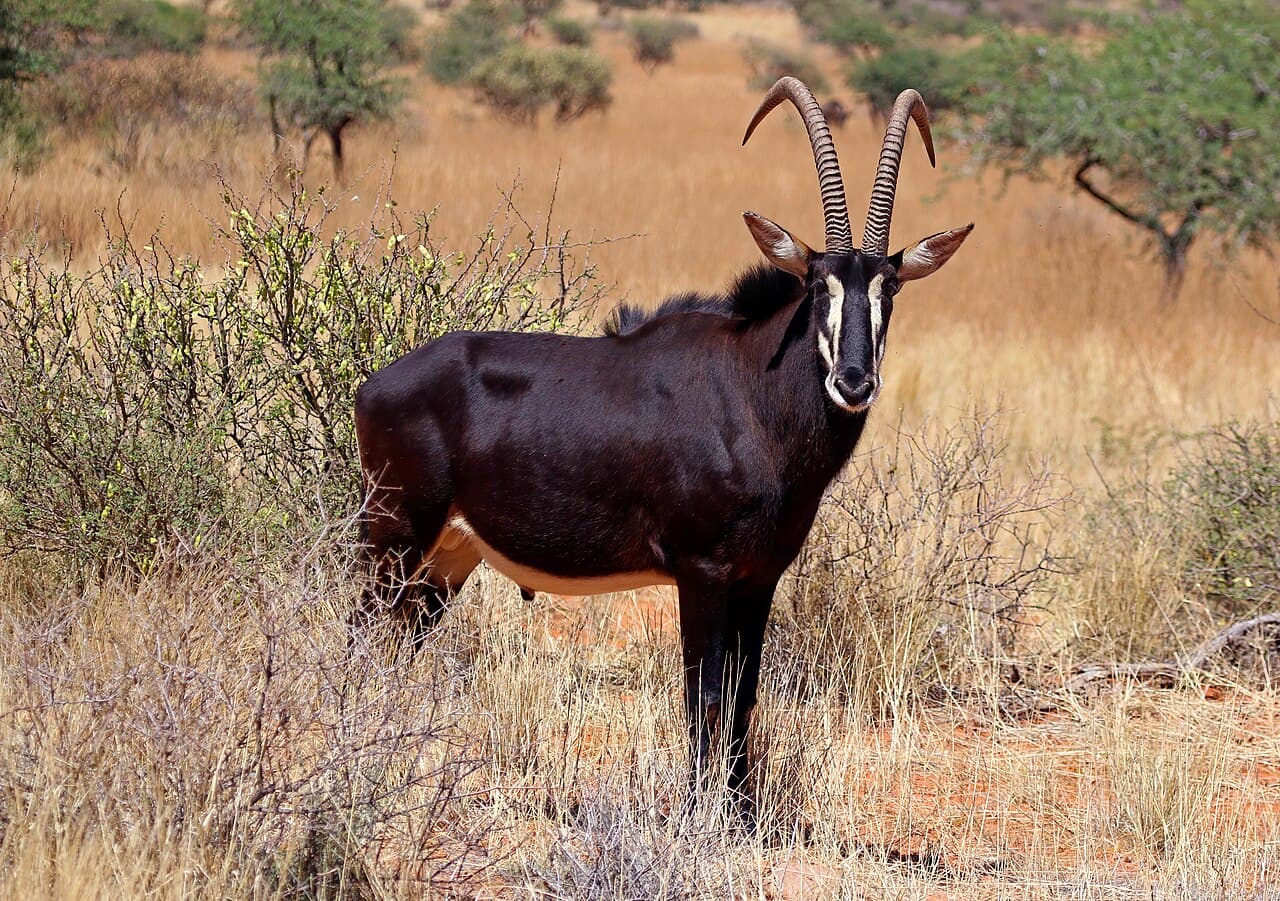
Antelopes are herbivores - they eat only plants, grasses and leaves. Because they cannot fight off large predators with teeth or claws, speed is their best defence. Many antelopes can run at 80 kilometres per hour for short bursts. They also leap high in the air - a movement called 'pronking' or 'stotting' - which may be a way of showing predators they are fit, healthy and not easy to catch.
The kob is one of the most common antelopes in Burkina Faso's parks. It is a medium-sized, reddish-brown animal with lyre-shaped horns. Kobs gather in large herds on open grassland near water, which makes Arli a perfect home for them. The horns are found only on the males, and they use them when competing with other males.
The roan antelope is much larger - one of the biggest antelopes in Africa. It has a horse-like neck, black-and-white markings on its face, and swept-back horns. Despite its size, it is shy and tends to live in small groups in thicker bush areas. The waterbuck, as its name suggests, is never found far from a river or lake.
The W National Park, which covers parts of Burkina Faso, Benin and Niger, is a UNESCO World Heritage Site. This protected area is one of the last places in West Africa where large herds of animals can still move freely across the landscape, following ancient routes between water sources and grazing grounds.