
Classroom lesson · Festival · 🇨🇾 Cyprus

Limassol Carnival

Two weeks of costumes, music, and joyful parades

Photo · Wikimedia Commons

What is it?

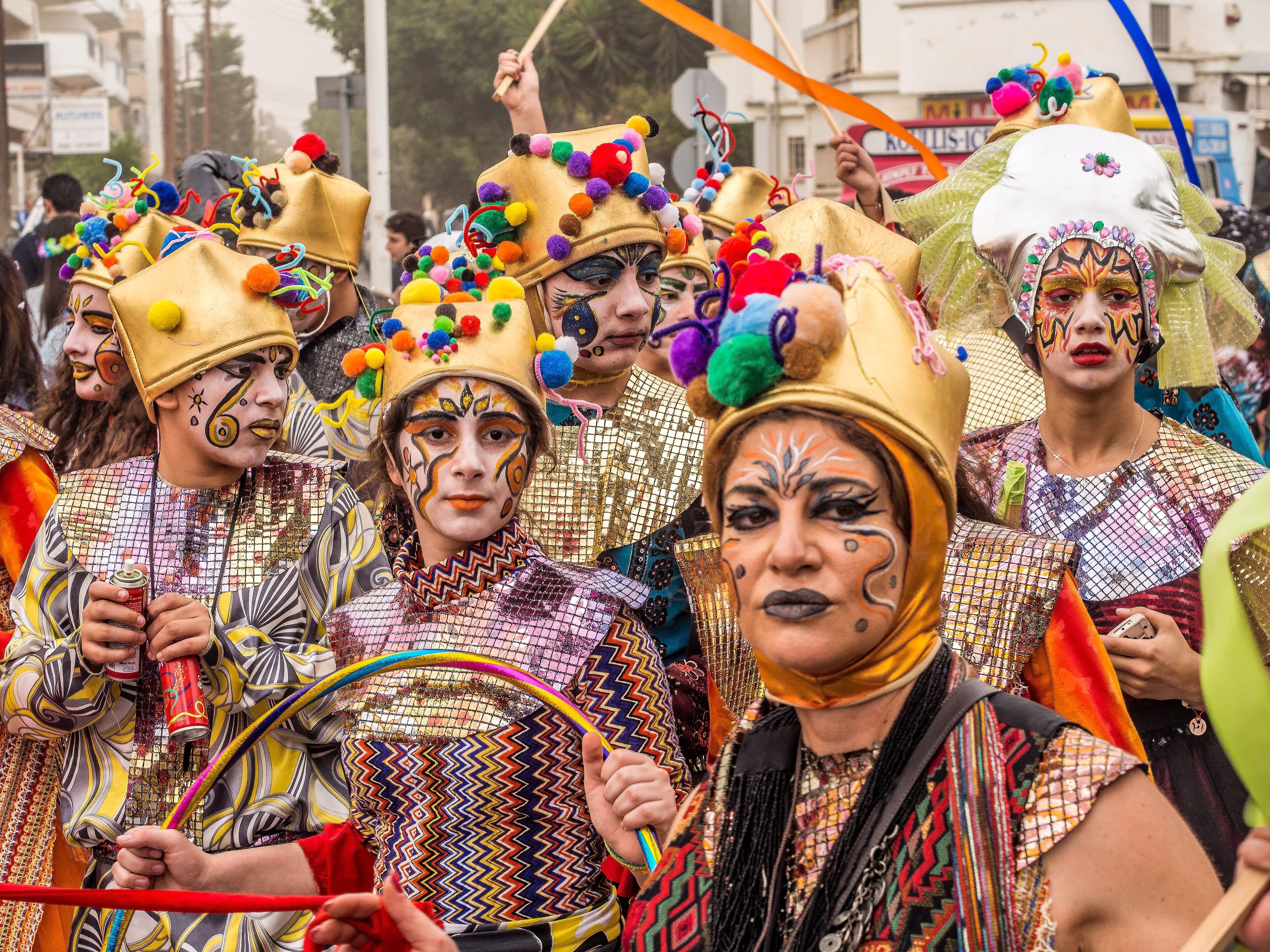
Every February or early March, the city of Limassol transforms into a giant outdoor party for its famous carnival — one of the biggest and most exciting in the eastern Mediterranean. For nearly two weeks, the streets fill with costumed parades, music, dancing, and laughter. Children and adults alike dress up in spectacular outfits and join the celebrations.

Tell me more

The carnival begins with the arrival of the King Carnival, a giant parade float carrying a cheerful carnival king character. From that moment, celebrations spread across the city. Street musicians play, costume shops run out of outfits, and the smell of sweet fried pastries called lokmades drifts through the air from every direction.

The highlight is the Grand Carnival Parade on the last Saturday before the quieter period of Lent begins. This parade can stretch for several kilometres and features floats, marching bands, dance groups, and thousands of costumed participants. Spectators line the streets holding bags to catch the sweets and trinkets thrown from the floats.

Children's costume competitions are an important part of the Limassol Carnival. Young participants dress as everything from superheroes to historical figures to fantastical creatures. Schools often organise group costumes so classes arrive together in matching or themed outfits. The creativity and colour on display is extraordinary.

In the classroom

Walk your class through this in 15 minutes.

Talk together

Discussion prompts

  1. 01Carnivals are a tradition in many countries around the world — in Brazil, the Caribbean, Italy, and Cyprus. Why do you think the idea of dressing up and parading spread so widely?
  2. 02If you were designing a carnival float, what story or theme would it tell?
  3. 03How does wearing a costume change the way you feel and behave?
Try this

Classroom activity

Design a carnival costume for yourself. It can be based on a character from a story, an animal, a historical figure, or a completely invented creature. Draw the full costume from head to toe and label every part. Then write three sentences explaining the character you would be and how you would move and act during the parade.