
Classroom lesson ยท Paphos Mosaics ยท ๐Ÿ‡จ๐Ÿ‡พ Cyprus

Paphos Mosaics

Stunning Roman picture-floors under the open sky

Photo ยท Wikimedia Commons

What is it?

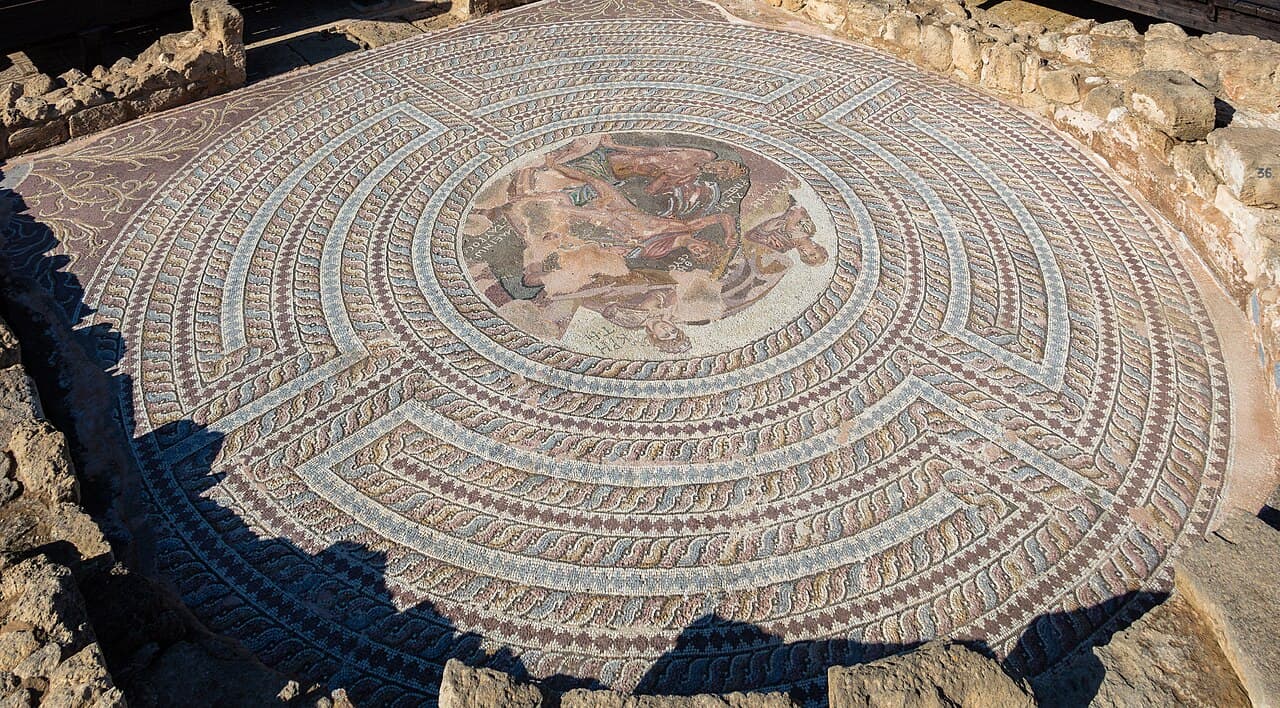
Under the ground in the seaside city of Paphos, archaeologists discovered some of the most beautiful mosaic floors in the world. These floors were made by Roman artists nearly 2,000 years ago using millions of tiny coloured tiles. They show scenes from myths and stories, and they are so incredible that UNESCO added them to the World Heritage List.

Tell me more

A mosaic is a picture made by pressing tiny pieces of stone, glass, or pottery โ€” called tesserae โ€” into soft plaster. Roman artists were extraordinarily skilled at making the tiny tiles blend together into detailed pictures of people, animals, and swirling patterns. The craftspeople who made the Paphos mosaics were among the best in the whole Roman Empire.

The floors were part of grand private homes called villas, where wealthy Romans lived. Imagine having a painting on your floor instead of your wall! The pictures tell stories from Greek and Roman mythology โ€” you can see the god Dionysus riding a leopard, and Narcissus gazing at himself in a pool. Each scene is like a storybook spread across the ground.

Today the mosaics are protected under modern roofed shelters so visitors can walk above them on raised walkways. The site is called the Paphos Archaeological Park. New sections are still being discovered by archaeologists digging carefully with small brushes and tools. There may be many more beautiful floors yet to be found.

In the classroom

Walk your class through this in 15 minutes.

Talk together

Discussion prompts

  1. 01Why do you think wealthy Romans chose to put artwork on their floors rather than just leaving them plain?
  2. 02If you were going to make a mosaic of your own life story, what three scenes would you choose?
  3. 03How do things like mosaics help us understand what life was like 2,000 years ago?
Try this

Classroom activity

Design your own mosaic panel on squared paper. Choose a scene โ€” it could be an animal, a favourite story, or your school. Colour each square as if it were a tile. Try to use at least five colours and think about how the colours blend at the edges.