
Classroom lesson · Wildlife · 🇩🇲 Dominica

Mountain Chicken Frog

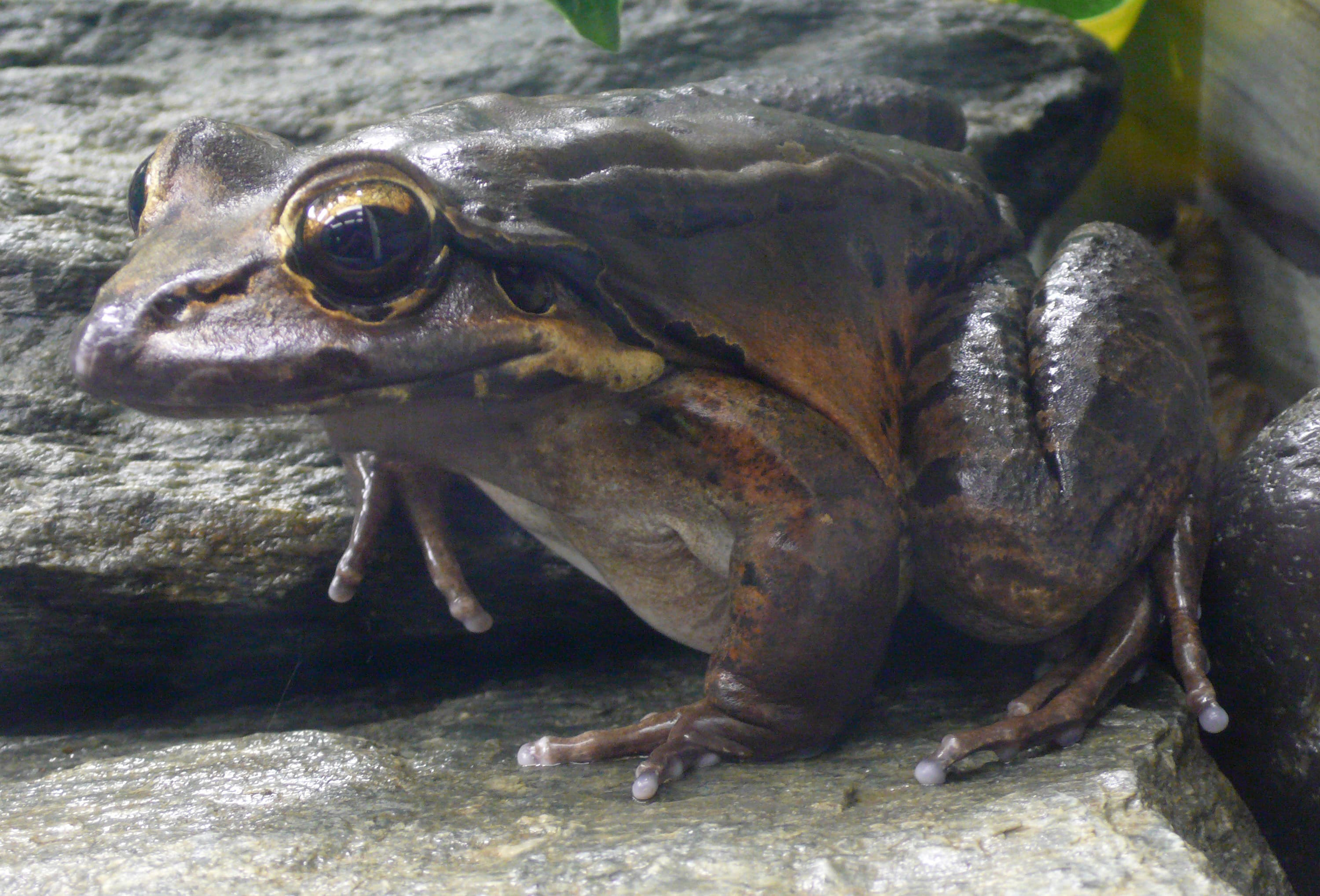
A giant frog — and one of the biggest in the world

Photo · Wikimedia Commons

What is it?

The mountain chicken is not a chicken at all — it is a giant frog! It is one of the largest frogs in the world, and it lives only in Dominica and the neighbouring island of Montserrat. It gets its funny name because people once cooked its legs for food and said they tasted just like chicken.

Tell me more

An adult mountain chicken frog can grow to about 21 centimetres long — roughly the length of your foot — and weigh up to 900 grams, which is almost as heavy as a bag of sugar. With long, powerful back legs, it is an excellent jumper. Its skin is a mottled brown, which helps it blend in with dead leaves and muddy ground.

Mountain chickens are unusual frogs because instead of laying eggs in water, the female lays her eggs in a burrow in damp soil. She stays with the eggs, and when the tadpoles hatch, she feeds them with unfertilised eggs she produces especially for them — like bringing them snacks. The father guards the burrow entrance the whole time.

Mountain chicken frogs are now very rare and protected by law in Dominica. Scientists work hard to raise them safely and study how to help wild populations grow. Because Dominica is one of only two places on Earth where they live, Dominicans feel a special responsibility to protect them.

In the classroom

Walk your class through this in 15 minutes.

Talk together

Discussion prompts

  1. 01The mountain chicken is not a chicken at all. Why do you think an animal might get a misleading name like that?
  2. 02What makes the way mountain chicken frogs care for their young unusual compared to other frogs you know about?
  3. 03If you were a scientist trying to help a rare frog, what is the first thing you would want to find out?
Try this

Classroom activity

Write a field notebook entry as if you are a scientist who has just discovered a mountain chicken frog in the Dominica rainforest. Describe what it looks like, how big it is, where you found it, and what it was doing. Draw a sketch with measurements in the margin.