
Classroom lesson · Wildlife · 🇪🇨 Ecuador

Blue-Footed Booby

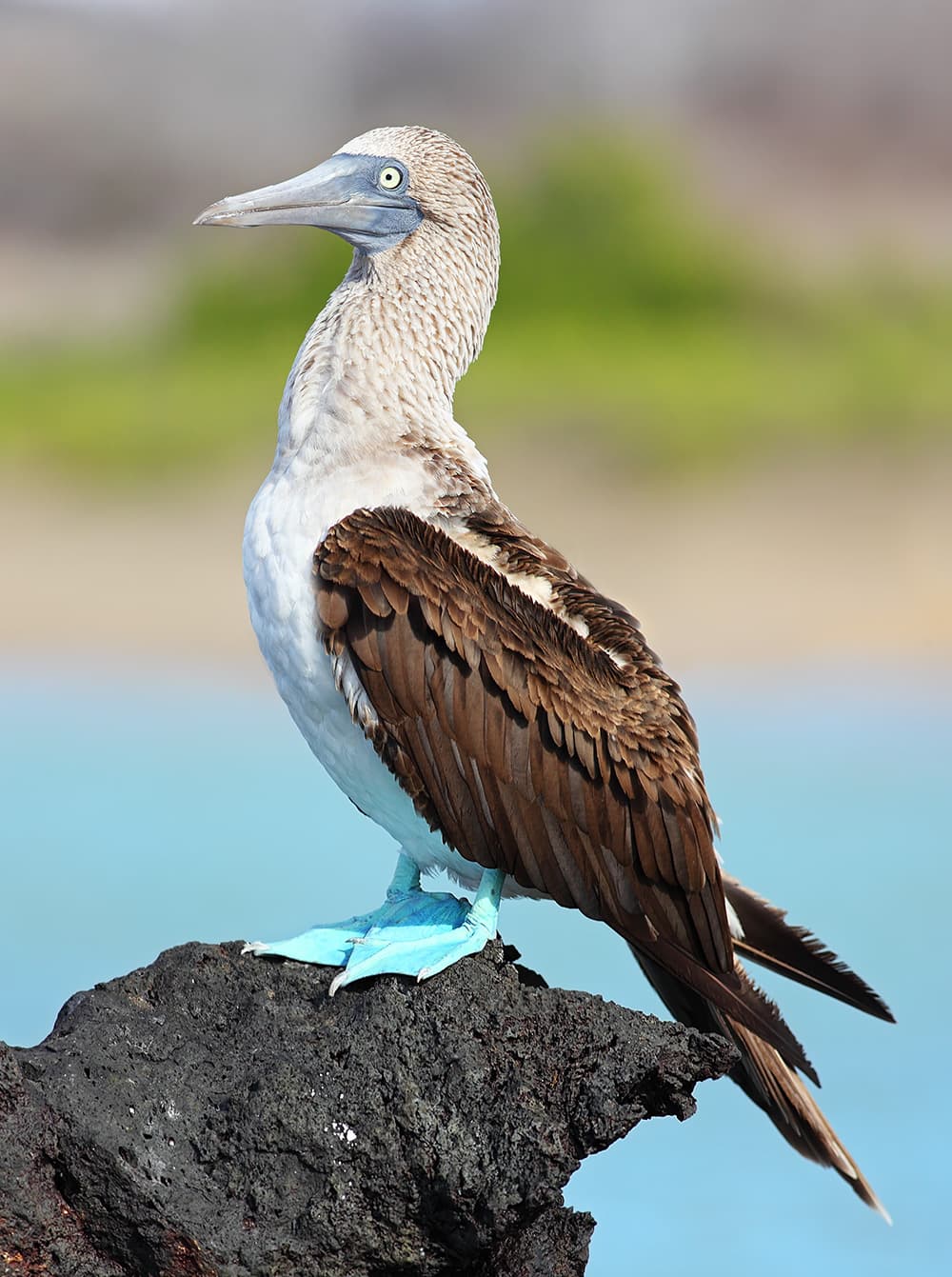
The Galápagos seabird famous for its brilliant turquoise feet

Photo · Wikimedia Commons

What is it?

The blue-footed booby is a seabird that lives around the Galápagos Islands and along the western coast of the Americas. It is instantly recognisable because of its brilliant turquoise-blue feet, which look almost too bright to be real. These remarkable birds are famous for a very funny courtship dance — when a male wants to impress a female, he high-steps around, lifting each vivid blue foot into the air as if showing off his best shoes.

Tell me more

Blue-footed boobies are brilliant fishers. They fly above the sea, spot fish near the surface, and then fold their wings back and plunge into the water like an arrow — sometimes from a height of 30 metres — hitting the water at up to 100 km per hour. A special arrangement of air sacs under the skin cushions the impact so they do not get hurt.

The blue colour of their feet comes from the fish they eat, which contain a pigment called carotenoid. The brighter and bluer the feet, the healthier the bird — which is why females prefer males with the brightest feet when choosing a mate. The feet are a window into how healthy a bird is.

Both parents take turns keeping the eggs warm — not by sitting on them, but by covering them with their big, warm feet! Because the colour of their feet fades when they are unwell or not eating well, their feet also act as a health signal to their partner. If the feet start to fade, it might mean one bird needs to eat more fish.

Boobies nest on the ground among rocks. Chicks hatch covered in fluffy white down and grow quickly, begging noisily for food. The word 'booby' comes from the Spanish 'bobo', meaning silly or clown — early sailors found the birds' fearlessness around humans rather ridiculous and gave them the nickname that stuck.

In the classroom

Walk your class through this in 15 minutes.

Talk together

Discussion prompts

  1. 01The booby's blue feet show how healthy it is. Can you think of other animals (or things in nature) where colour is a signal of health or strength?
  2. 02Boobies dive at 100 km per hour. What body features help them survive such a fast impact with water?
  3. 03Sailors called them 'boobies' because they seemed silly to be unafraid of humans. Who do you think was wiser — the bird or the sailor?
Try this

Classroom activity

Design your own imaginary seabird. Give it a special feature (like the blue feet) that tells other birds something important about it. Draw your bird, label the special feature, and write two sentences explaining what the feature communicates and why it is useful.