
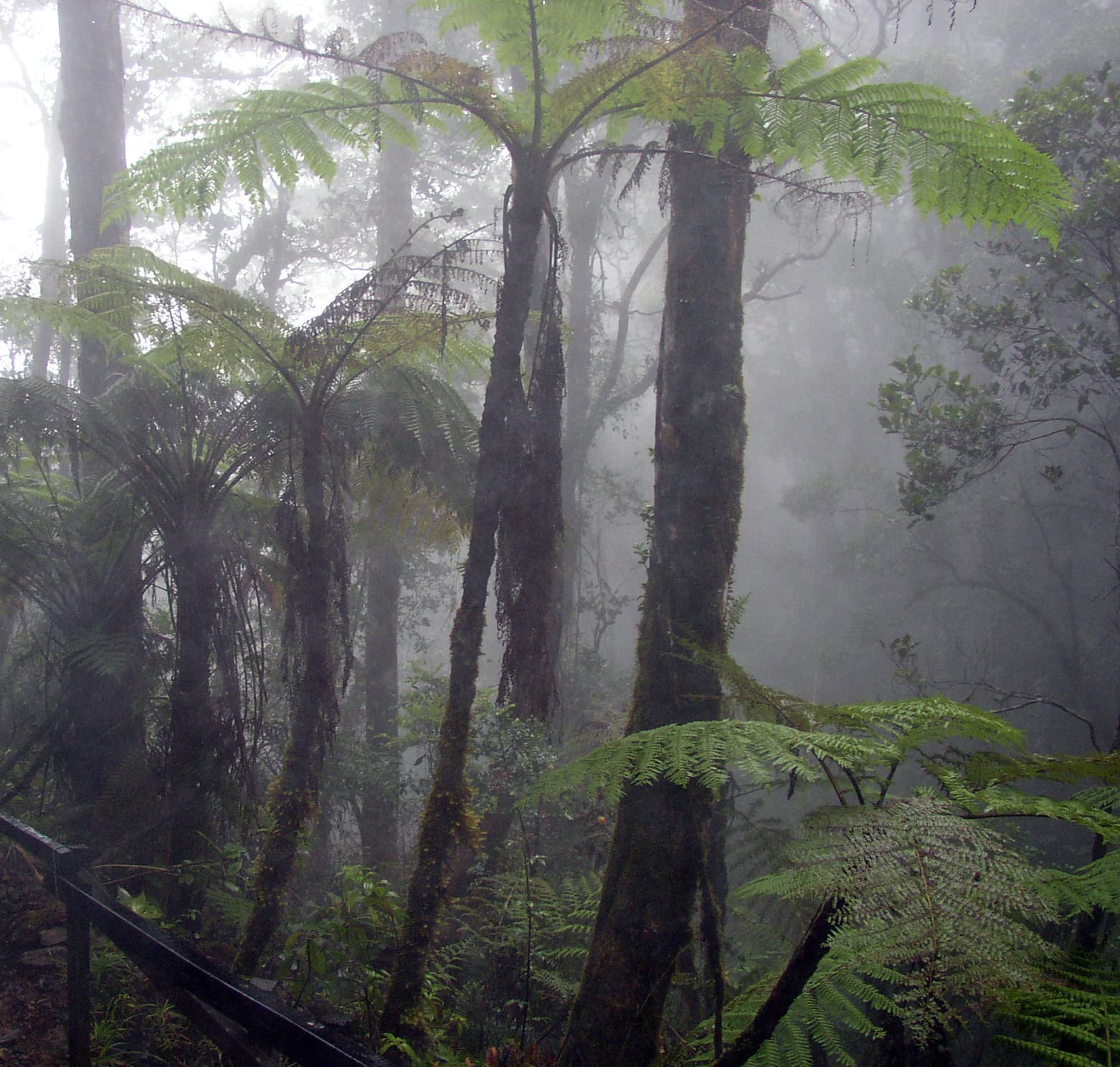
Cloud forests form at altitudes of roughly 1,500 to 3,000 metres - that is between about one and a half and three kilometres above sea level. At these heights, warm moist air rises from the coast or the Amazon and cools down, turning into clouds exactly where the forest grows. This gives the trees a constant supply of water, even without heavy rain.
Because of all this moisture, cloud forests are incredibly lush. Tree trunks, branches and even leaves are covered in thick carpets of moss, ferns and bromeliads (plants that collect water in little cups). Orchids of every colour hang from branches. Ecuador alone has over 4,000 species of orchid - more than any other country.
Cloud forests are home to some remarkable animals. The resplendent quetzal - a bird with shimmering green and red feathers and a very long tail - lives in cloud forests. So do spectacled bears, glass frogs (whose skin is so thin you can see their hearts beating), and many kinds of hummingbird.
These forests also play an important role in providing fresh water. The trees and moss absorb water from the clouds and slowly release it into streams and rivers that flow down to villages and farms below. Protecting cloud forests helps make sure clean water keeps flowing for the people and animals who depend on it.