
Classroom lesson · Wildlife · 🇪🇨 Ecuador

Galápagos Giant Tortoise

The world's largest tortoise and one of Earth's longest-living animals

Photo · Wikimedia Commons

What is it?

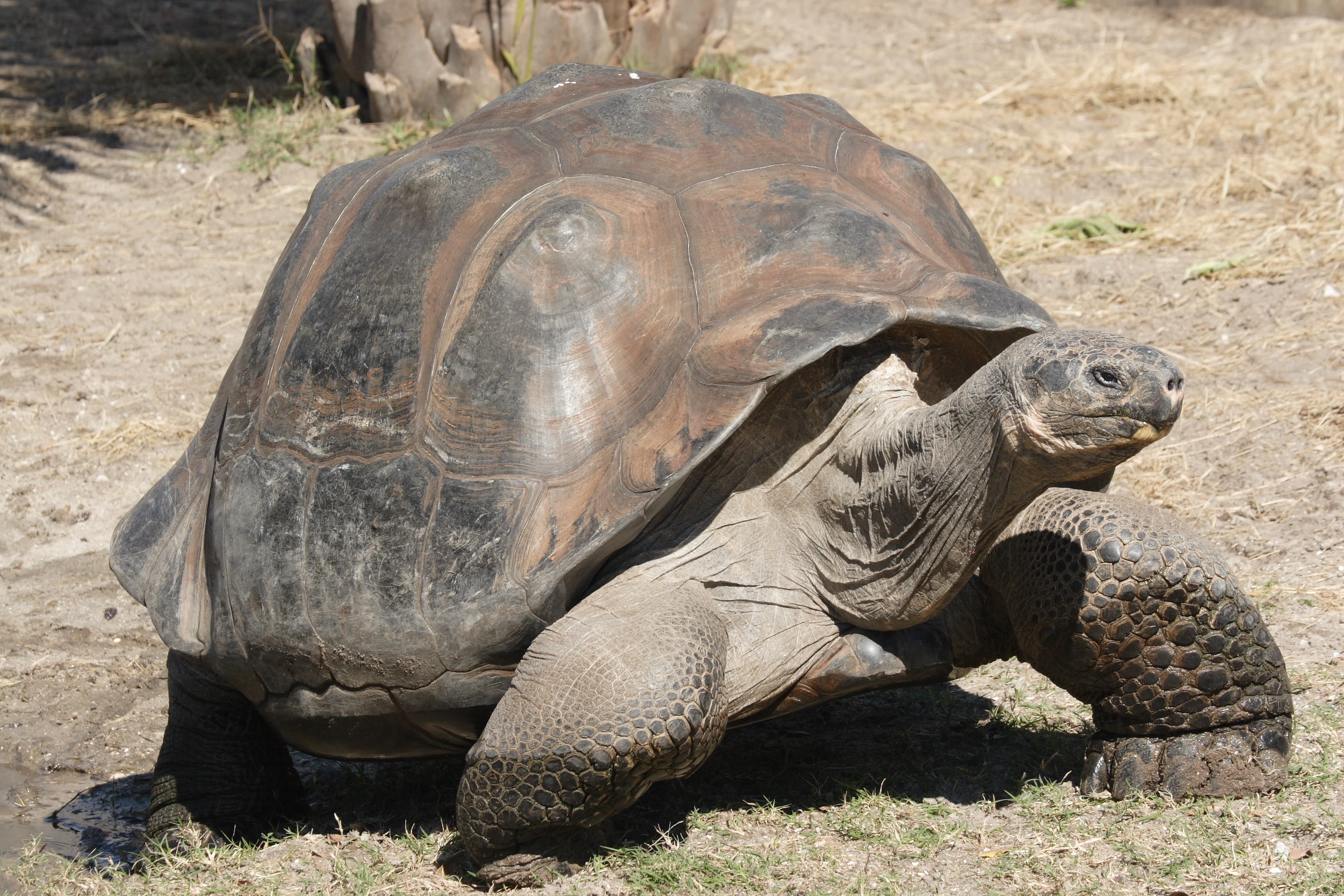
The Galápagos giant tortoise is the largest tortoise in the world. It can weigh as much as 400 kilograms — more than most motorbikes — and its shell can be over a metre long. These incredible animals can live for well over 100 years, and some individuals have been recorded living past 170 years, making them among the longest-lived animals on Earth.

Tell me more

Giant tortoises spend most of their time eating grass, cacti and leaves. They move slowly and steadily across the island, and can go for a very long time without food or fresh water because their bodies are very good at storing both. Sailors in the past even used to take tortoises on ships as a supply of fresh food for long voyages — the tortoises could survive for months without being fed.

Different islands in the Galápagos have tortoises with different shell shapes. Tortoises on islands with tall cacti have long necks and saddle-shaped shells that let them reach up high. Tortoises on islands with plenty of low grass have dome-shaped shells and shorter necks. This is another example of the adaptation Charles Darwin observed on his visit.

Giant tortoises love to wallow in muddy pools and streams. This keeps them cool in the hot island sun and may also help get rid of ticks and other insects that bother them. At night, they tuck their heads and legs inside their shells to stay warm.

The Galápagos tortoise population dropped dangerously low in past centuries due to hunting and the introduction of animals like goats and rats to the islands. Today, a major conservation programme breeds tortoises in captivity and releases young ones back onto the islands. Numbers are now recovering, and Española Island — which once had only 15 tortoises left — now has over 2,000.

In the classroom

Walk your class through this in 15 minutes.

Talk together

Discussion prompts

  1. 01A giant tortoise can live for over 170 years. What events in history might a tortoise born in the 1850s have 'witnessed' during its long life?
  2. 02Tortoises on different islands have different shell shapes. Why do you think the same animal would develop differently on different islands?
  3. 03The tortoise population was rescued by conservation work. What do you think 'conservation' means, and why is it important?
Try this

Classroom activity

Compare the timeline of a giant tortoise's life with a human life. Draw two timelines side by side, each 170 years long. Mark key milestones on the human timeline (starting school, becoming an adult, retiring). On the tortoise timeline, mark when it reaches full size (about 30 years), when it might start laying eggs, and how long it lives. What surprises you most?