
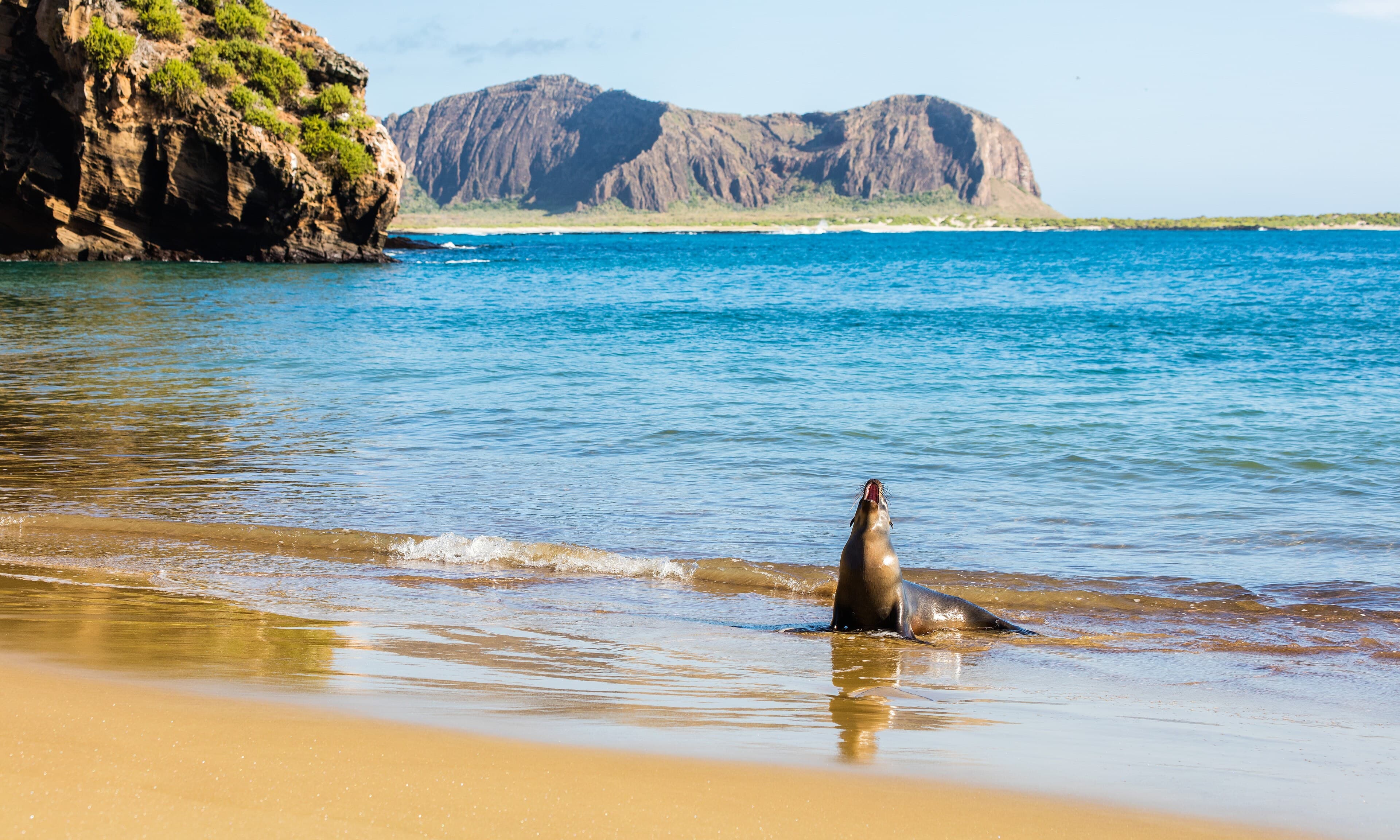
The islands were formed by volcanoes pushing up from the ocean floor over millions of years. Because they are so far from the mainland, animals that arrived there - floating on logs, flying, or swimming - slowly changed over time to suit their new island homes. This is why many Galápagos creatures look different from their relatives anywhere else in the world.
Charles Darwin was a young naturalist - someone who studies living things - when he visited on a ship called HMS Beagle. He noticed that the same type of bird, the finch, had slightly different beak shapes on different islands. Each beak was perfectly shaped for the food available on that island. This helped him figure out the idea of evolution - how living things gradually change and adapt over long periods of time.
Today the islands are a protected national park. Scientists from around the world come to study the unique wildlife. There are no large land predators, which is why the animals are famously unafraid of humans - you can walk very close to a giant tortoise or a sea lion and it simply carries on with its day.
The Galápagos sea is rich with sea turtles, hammerhead sharks, colourful fish and playful sea lions. Above the water, blue-footed boobies and frigatebirds swoop through the sky. It is one of the best places on the planet to see wildlife behaving exactly as it would if people were not there.