
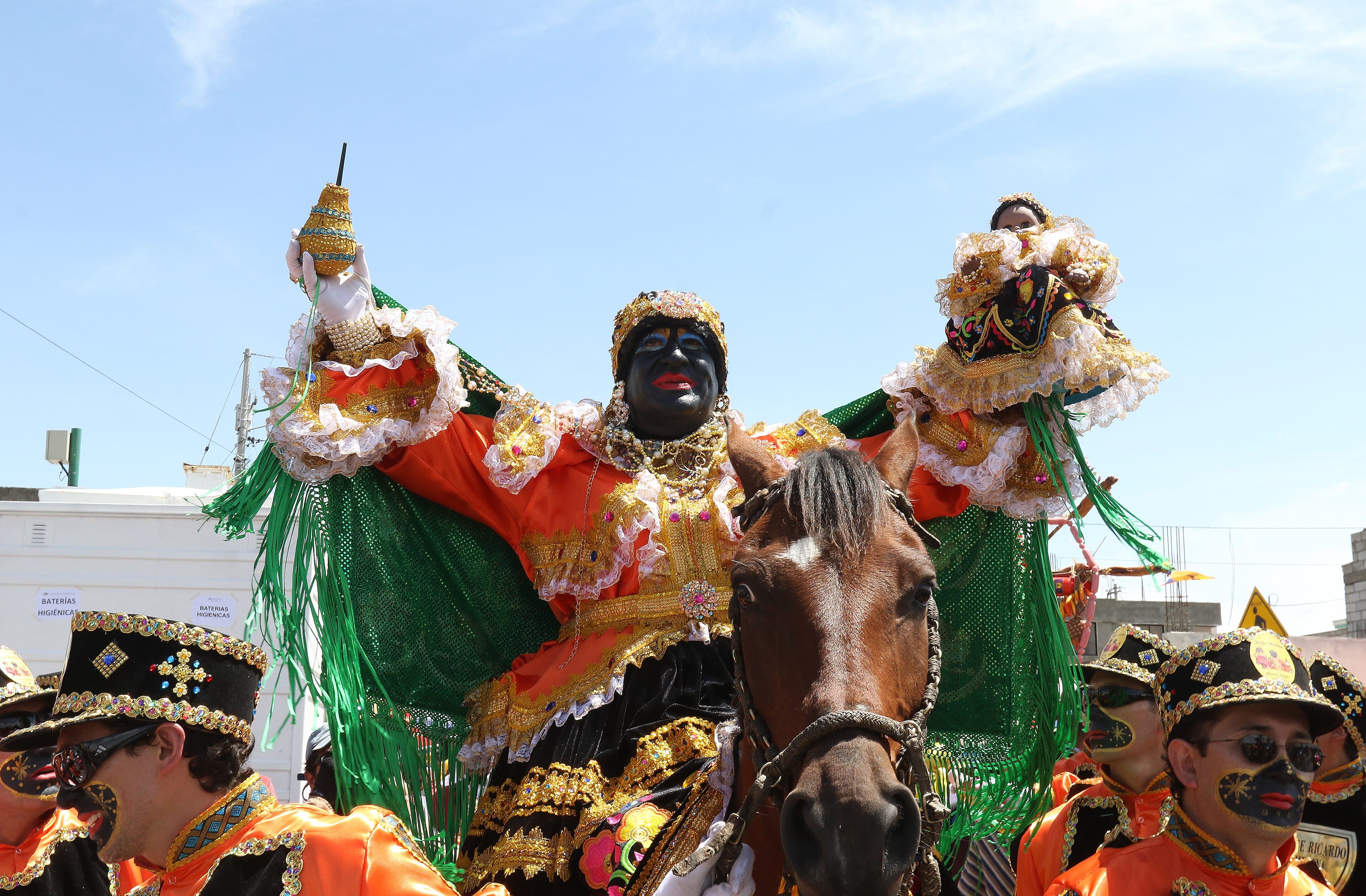
The origins of the Mama Negra parade are a joyful mix of different cultural strands. Some historians connect it to celebrations of the nearby Cotopaxi volcano - local tradition says that past volcanic eruptions were halted thanks to the intercession of a religious image, and the celebration gives thanks for the safety of the city. Others see in it echoes of African traditions brought by enslaved people centuries ago. Today it is simply a proud, joyful celebration of Latacunga's identity.
The parade features dozens of characters, each with their own elaborate costume and role. Alongside the Mama Negra herself, there are 'yachaks' (a type of wise person associated with Andean spiritual traditions) dressed in animal skins, 'loeros' dressed in colourful rags carrying animals, 'ashangueros' carrying enormous decorated wooden frames on their backs, and 'champuceros' offering drinks to the crowd. Every character is performed with great energy and theatrical flair.
Music fills the streets during the parade. Brass bands, traditional Andean wind instruments and percussion create a constant, joyful noise as the procession moves through the city. Onlookers line the streets, laughing as the Mama Negra sprays rose water from the syringe, and marvelling at the colours and energy of the different characters.
The parade is a point of enormous local pride. Latacunga's residents prepare for months, making costumes, rehearsing, and organising. The festival has been recognised as an important part of Ecuador's intangible cultural heritage - a living tradition that tells the story of a city and its people through costume, dance and celebration.