
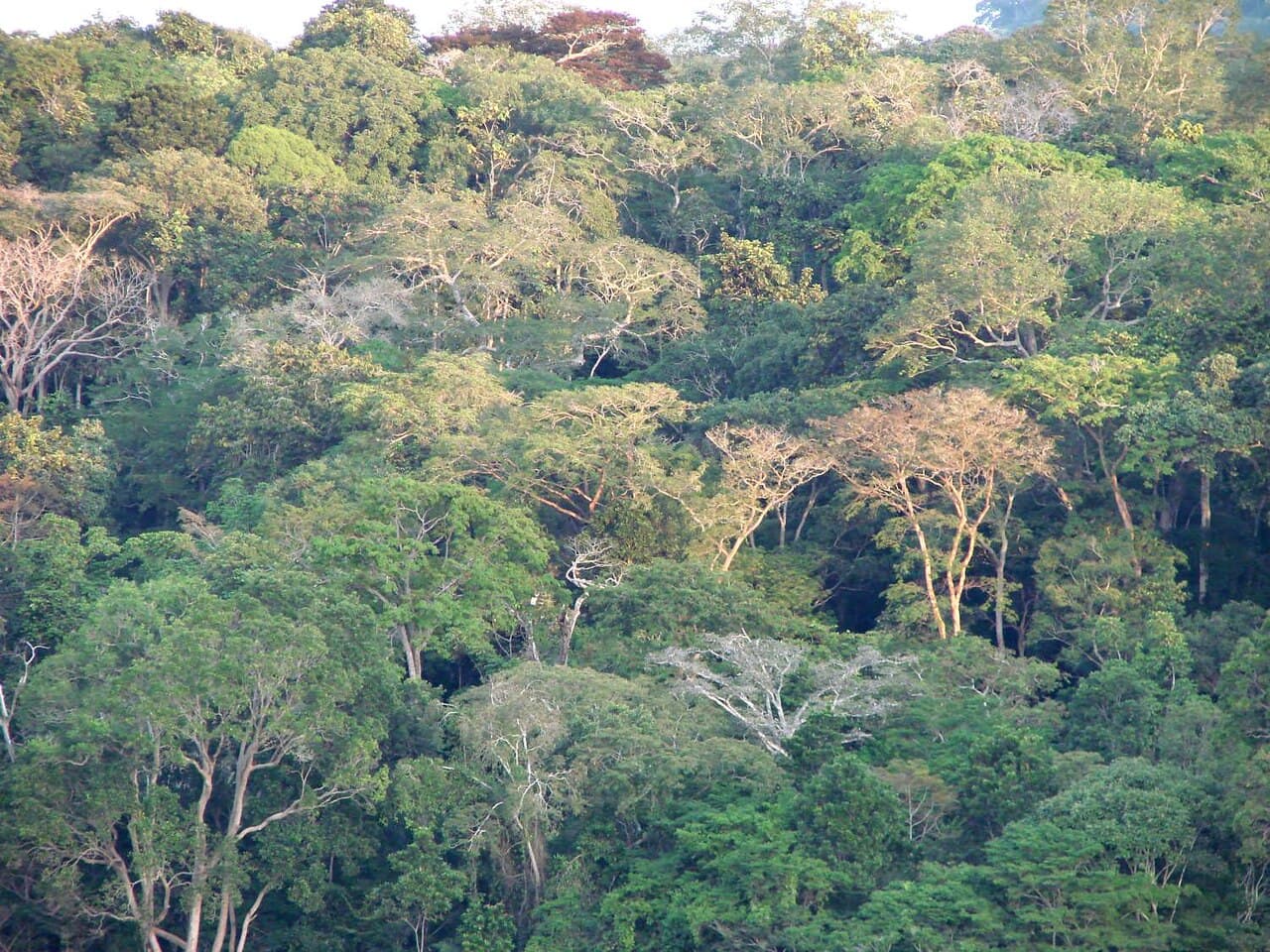
Río Muni shares its borders with Cameroon to the north and Gabon to the south and east. Most of the region is draped in thick rainforest where the trees can grow 40 to 50 metres tall - as tall as a fifteen-storey building. The treetops form a solid green ceiling called the canopy, and beneath it is a quieter, shadier world where smaller plants and animals live.
Because the forest has been largely undisturbed for a very long time, it holds an astonishing variety of life. Scientists have recorded more than 3,000 plant species and hundreds of bird species in Río Muni. Many of the mammals living here - such as forest elephants and western lowland gorillas - are difficult to find elsewhere in such healthy numbers.
Several rivers wind through the forest, including the Mbini (also called the Río Benito) and the Muni estuary, which is a wide, calm stretch of water where the river meets the sea. The Muni estuary is surrounded by mangrove forests - trees that grow with their roots in salty water - which act as nurseries for fish and nesting places for birds.
The people of Río Muni have lived in and around this forest for thousands of years. The Fang, Bubi, Ndowe, and other peoples developed deep knowledge of the forest - which plants heal, which animals to watch for the weather changing, and how to move quietly through the trees. Much of this knowledge is still passed down from grandparents to children today.