
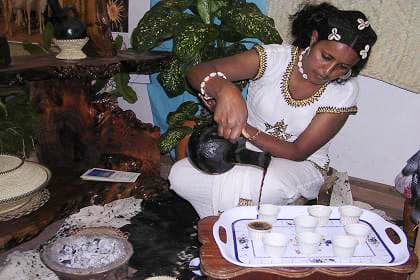
The ceremony begins with the host spreading fresh green grass and flowers on the floor - a symbol of life and welcome. Then the raw coffee beans are washed and placed in a flat iron pan over hot coals. The host stirs them constantly as they roast, filling the room with a rich, toasty smell. Guests sit in a circle on low seats, chatting, as they watch.
Once the beans are roasted, they are ground in a wooden mortar and pestle. The ground coffee goes into the jebena, a clay pot shaped a bit like a round-bottomed flask with a long spout, and water is poured in. The jebena sits on the coals and the coffee brews slowly. The host pours it into tiny cups through a grass filter that catches the grounds.
Coffee is served three times in a ceremony: the first round is called abol, the second tona, and the third bereka. Each round is slightly weaker than the last. Guests are expected to stay for all three - leaving after just one cup can seem rude, because the ceremony is about spending time together, not just the drink. Sweet popcorn or bread is often served alongside.
Eritrea - and the wider Horn of Africa - is the homeland of coffee. Wild coffee plants still grow in highland forests across the region, and it is believed that people first began drinking coffee here before it spread around the world. So when you drink coffee anywhere on the planet, you are connected to this part of Africa.