
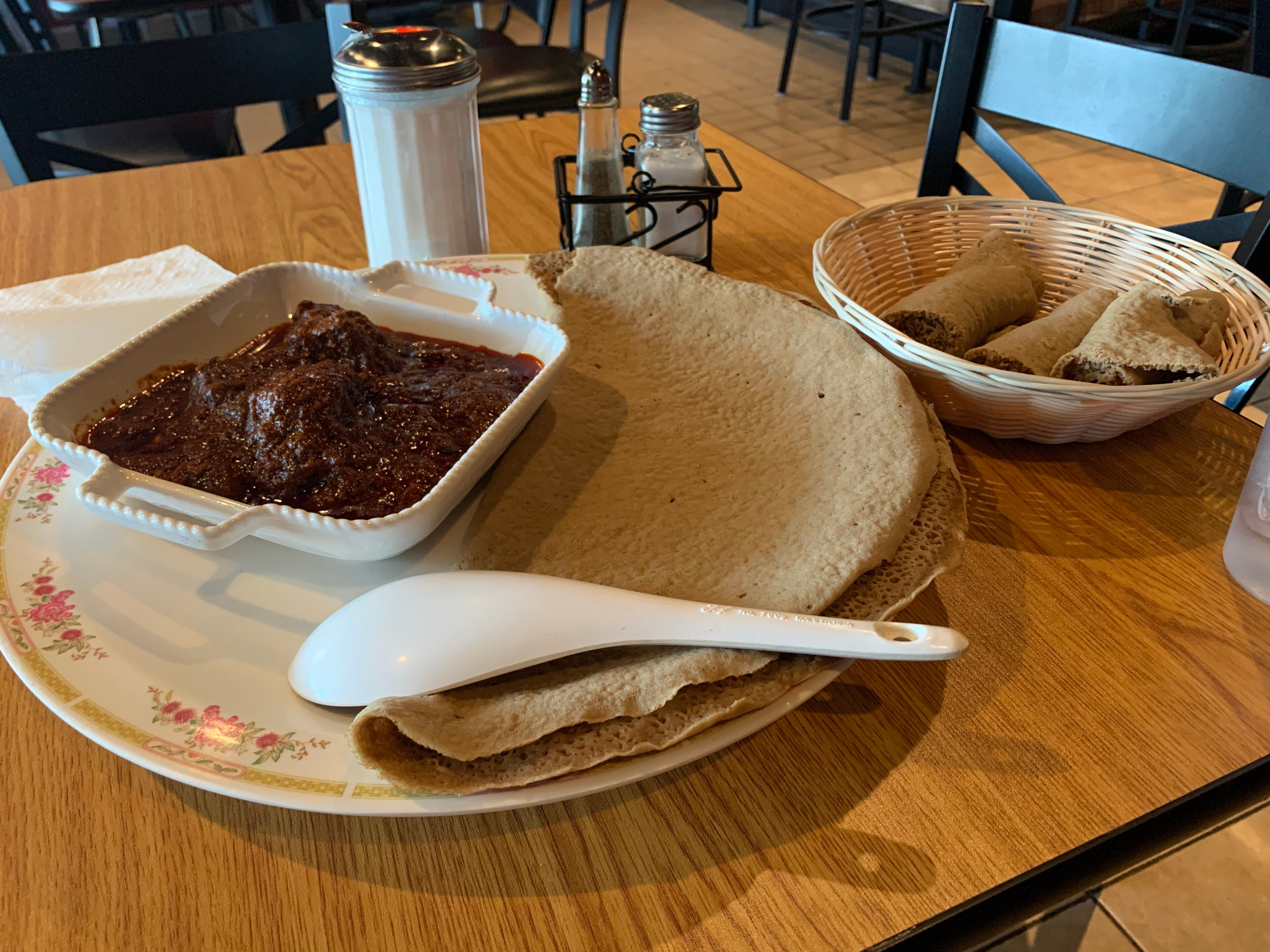
Teff is a remarkable grain. The seeds are so tiny that a teaspoon holds thousands of them, yet it is packed with iron, calcium and protein. Teff flour is mixed with water and left to ferment for a couple of days, which gives injera its slightly sour, bubbly taste and its unique spongy texture - full of tiny holes that soak up stew perfectly. Injera is naturally gluten-friendly compared to wheat bread.
Zigni stew gets its deep red colour and fiery warmth from berbere, a blend of chilli, ginger, garlic, fenugreek, cardamom and other spices. Every family has its own slightly different recipe for berbere, passed down through generations. Making a big batch of zigni fills the kitchen with an incredible aroma that people often say is the smell of home.
In Eritrea, eating is very much a shared experience. A single large injera is placed in the centre of the table and everyone eats from the same one. Sharing food this way is a sign of friendship and trust - in Eritrean culture, feeding someone with your own hand is one of the warmest gestures you can make. Meals are slow, social and full of conversation.
Alongside zigni, a typical Eritrean spread might include lentil stew, a dish of fresh salad, spiced butter called tesmi, and various vegetable dishes. On fasting days - which are frequent in the Eritrean Orthodox calendar - meat is skipped and the table fills with wonderful plant-based dishes instead.