
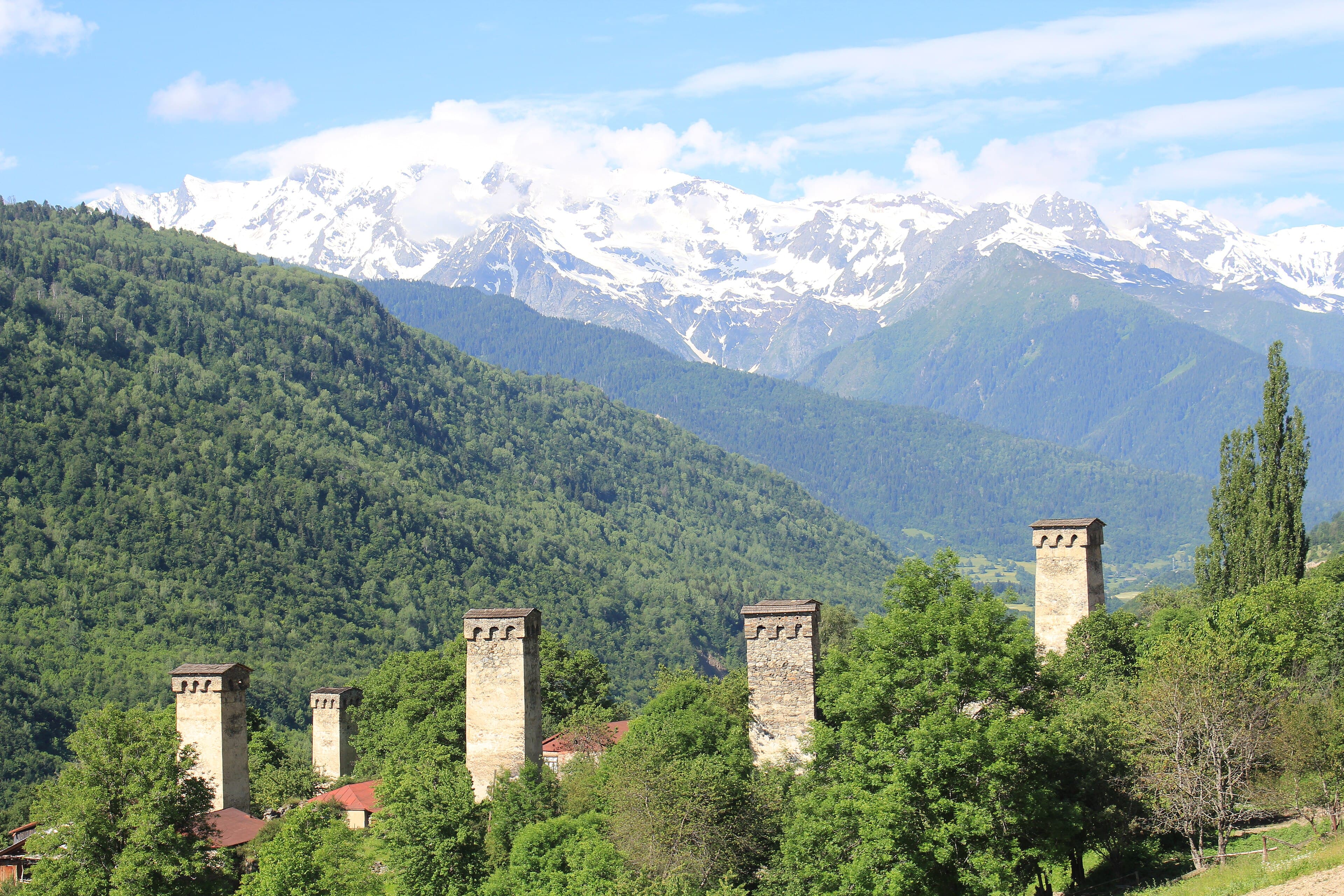
Each village in Svaneti has several towers clustered together, sometimes dozens in a small area. The towers can be 20 to 28 metres tall - that is about the height of a nine-storey building. They were built so strongly that they have survived earthquakes, deep snow, and fierce winds for centuries.
The towers were clever buildings. The ground floor was used to keep animals safe during cold winters. Higher floors were living spaces for the family. The very top was a lookout point where people could watch for danger and signal to the next village using fires. Some towers even had special chutes for dropping stones on unwanted visitors.
Svaneti sits so high in the mountains - more than 2,000 metres above sea level - that it is completely cut off by snow for several months every winter. Until a road was finally built in the 1930s, the only way in or out was over mountain passes on foot or horseback. Because of this, the Svan people kept their ancient language and customs almost completely unchanged.
Today Svaneti is a UNESCO World Heritage Site, meaning the whole world has agreed it is a special place worth protecting. Hikers come from all over the globe to walk between the villages on trails that pass glaciers, wildflower meadows, and crystal-clear rivers. The most famous village, Mestia, even has a small airport in the mountains.