
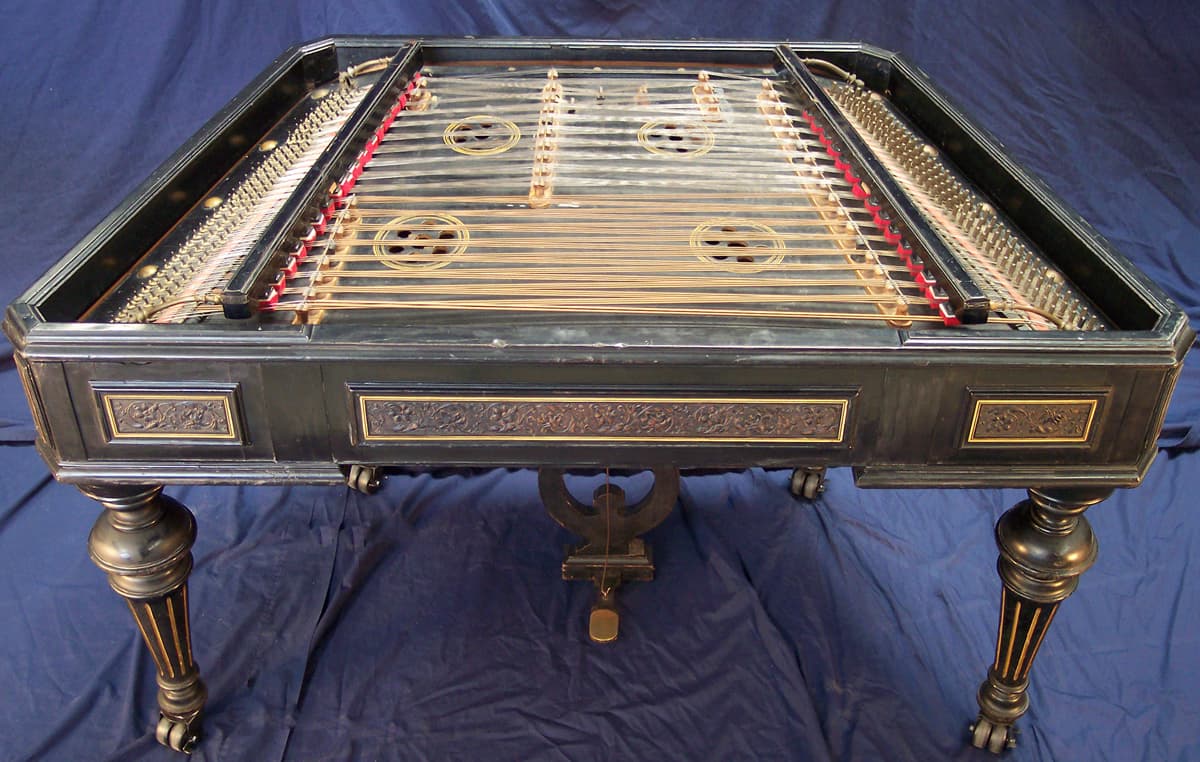
The cimbalom looks a little like a very flat grand piano laid on legs, but it works quite differently. Instead of keys that press felt hammers onto strings, a cimbalom player holds two small hammers themselves and strikes the strings directly by hand. This means the player can control not just which notes they play, but exactly how hard and at what angle they hit each string - giving them enormous expressive freedom.
Hungarian folk ensembles often include a cimbalom, a violin (or several violins), a viola, a double bass and sometimes a clarinet. The cimbalom provides a shimmering, rapid middle layer of sound underneath the singing melody of the violins. Together they create the lively, heartfelt sound that is recognised as Hungarian folk music.
The great Hungarian composer Béla Bartók spent years travelling through Hungarian and Romanian villages in the early 1900s, recording folk melodies on one of the first portable recording machines ever made. He wanted to preserve the music before it was forgotten. He then used those folk rhythms and melodies in his own concert compositions, making Hungarian folk music famous around the world.
Hungarian folk music has a very distinctive rhythm - it often uses unusual beat patterns that feel slightly off-balance to ears used to pop music, but that give the music an infectious, energetic feeling. When you hear a csárdás played on violin and cimbalom at full speed, it is almost impossible to keep your feet still.