
Hungary sits above a lot of volcanic rock, and rainwater that trickles down into it gets heated by the hot rock deep underground. It then rises back up through cracks in the earth as warm spring water. Scientists call this geothermal energy - heat that comes straight from the ground.
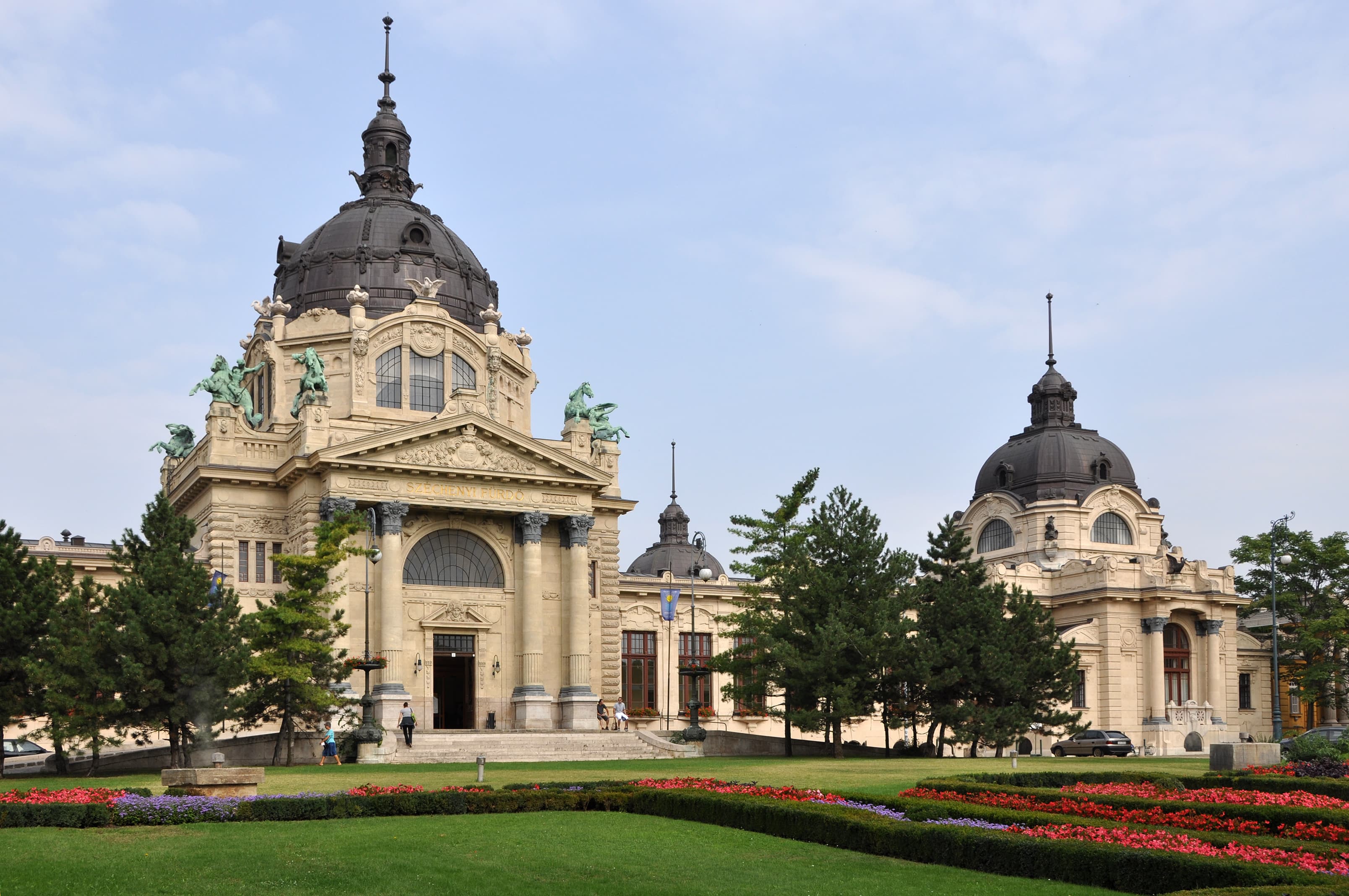
Széchenyi Baths opened in 1913 and looks like a grand palace rather than a swimming pool. It has 18 pools of different sizes and temperatures. Some are for swimming laps; others are shallow and warm, almost like a giant outdoor bathtub. In winter the steam from the hot water floats up into the cold air in big white clouds.
One of the most famous sights at Széchenyi is elderly men sitting in the warm outdoor pool playing chess on floating boards, even in cold weather. The chessboards float on little platforms between the players. It has become a symbol of how relaxed and playful Hungarian bath culture is.
Budapest has more than 100 thermal springs and 80 public baths. The city is sometimes called the 'City of Spas'. For Hungarians, going to a bath is not just about getting clean - it is a place to relax, meet friends and feel good.