
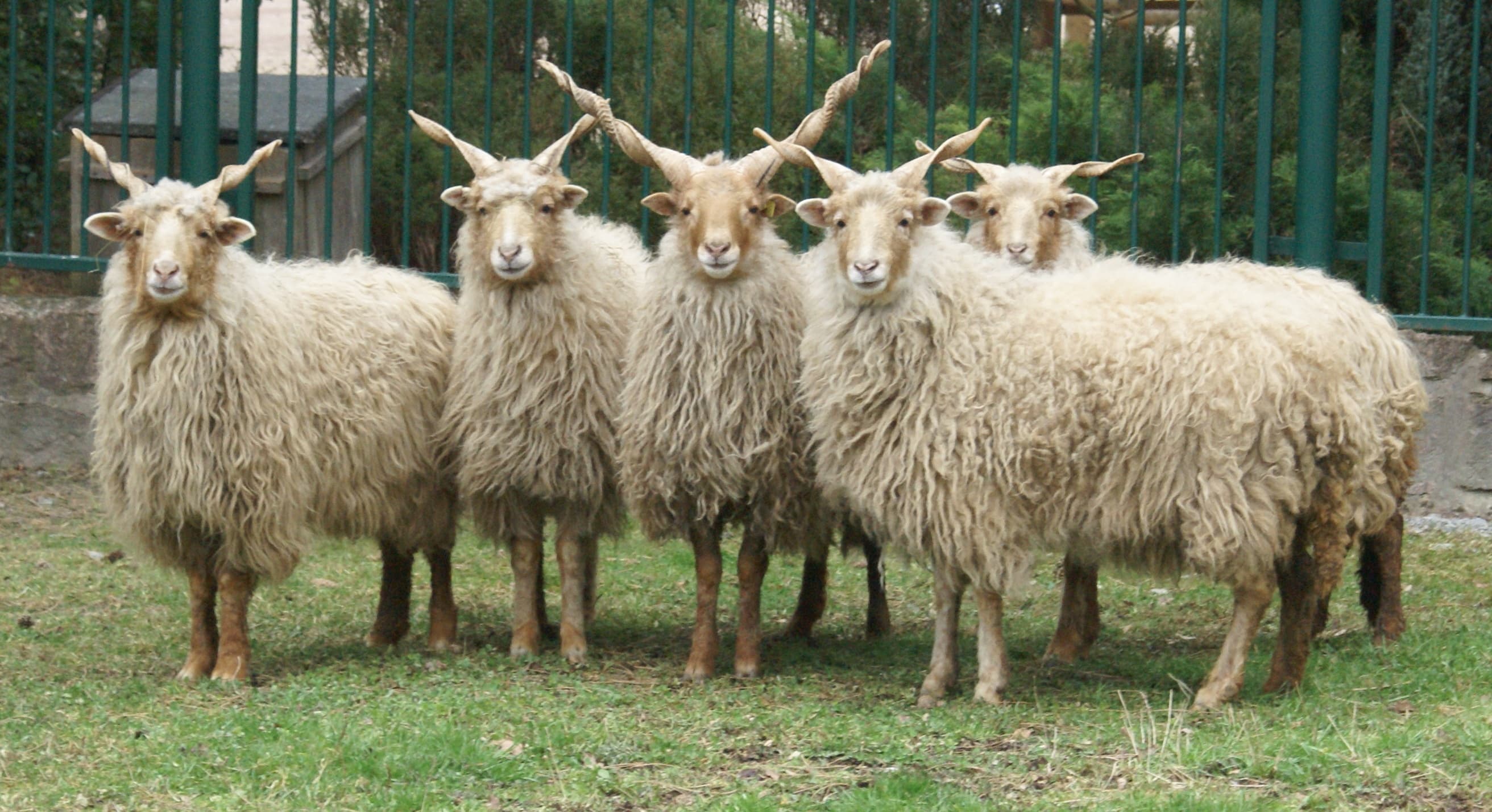
Racka sheep are native to Hungary and have been living on the Puszta for centuries alongside the Hungarian Grey cattle and the csikós horsemen. They are a hardy breed, comfortable in both baking summer heat and cold winters, and they can find enough food on rough grassland where many other animals would struggle.
The twisted horns are not just for show - they are strong and help the animals defend themselves. But they are so unusual-looking that rackas have become one of Hungary's most distinctive symbols. You can find them on souvenirs, postcards and art all around the country.
Racka wool is long, slightly coarser than typical soft sheep wool, and grows in long wavy locks. Traditionally, Hungarian shepherds used it to make thick, heavy cloaks called szür (say: SEER) - warm enough to sleep under as a blanket on cold Puszta nights. Some szür were so beautifully embroidered that they were worn on special occasions.
Today racka sheep are kept in national parks and on traditional farms. Visitors to the Hortobágy can often walk right up to a herd and see those extraordinary corkscrew horns up close - something that almost always makes children (and adults) burst out laughing with surprise.