
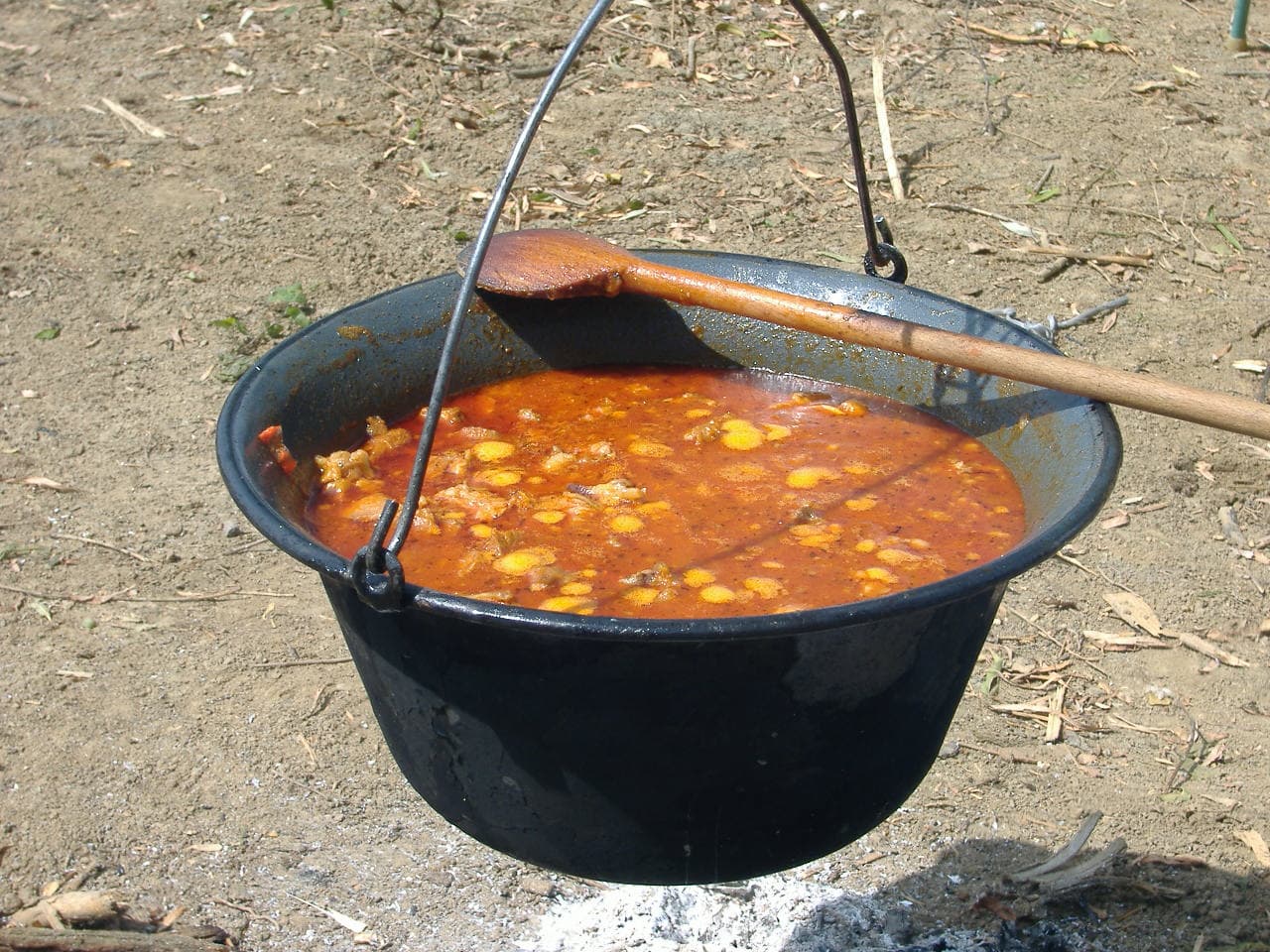
The name 'goulash' comes from the Hungarian word 'gulyás' (say: GOO-yash), which means 'cattle herder'. It was the cattle herders - the gulyás - on the Puszta who first cooked this dish. They would travel for weeks with their herds and make a simple stew using dried beef, onions and paprika, which they could carry easily. Water and fire were the only other things they needed.
The magic ingredient in goulash is paprika - ground dried red peppers that give the stew its gorgeous red colour and deep flavour. Hungary is famous for its paprika; fields of red peppers are grown across the country, especially around the town of Kalocsa, where the streets are decorated with strings of drying peppers every autumn.
Traditional Hungarian goulash is more like a thick soup than a stew. It is made in a big round pot called a bogrács (say: BOG-rach), which hangs over an open fire on a metal hook. Cooking in a bogrács over a wood fire gives the goulash a smoky flavour you just cannot get from a kitchen cooker.
Every family and every region has its own version of goulash. Some use pork instead of beef; some add egg noodles called csipetke (small pinched dumplings); some make it thicker, some thinner. But all versions start the same way: onions and paprika, lots of time and low heat.