
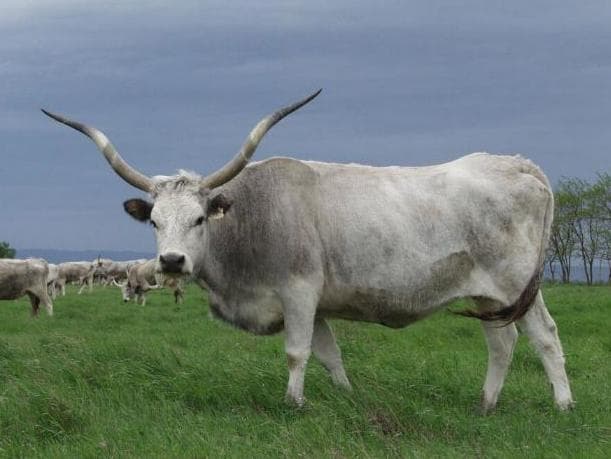
Hungarian Grey cattle arrived in the Carpathian Basin (where Hungary sits today) more than a thousand years ago. For centuries they were Hungary's most important farm animal, providing milk, meat and the pulling power to move heavy loads and plough fields.
The breed is incredibly tough. Long winters, summer droughts and the harsh open plains of the Puszta have shaped these cattle to be hardy animals that can survive on rough grass that other breeds would not eat. Their thick silver-grey winter coat keeps them warm even in freezing temperatures.
The males (bulls) have especially impressive horns that can grow to 80 centimetres long. The horns curve outward and upward, almost like a lyre - a shape so distinctive that Hungarian Grey cattle appear in paintings and sculptures all over Hungary.
By the twentieth century, Hungarian Grey cattle almost disappeared because faster-growing modern breeds replaced them on farms. But people recognised how special and ancient this breed is, and today conservation programmes protect them. You can see herds of them in the Hortobágy national park - living much as they did a thousand years ago.