
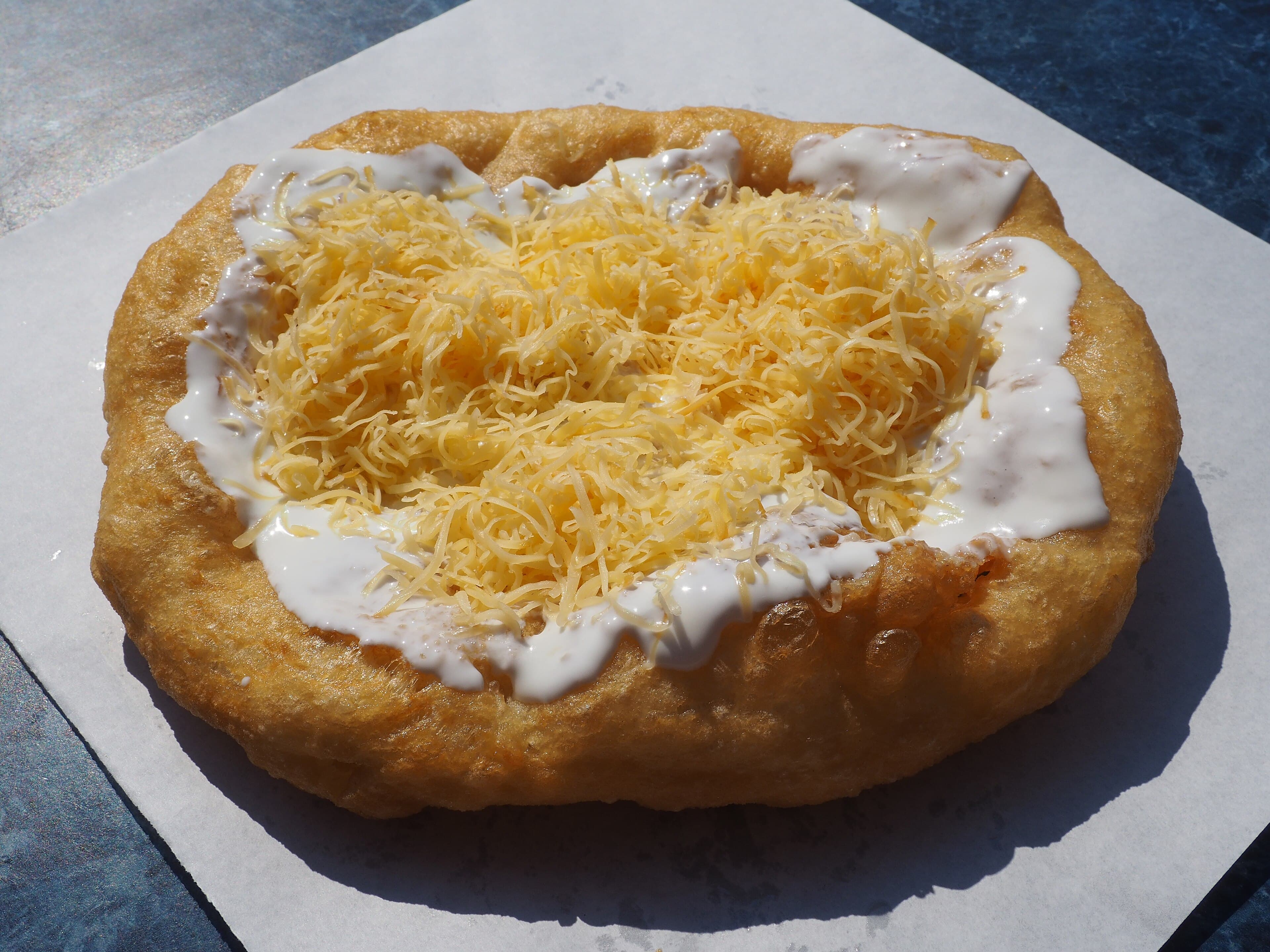
The word 'lángos' comes from the Hungarian word 'láng', which means 'flame'. The name comes from the old tradition of putting a piece of bread dough in front of the fire while the rest of the bread baked in the oven - so it cooked quickly, in the heat of the flames, for the family to enjoy fresh and hot.
Today lángos is made by dropping circles of soft yeast dough into hot oil. The dough puffs up dramatically as it fries - it almost doubles in size. Within a few minutes it becomes golden and bubbly on the surface. The smell of frying lángos at a market or fair is one of the most irresistible smells in Hungary.
Lángos is sold at street markets, Lake Balaton beach stalls, fun fairs and summer festivals all over Hungary. The classic topping is sour cream (tejföl) and grated cheese, but garlic butter is also very popular. Sweet versions with strawberry jam or Nutella have become popular with younger children.
Making lángos at home is a favourite rainy-day activity for Hungarian families. The dough is simple to make with flour, yeast and a little sour cream or potato, and frying it is fast. There are recipes that use leftover mashed potato in the dough, which makes it extra fluffy and slightly sweet.