
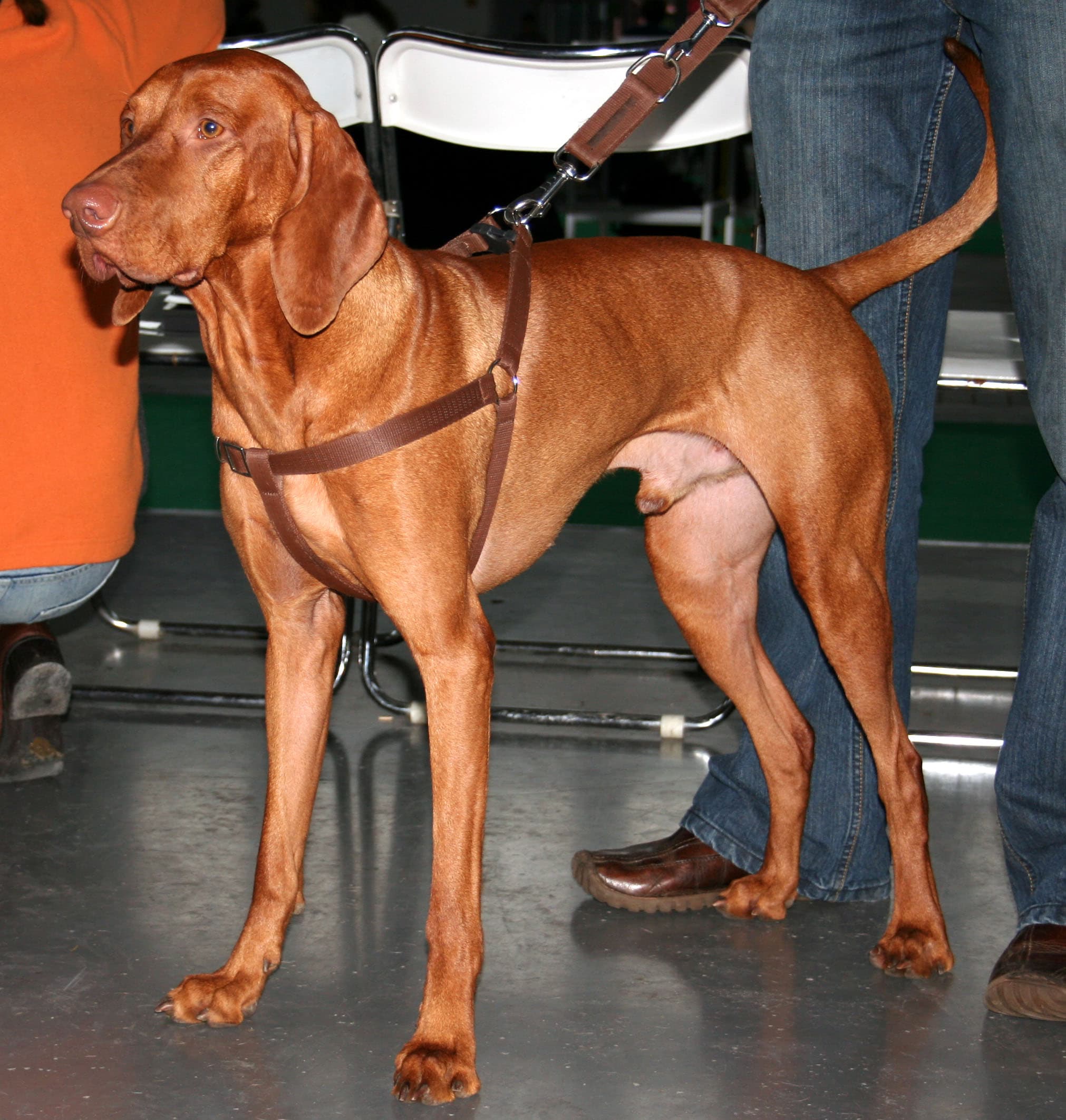
The vizsla's golden-rust coat is one of the most striking things about the breed. Unlike many dogs, everything on a vizsla is the same colour - the coat, the nose and even the eyes are all warm shades of golden brown. When a vizsla stands in autumn grass, it can almost disappear into the golden landscape.
Vizslas are pointer dogs - bred to find birds hiding in grass and then 'point' at them by freezing completely still with one front paw raised and their nose aimed at the exact spot where the bird is hiding. This gives hunters time to approach without scaring the bird away. It is an instinct the dogs are born with, not something they have to be taught from scratch.
These dogs have enormous amounts of energy and love to run. They need at least two good runs every day. But they are also famously loving - they are sometimes called 'velcro dogs' because they stick close to their owners and hate being left alone for long. A vizsla is happiest when it can be outside running one moment and then curled up right beside its favourite person the next.
Vizslas appear in Hungarian art and manuscripts going back to the 1300s. Because Hungarians have kept careful records of the breed for so long, the vizsla is one of the oldest recognised dog breeds in the world. Today they are popular pets and show dogs in over 30 countries.