
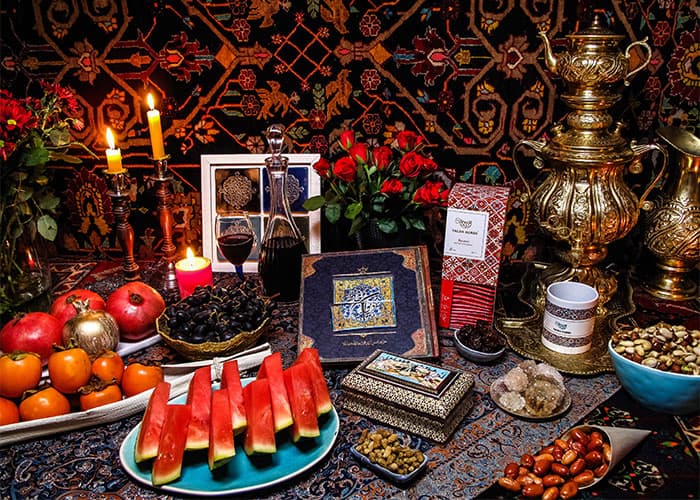
The tradition is to stay awake through the longest, darkest night of the year surrounded by family and warmth. Tables are piled with seasonal foods - deep-red pomegranates split open to show their glistening seeds, slices of watermelon (stored specially from summer), bowls of mixed nuts, and dried fruits. Pomegranates are especially central to Yalda because their red colour represents the glow of the rising sun and the warmth of life, and each tiny seed inside looks like a ruby.
Reading poetry is an essential part of Yalda Night. The book most often used is the collected poems of Hafez, the great 14th-century poet of Shiraz. The ritual goes like this: someone makes a wish silently, then opens the Hafez book to a random page, and whoever is reading aloud - often an elder - reads the poem found there. The poem is then interpreted as a kind of gentle, poetic answer to the wish. This tradition is called 'fal-e Hafez', which means 'Hafez's fortune'. Everyone gets a turn.
Yalda connects modern Iranians to a celebration that has been observed for over 2,000 years. Ancient Persians saw the long winter darkness as the forces of darkness at their strongest - and staying awake together, keeping fires and lamps lit and sharing food was a way of saying: we are here, we are warm, and the light will return. Today it remains one of the most warmly loved family celebrations of the year, a night when even distant relatives try to travel home to be together.