
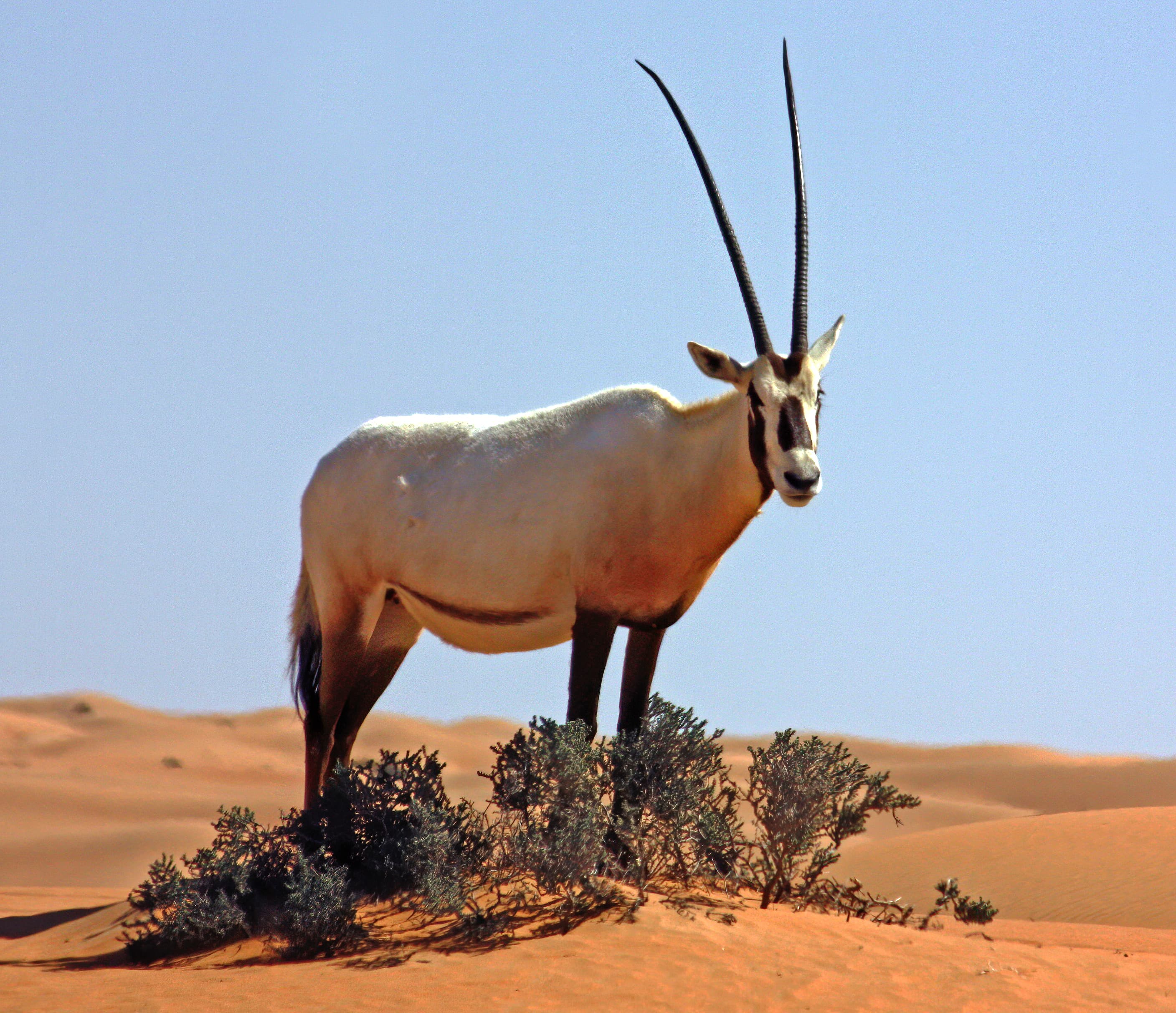
The Arabian oryx is perfectly designed for desert life. Its white coat reflects the fierce desert sun, keeping it cool. It can survive for weeks without drinking water by getting moisture from the desert plants it eats. Its wide hooves spread its weight across the sand, a bit like snowshoes work in snow, so it doesn't sink in. And it can detect rain falling more than 100 kilometres away, then walk towards it to find fresh green plants.
By 1972 the last wild Arabian oryx had been shot for sport. Luckily, a small number were in zoos. Conservationists - people whose job is to protect and rescue animals - began a very careful breeding programme. Baby oryxes were raised safely and then gradually reintroduced into protected reserves in Jordan, Oman, and other countries. It was one of the first ever successful 'rewilding' projects in the world.
Today you can see Arabian oryx in the Shaumari Wildlife Reserve in Jordan, which was set up specifically to help the species recover. The reserve is home to other rare desert animals too, including ostriches and Persian onagers (a type of wild donkey). The oryx's long straight horns, seen from the side, look like a single horn - some historians think this might be how the legend of the unicorn began.