
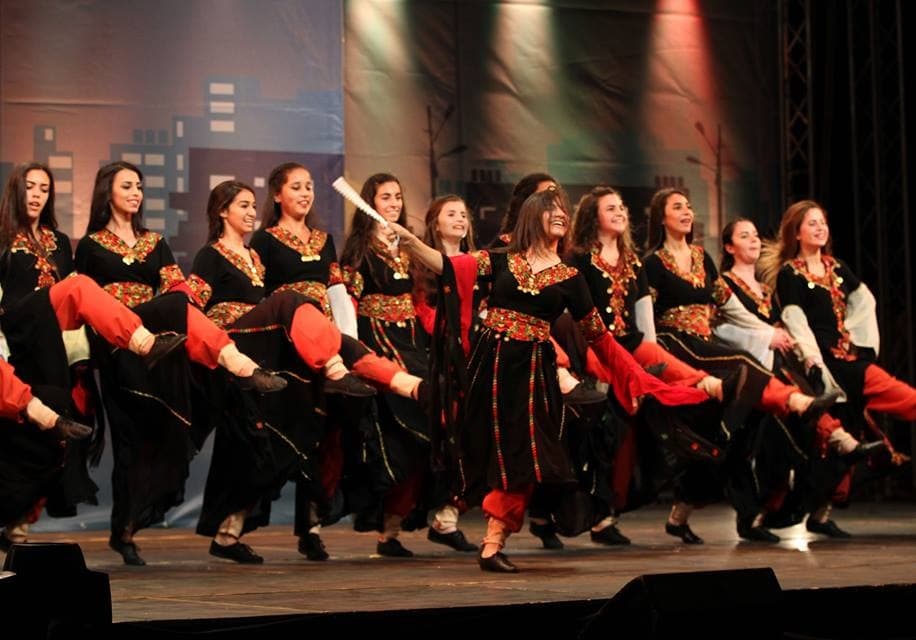
Dabke is performed at weddings, festivals, and national celebrations all over Jordan. The dancers form a chain - sometimes stretching across a whole courtyard - and the person at the front of the line (called the lawweeh) leads the steps and sometimes breaks away to perform impressive solo spins and jumps before rejoining the line. The rest of the dancers copy the same footwork: a combination of stamps, kicks, and little hops in a repeated rhythm.
The music for dabke is loud and exciting, played on instruments including the mijwiz (a double-barrelled reed flute that makes a buzzing, nasal sound), the tabla (a hand drum), and the rababa (a simple one-string fiddle). The beat is steady and driving - once you hear it, it is very hard not to tap your feet. Modern versions of dabke sometimes mix in electric instruments and recorded music.
Traditional costumes for dabke performances are beautifully embroidered. Women often wear long embroidered dresses in rich colours - red, green, blue and gold - with intricate cross-stitch patterns that can take months to make by hand. Men typically wear a white or striped tunic with a keffiyeh headscarf. Today dabke is taught in schools, performed at the Jerash Festival, and posted in lively videos across the internet.