
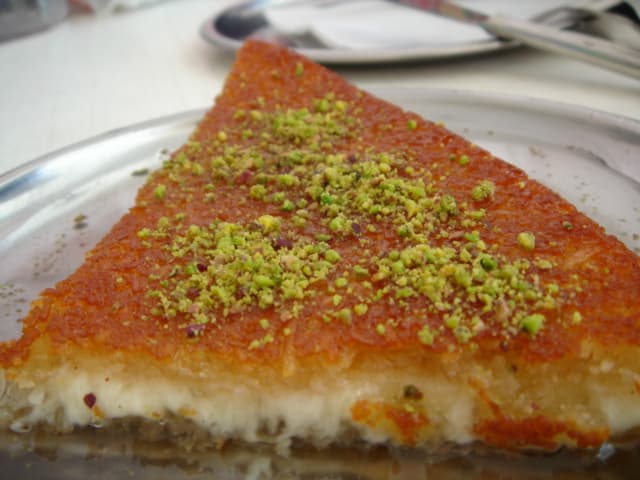
The bottom layer of knafeh is made from kataifi pastry - a type of dough that has been pushed through tiny holes to form very thin shreds, a bit like fine spaghetti. These shreds are layered into a large round tray, packed with creamy white cheese (usually a stretchy melting cheese), then baked until golden and crunchy on the outside. The moment it comes out of the oven, warm sugar syrup flavoured with rose water or orange blossom is poured all over it.
The contrast of textures is what makes knafeh so special: the outside is crunchy and golden, but the middle pulls apart in long cheesy strings, like a sweet version of melted mozzarella. The syrup makes it sticky and fragrant. A generous handful of roughly crushed pistachios on top adds a bit of crunch and a flash of green colour. It is usually cut into squares or wedges and served on a piece of flatbread.
The city of Nablus (in nearby Palestine) is often credited with inventing the most famous style of knafeh, and Jordanians celebrate the dish enthusiastically. In Amman, the capital of Jordan, bakeries and street stalls make enormous round trays of knafeh fresh every morning, and the warm, sugary smell drifts down the streets. It is popular at any time of day - for breakfast, as a snack, or as a dessert.