
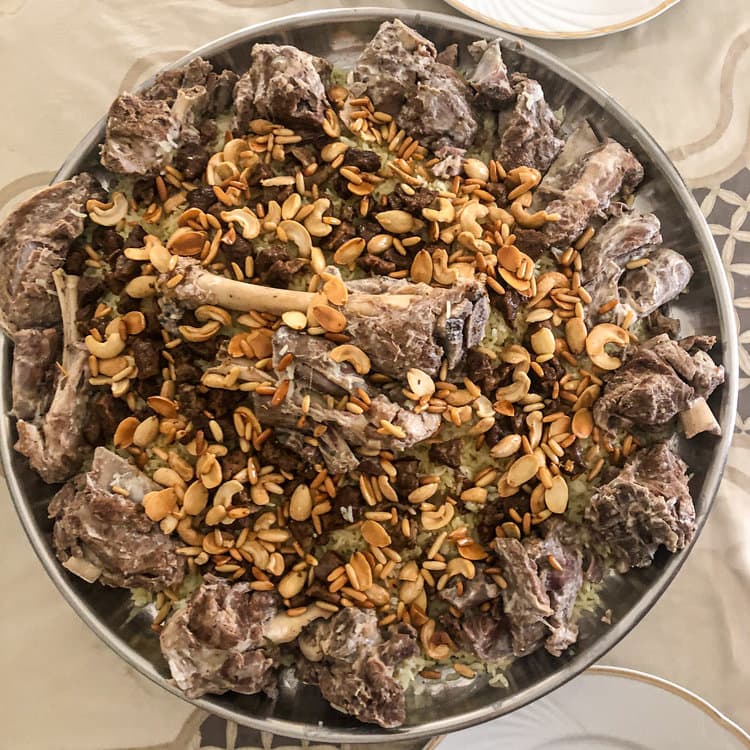
The word 'mansaf' means 'large tray' in Arabic - and the dish is traditionally served on an enormous round platter big enough for a whole family to eat from together. Everyone gathers around, standing or sitting, and uses their right hand to roll small balls of rice and lamb and dip them in the jameed sauce. Sharing a mansaf from one plate is seen as a sign of trust and togetherness.
The jameed sauce is the most special part. Jameed is made by salting and fermenting goat's or sheep's milk until it dries into hard, pale brown lumps that look a bit like rocks. The dried jameed is then soaked in water and slowly dissolved into a smooth, creamy, tangy sauce. The fermenting process is an ancient technique that allowed people in the desert to preserve milk for months without refrigeration - very clever!
Mansaf has its roots in the Bedouin tradition of hospitality. In Bedouin culture, a guest must always be welcomed generously, and serving mansaf was the greatest way to show honour and respect to a visitor. Even today, serving mansaf to someone communicates a very strong message: you are truly welcome here. It is common at weddings, Eid celebrations, and any big gathering of family and friends.