
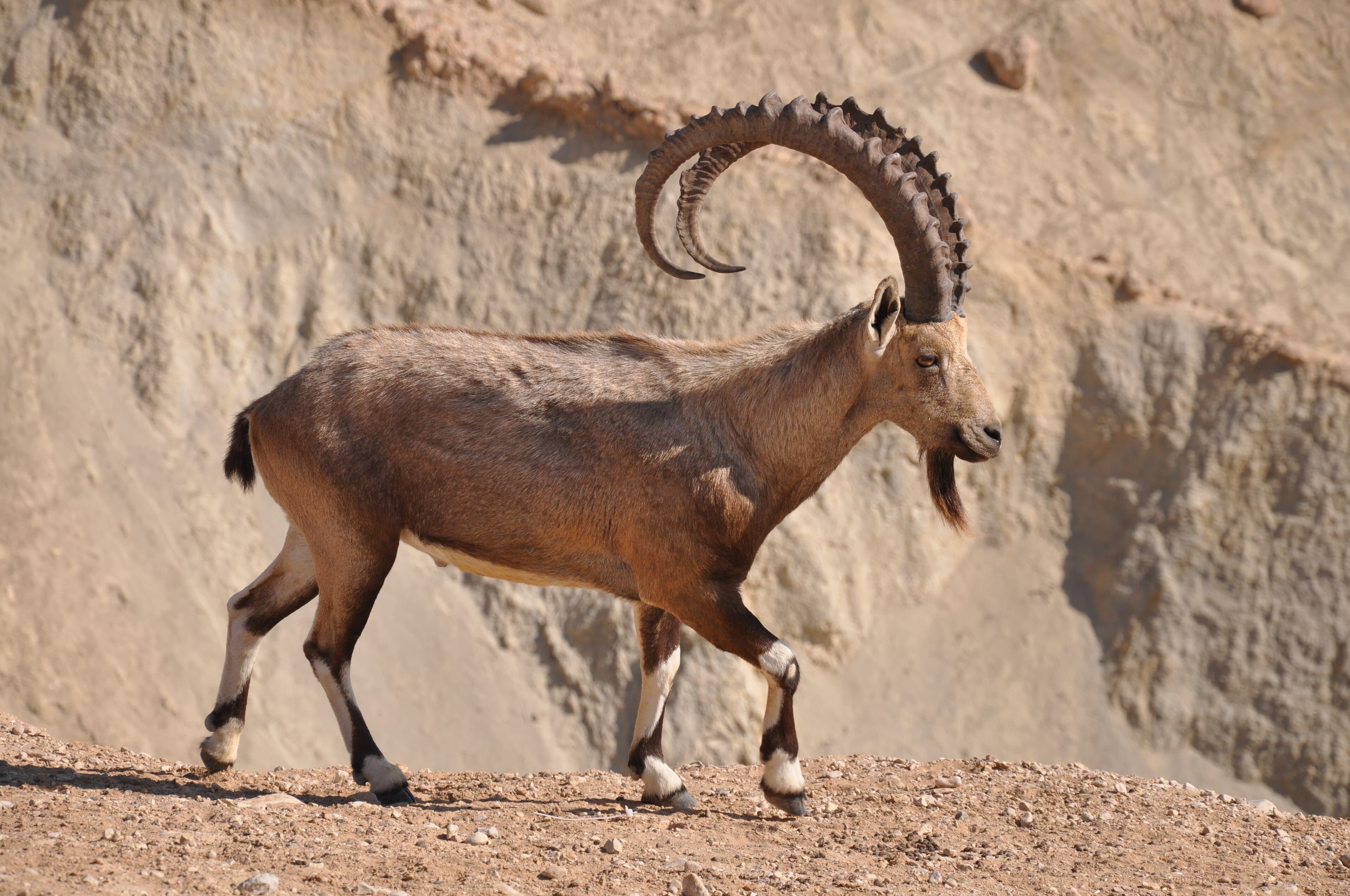
Nubian ibex are expert mountaineers. Their hooves have a hard outer edge like a shoe, but the centre of the hoof is soft and rubbery - perfect for gripping rock. When a predator chases them, they dash straight up a cliff face at full speed, leaping from tiny ledge to tiny ledge. Very few predators can follow. Their brown colouring helps them blend in against the golden and red desert rock so that eagles, leopards and wolves struggle to spot them.
Male ibex have much longer and more dramatic horns than females. The males use their great horns in head-butting contests - rearing up on their back legs and clashing horns together with a loud crack - to decide who is strongest. Despite how dramatic this looks, the animals are rarely hurt because the horns are designed to absorb the impact. Females have shorter, lighter horns that are still useful for defence.
Nubian ibex graze on tough desert plants, shrubs, and leaves. They are most active in the early morning and late afternoon when it is cooler, resting in the shade during the fiercest heat of the day. In Jordan they can be spotted in Wadi Rum, the Dana Biosphere Reserve, and the Mujib canyon - often balancing on ledges so narrow it seems impossible.