
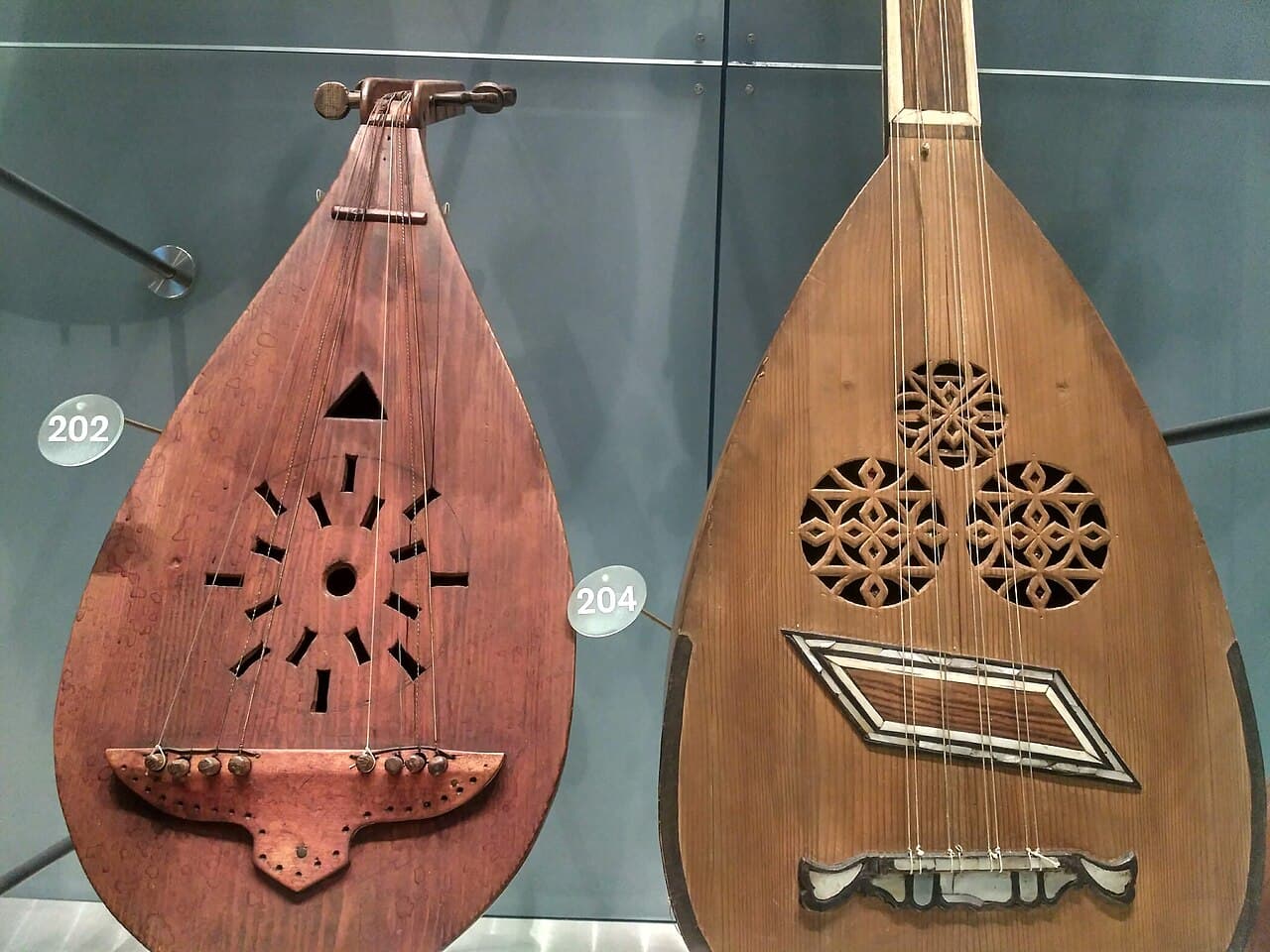
The oud is the ancestor of the European lute - the word 'lute' actually comes from the Arabic 'al-oud', meaning 'the wood'. When Arab scholars and musicians travelled to Europe in the Middle Ages, they brought the oud with them, and European musicians adapted it into the lute. So the guitar, the banjo, and many other stringed instruments can all trace some of their family tree back to the oud.
Playing the oud is a skill that can take years to master. Unlike a guitar, the oud has no frets - the small metal bars on a guitar neck that help the player find the right notes. Instead, the oud player must know exactly where to press on the smooth neck to get each note. This means that skilled oud players can slide smoothly between notes, creating the beautiful, flowing melodies that are characteristic of Arab music.
In Jordan and across the Arab world, oud music is played at many occasions - celebrations, weddings, quiet evenings at home, and concerts. Jordanian oud players are highly respected. Many cities have schools and conservatories where young people learn to play traditional oud styles as well as composing new music. The Jerash Festival of Culture and Arts often features wonderful oud performances under the stars.