
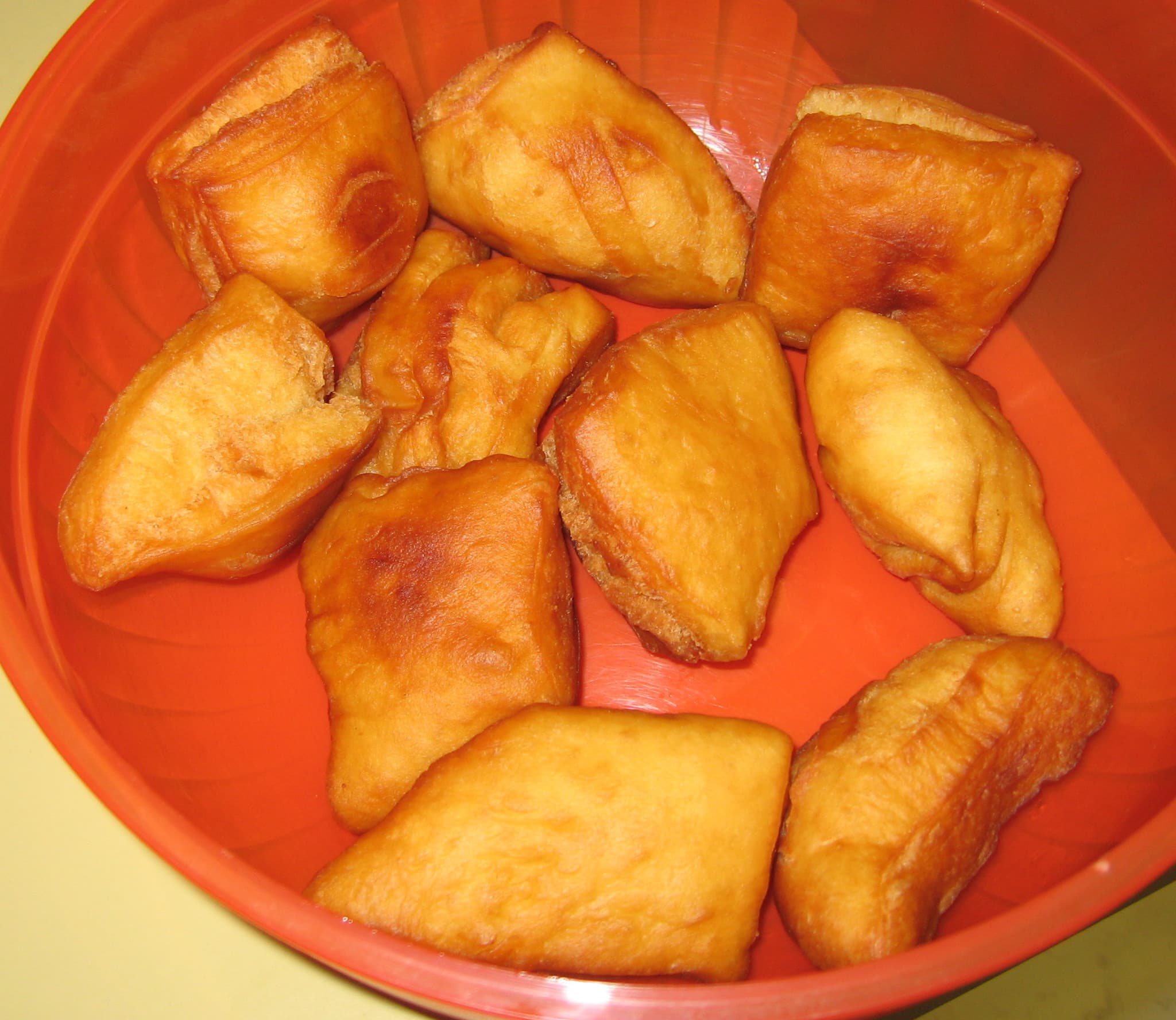
The dough is made from flour, yeast, eggs, milk and a little fat, then rolled into small balls and dropped into hot oil. They puff up as they fry, turning a beautiful golden-brown. The whole kitchen fills with a wonderful warm, doughy smell while they cook.
Baursak are traditionally placed in big bowls or piled high on platters so guests can help themselves freely. Hospitality is extremely important in Kazakh culture, and offering baursak to a visitor is a way of saying 'you are welcome here and I am happy you have come'.
They can be eaten plain - just warm and slightly chewy - or with jam, clotted cream or honey. In some regions they are made slightly sweeter; in others they are plainer, to go alongside salty meat dishes or a bowl of sorpa broth.
Children in Kazakhstan often remember the smell of baursak frying as one of the cosiest smells of childhood - associated with grandmothers' kitchens, festivals, and family gatherings. Making baursak together is a family activity passed down through generations.