
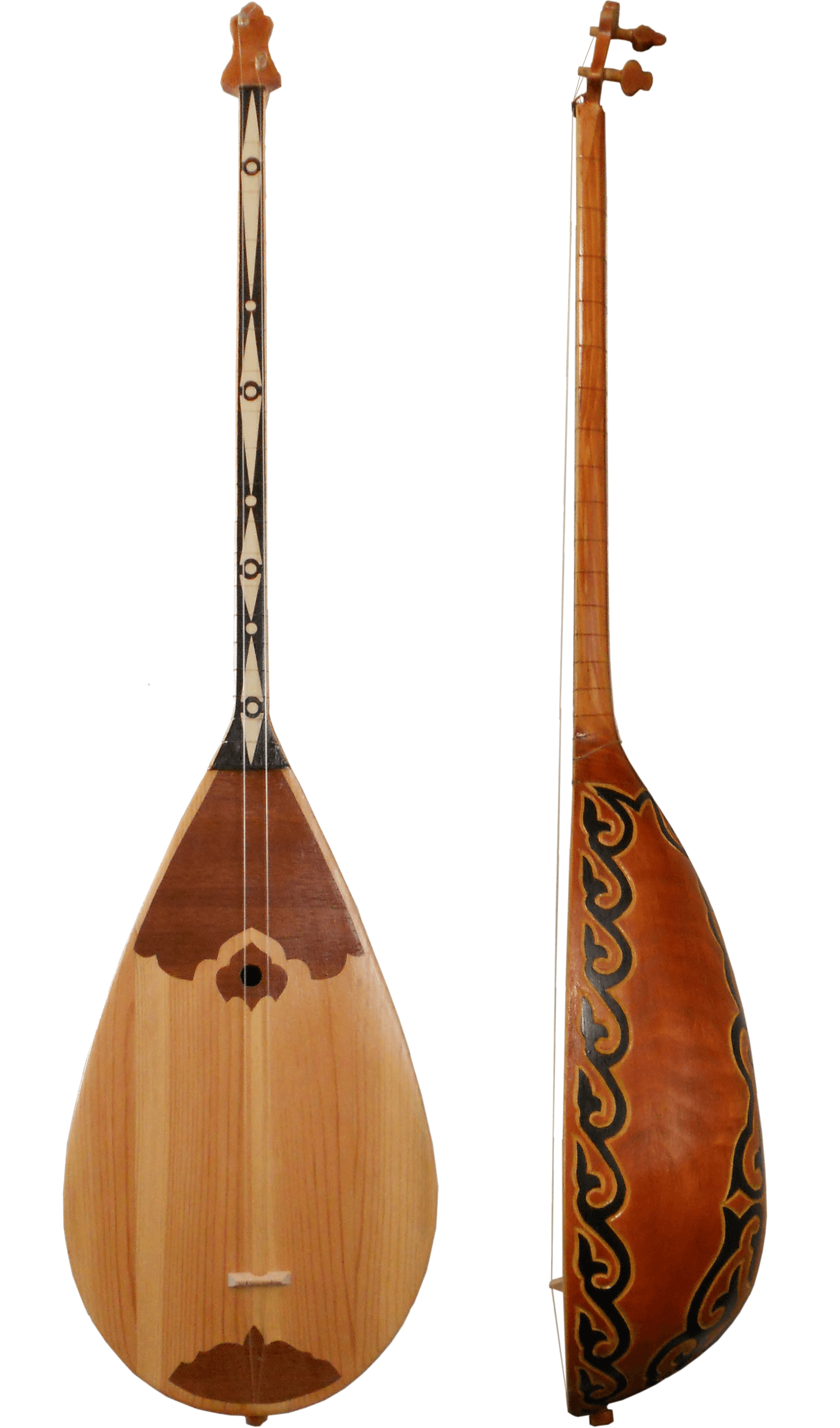
The dombra is thought to be thousands of years old. Nomadic herders carried it across the steppe on horseback, playing around campfires and at celebrations. Because it was light, sturdy and easy to carry, it was the perfect instrument for people who moved with their flocks.
Players pluck, strum and tap the strings with their fingers - no plectrum is needed. The right hand creates rhythm by strumming rapidly across the strings while the left hand presses the neck to change the notes. A good dombra player can make the instrument sound like a galloping horse or a howling wind.
Traditional Kazakh songs performed on the dombra often tell stories - about the landscape, about heroes, about daily life on the steppe. These songs, called küy, are passed from teacher to student through playing rather than written notation. Remembering and performing a küy is considered a great skill.
Today the dombra is taught in schools across Kazakhstan, and there are competitions where young players show off their skill. Many modern Kazakh musicians blend dombra sounds with electronic music or other instruments, creating something entirely new while keeping the tradition alive.