
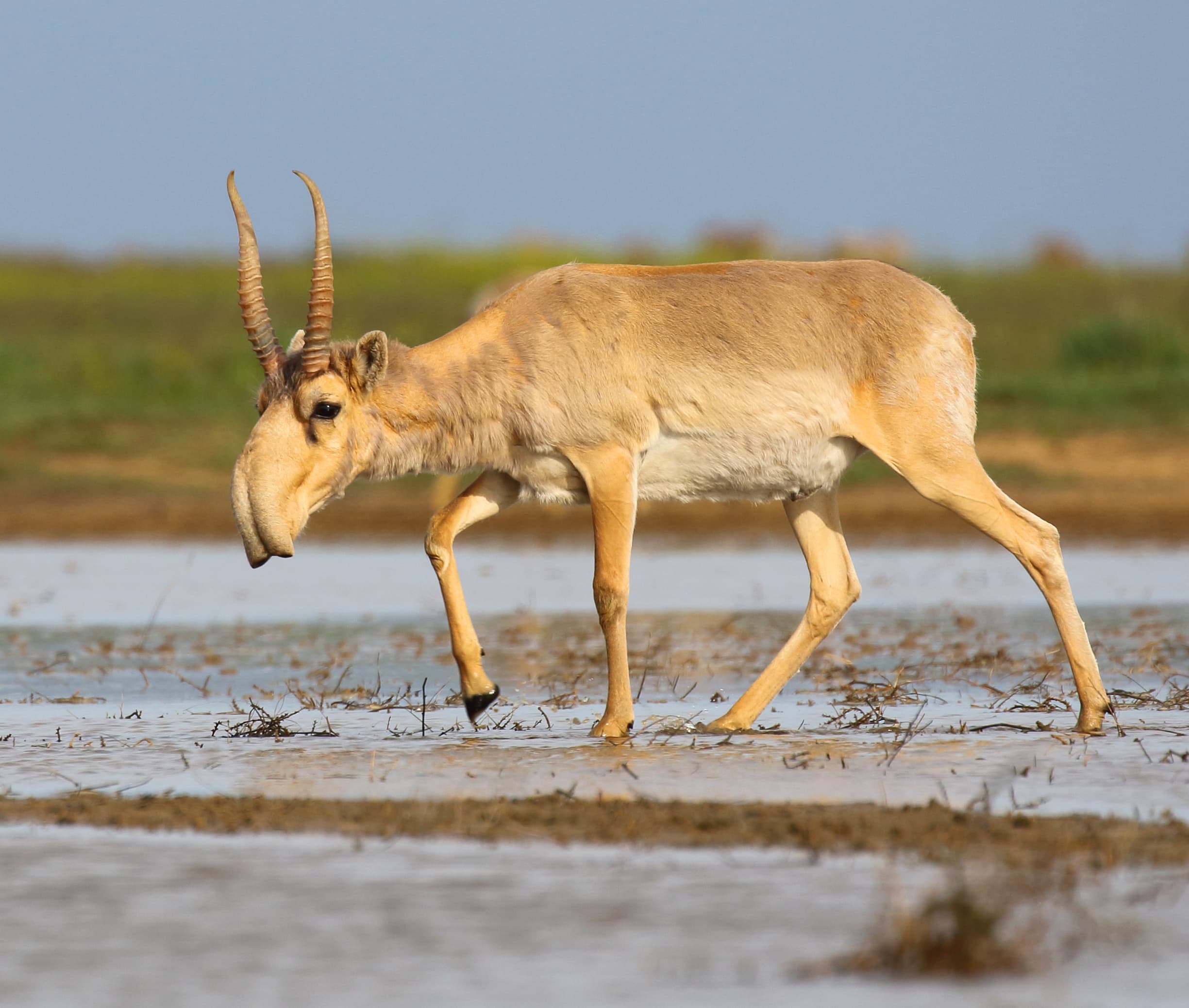
That extraordinary nose is not just for show. In summer, it filters dust out of the air kicked up by thousands of hooves. In winter, the twisting inner passages warm up the freezing cold air before it reaches the saiga's lungs. It is one of nature's most clever designs.
Saiga are famous for their spectacular migrations. In spring, enormous herds - sometimes hundreds of thousands of animals - move across the Kazakh steppe in long, flowing rivers of tan and white. The sound of their hooves on the dry ground can be heard from far away.
Male saiga have ringed, translucent horns that glow a pale amber colour in sunlight. These horns grow quickly during the spring and summer. Females have no horns at all.
For a long time saiga numbers fell very sharply, but conservation efforts in Kazakhstan - including protected areas and anti-poaching patrols - have helped their populations begin to recover. Today Kazakhstan is home to the largest remaining saiga herds in the world, and watching a migration is one of the greatest wildlife spectacles on the steppe.