
Classroom lesson ยท Wildlife ยท ๐Ÿ‡ฐ๐Ÿ‡ฎ Kiribati

Coconut Crab

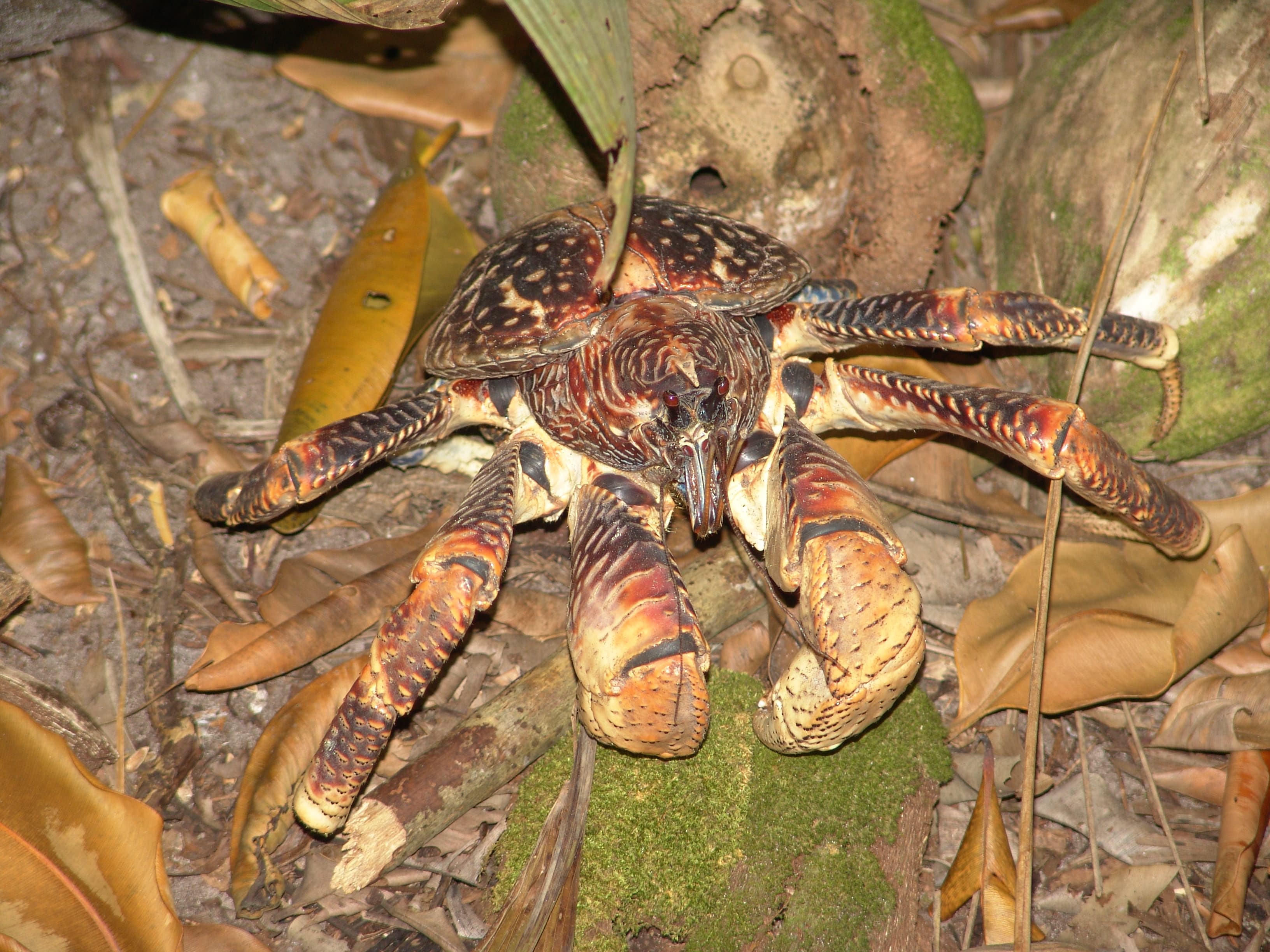
The world's biggest land crab, strong enough to climb a palm tree

Photo ยท Wikimedia Commons

What is it?

The coconut crab is the largest land-living arthropod on Earth โ€” meaning it is the biggest crab, spider, insect or similar creature that lives on land anywhere in the world. An adult can weigh up to 4 kilograms and measure nearly a metre from claw tip to claw tip. Despite their size, they are surprisingly nimble climbers.

Tell me more

Coconut crabs got their name because they can crack open a coconut using their powerful claws โ€” something very few animals on Earth can do. First they strip away the fibrous husk, then they use a special pointed tip on one claw to pierce the coconut's eye before levering the shell apart. It can take an hour, but the crab is patient and the reward is the rich white coconut meat inside.

These crabs spend their whole adult lives on land โ€” unlike most crabs, which need to stay near the sea. They breathe through special organs that work like lungs when kept moist, and they come to the sea only as tiny babies before returning to the land. They love to climb palm trees at night, and their long legs mean they can reach surprisingly high branches.

On Kiribati's quieter islands and atolls, coconut crabs come out after dark to forage for fallen fruit, coconuts, and scraps. They have a strong sense of smell and can detect food from quite a distance. Local people have traditionally eaten coconut crabs as a valued food, and on protected islands the population can grow very large indeed.

In the classroom

Walk your class through this in 15 minutes.

Talk together

Discussion prompts

  1. 01The coconut crab is a crab that lives entirely on land. What challenges do you think it had to 'solve' over millions of years to manage this?
  2. 02Its claws can crack open a coconut. Can you think of other animals that use tools or their body parts in a very clever way to get food?
  3. 03Coconut crabs can live for up to 60 years. How does a long lifespan change how an animal grows up compared to animals that live only one or two years?
Try this

Classroom activity

Draw a coconut crab beside an actual coconut (or a drawn coconut). Using the fact that adult coconut crabs can span nearly a metre from claw to claw, measure out 1 metre on the floor with a ruler or tape measure, then draw the crab to that scale. Add labels showing its claws, legs, and body. How big does it look compared to your own hand?