
Classroom lesson · Music · 🇽🇰 Kosovo

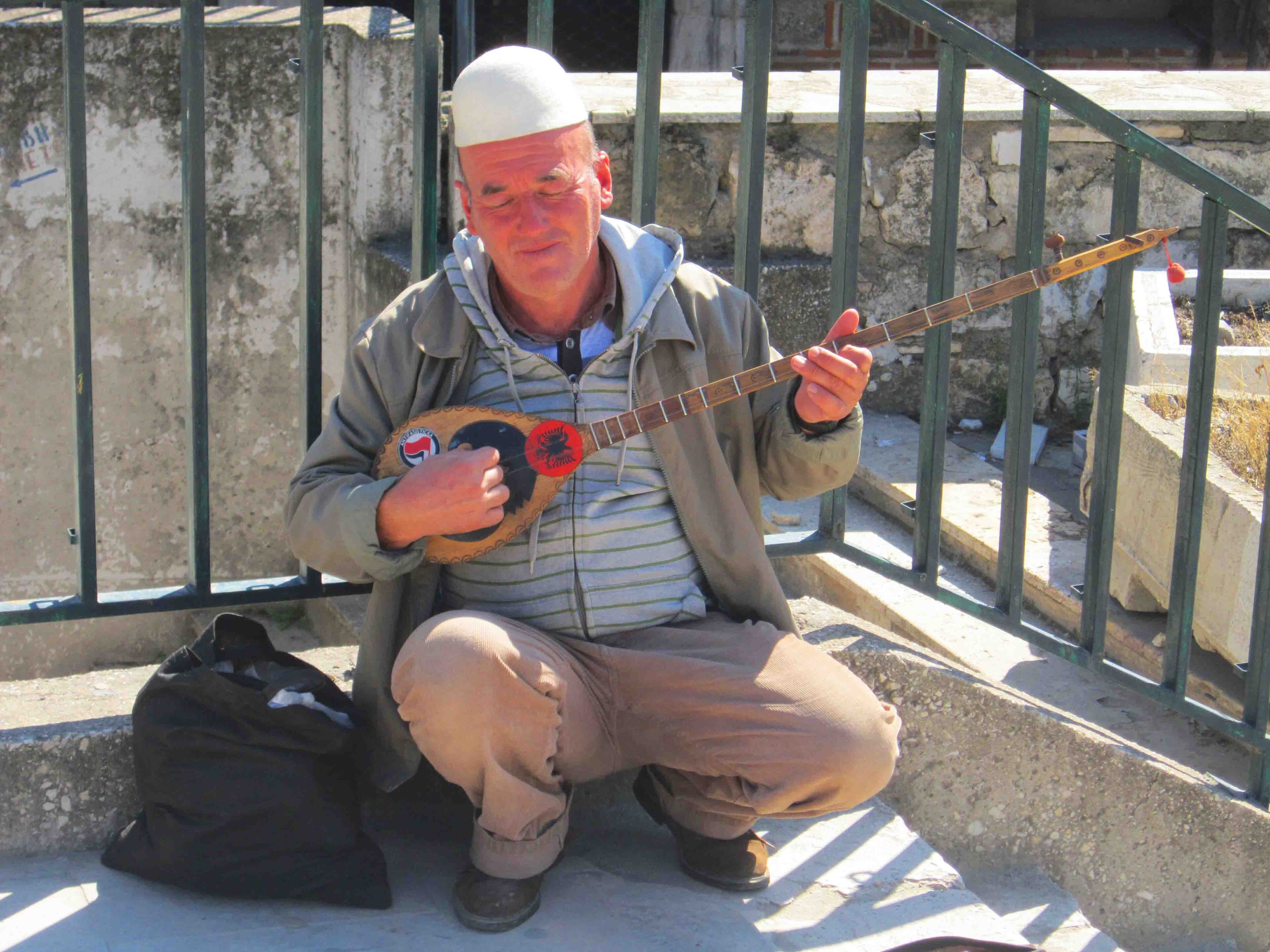
Çifteli

Kosovo's two-stringed mountain lute

Photo · Wikimedia Commons

What is it?

The çifteli (pronounced 'chiff-teh-lee') is a traditional two-stringed lute played in Kosovo and across Albanian-speaking communities. It has a long slender neck, a pear-shaped body, and only two strings — yet in skilled hands it produces a surprisingly rich and expressive sound.

Tell me more

The çifteli is one of the oldest instruments in the region. Its body is traditionally carved from a single piece of wood — often mulberry or walnut — and the strings were originally made from gut, though most players now use modern strings. Each instrument is handmade, which means no two çifteli are exactly alike.

The lower of the two strings stays on one steady note (called a drone) while the player uses the upper string to play the melody. This gives çifteli music a distinctive buzzing, hypnotic quality that sounds unlike most Western instruments. The drone string never changes, creating a constant hum that supports everything the melody does above it.

Traditionally, the çifteli was played by rhapsodes — musicians and storytellers called lahutarë — who would accompany their epic poems and tales with its sound. These storytellers would perform long, dramatic songs about heroes, mountains and adventure, sometimes performing for hours at a time.

Today the çifteli is still played at festivals, family celebrations and music events across Kosovo. Young musicians are learning the instrument, and you can find videos online of both traditional players and modern artists who mix çifteli sounds with contemporary music. The instrument is considered a key part of Kosovo's cultural identity.

In the classroom

Walk your class through this in 15 minutes.

Talk together

Discussion prompts

  1. 01The çifteli has only two strings but makes complex music. Can you think of other instruments that are simple in design but can make surprisingly rich sounds?
  2. 02Storytellers used to perform epic tales for hours, accompanied by the çifteli. Before books and screens, how do you think music helped people remember and share stories?
  3. 03Each çifteli is handmade and unique. How might playing a handmade instrument feel different from playing a factory-made one?
Try this

Classroom activity

Make a simple 'two-string instrument' from a shoebox and two rubber bands of different thicknesses stretched across the open top. Notice how each band makes a different sound. Now hold one band still (your 'drone') and pluck or tap the other rhythmically. Can you create a simple repeating melody above the constant hum?