
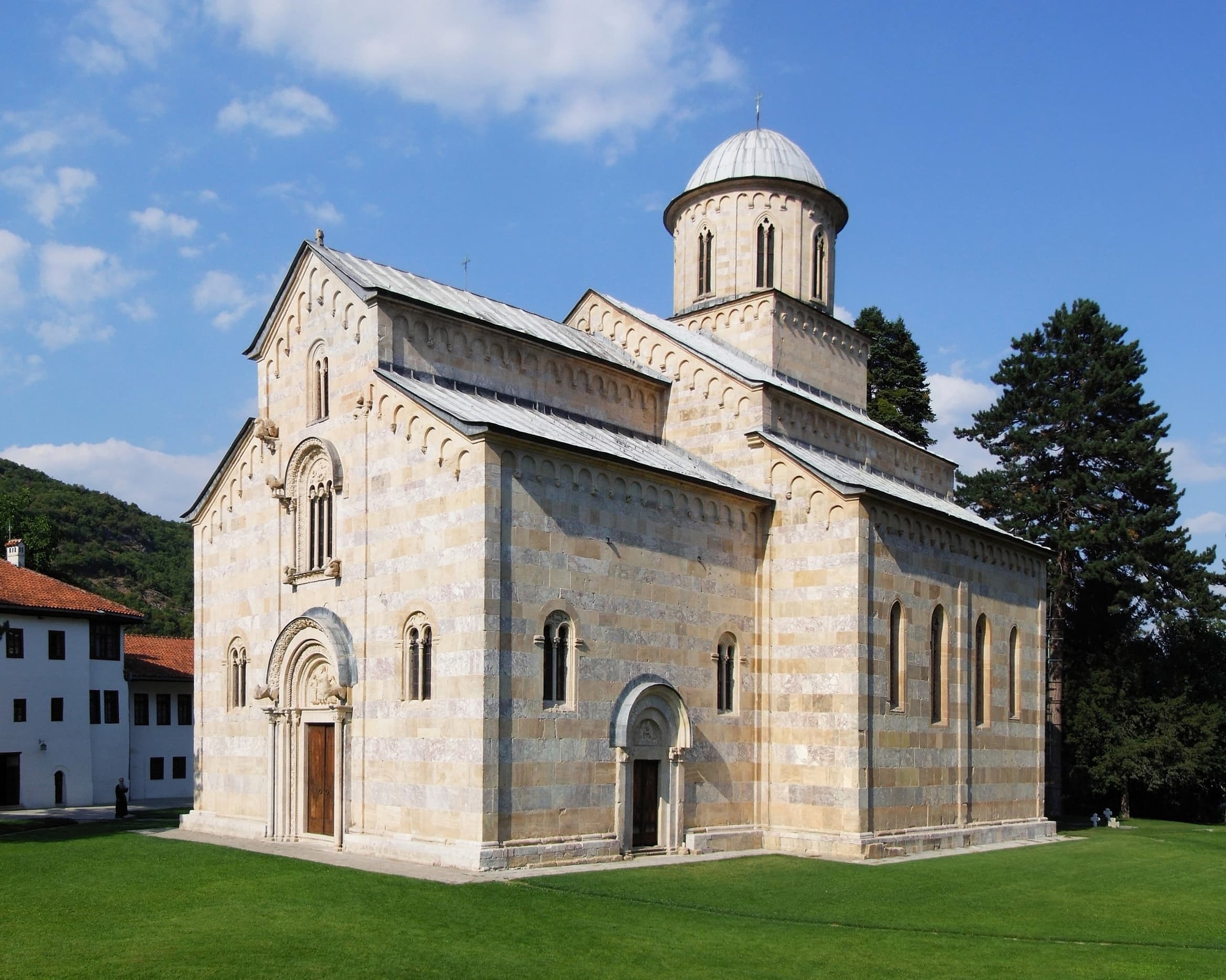
When you step inside the church at Visoki Dečani, the walls, ceiling and arches are covered in thousands of individual painted scenes. Historians estimate there are around 1,000 different fresco compositions, making this one of the largest and best-preserved collections of Byzantine fresco art in the world. Artists worked on them for years, painting scene after scene while the plaster was still fresh.
Fresco painting is a very demanding art form. The artist must work quickly because the paint only bonds properly with the wall while the plaster underneath is wet. There is no erasing or painting over - every brushstroke is permanent. The artists who created Visoki Dečani's frescoes were masters of their craft.
The colours in the frescoes have lasted for nearly 700 years. Reds, blues, golds and greens still glow in the dim light of the church. The pigments came from natural sources - ground-up minerals, plants and even some insects. Medieval artists had to make their own paints from scratch.
The monastery is built from a beautiful striped stone - pink and white bands of marble and limestone - that was quarried from nearby mountains. The carvings on the doorways and window frames are incredibly detailed, showing leaves, animals and geometric patterns intertwined. Stonemasons spent years on these details alone.