
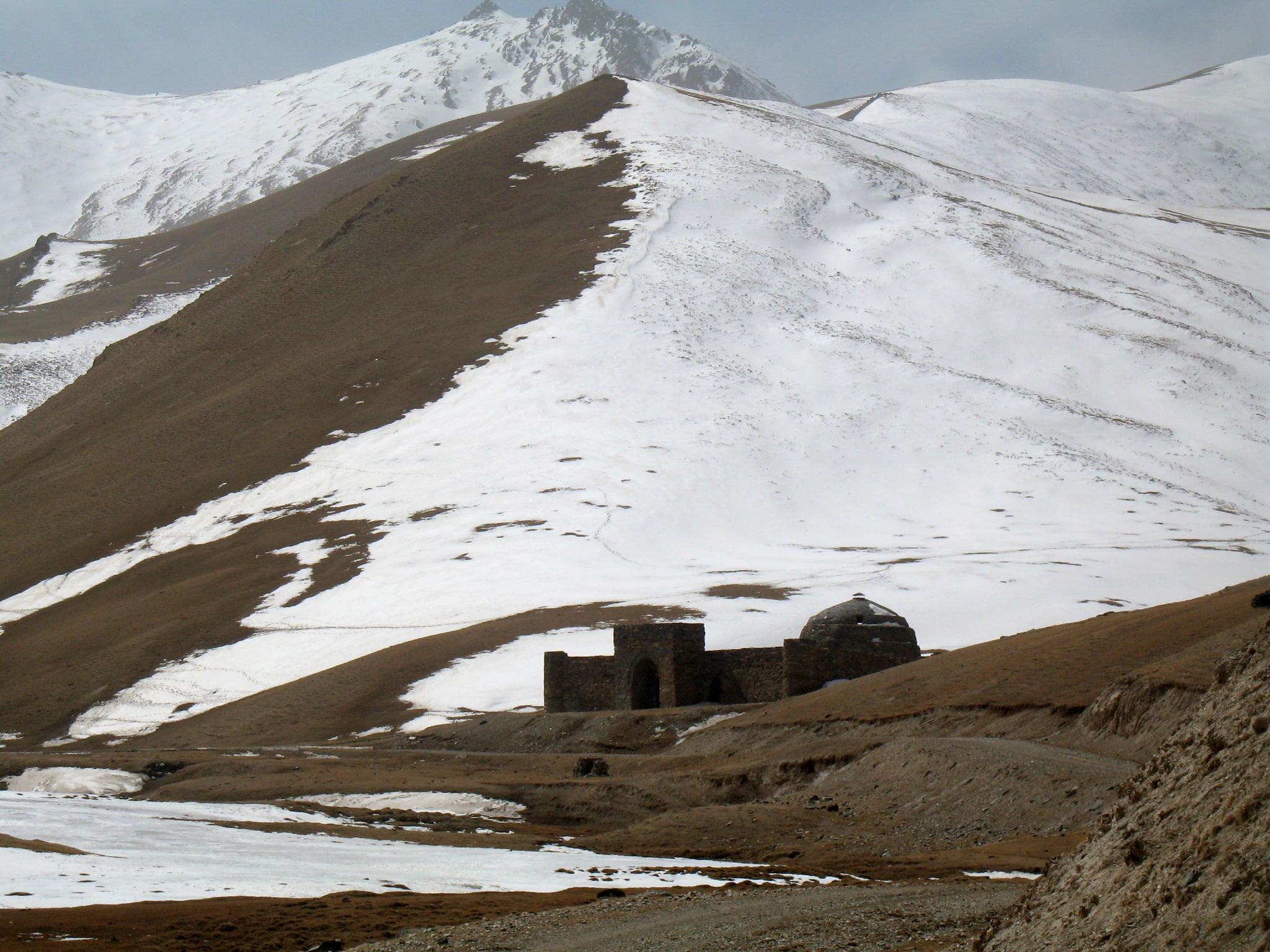
The Silk Road was not really one road but a great network of paths, passes and trails connecting China, Central Asia, the Middle East and Europe. Merchants carried silk, spices, jewels, glassware and many other goods back and forth along these routes for hundreds of years. The journey through Kyrgyzstan's mountain passes was beautiful but tough and cold.
A caravanserai was like a hotel for these travelling groups, called caravans. Tash Rabat had rooms for the merchants to sleep in, a large central hall, and space for the camels and horses that carried the loads. It could shelter up to 100 travellers at a time, keeping them warm and safe from mountain storms.
The building has a large stone dome over its central hall and many smaller domed rooms branching off a long corridor. It feels a bit like a maze when you explore it. The stone walls are so thick that it stays remarkably cool in summer and holds warmth in winter.
Standing inside Tash Rabat today, it is easy to imagine merchants from China sitting alongside traders from Persia, India or even Italy, sharing food and stories by firelight before continuing their journeys. It is a place where different cultures met and exchanged ideas as well as goods.